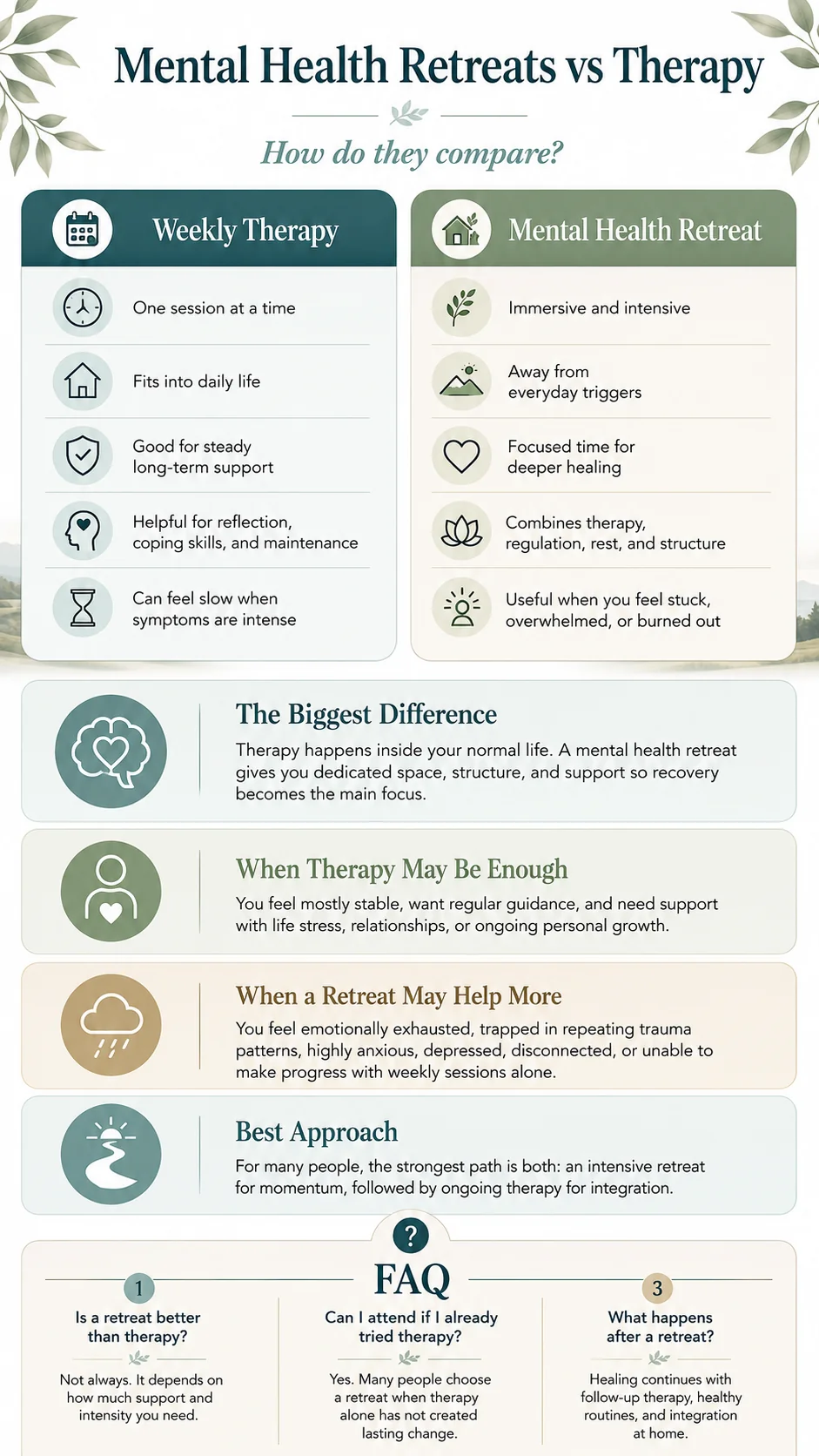
Many people begin with weekly therapy. It can be a valuable place to talk, reflect, learn coping tools, and build trust with a therapist over time.
But for some people, one session per week is not enough. They may feel stuck in the same patterns, overwhelmed by symptoms, or unable to make progress while still living inside the same stressful environment.
This is where a mental health retreat can offer a different kind of support.
A trauma retreat is not a replacement for all therapy. It is a more focused and intensive form of treatment for people who need time, privacy, structure, and distance from daily triggers. At New Paradigm, we work with people experiencing PTSD, complex trauma, anxiety, depression, burnout, emotional abuse, grief, and long-term nervous system dysregulation.
What Is Traditional Therapy?
Traditional therapy usually takes place once per week, often for 50 to 90 minutes. You meet with a therapist, discuss what is happening in your life, explore past experiences, and work on emotional patterns over time.
This format can work well when you have enough stability between sessions. It allows you to apply what you learn in real life and return the following week to discuss what came up.
Weekly therapy can be especially helpful for relationship issues, life transitions, mild to moderate anxiety, ongoing self-development, and maintaining progress after more intensive treatment.
The challenge is that deep trauma work often does not follow a neat weekly schedule. A person may spend most of the session settling in, explaining current stress, and then leave just as deeper material begins to emerge.
For someone living with high anxiety, emotional shutdown, intrusive memories, panic, dissociation, or chronic exhaustion, seven days between sessions can feel too long.
What Is a Mental Health Retreat?
A mental health retreat provides a concentrated period of treatment away from everyday pressure. Instead of attending one appointment each week, you step out of your usual routine and enter a structured environment where recovery becomes your main focus.
At a private mental health retreat, treatment may include individual trauma therapy, EMDR therapy, CBT, NLP, somatic work, guided nervous system regulation, meditation, movement, breathwork, massage, sleep support, and daily emotional processing.
The purpose is not to rush healing. The purpose is to create enough space for the mind and body to settle so that meaningful work can begin.
When you are no longer managing work demands, family conflict, social pressure, constant notifications, or unhealthy coping habits every day, you can often see your patterns more clearly.
The Main Difference Is Intensity
The biggest difference between therapy and a mental health retreat is intensity.
In weekly therapy, you may have one hour to process your week. In a trauma retreat, you may have daily individual sessions and a full schedule built around emotional regulation, rest, reflection, and recovery.
This can help when a person has reached a point where they know why they feel unwell but cannot shift the pattern alone.
For example, someone may understand that their childhood was traumatic. They may have spoken about it for years. Yet they still react with panic in relationships, shut down when they feel criticised, struggle to sleep, overwork, self-medicate, or feel disconnected from themselves.
Insight matters. But insight alone does not always resolve a trauma response held in the nervous system.
Intensive trauma treatment creates more opportunity to work with the emotional, cognitive, and physical layers of the pattern.
Therapy Happens Inside Your Normal Life
Therapy asks you to heal while you continue living your normal life.
You may leave a session and immediately return to work, parenting, conflict at home, financial pressure, social obligations, or the same environment where your symptoms became worse.
This can make progress difficult. Your nervous system may never get a real chance to settle.
A mental health retreat gives you temporary distance from the environment that keeps your stress response active. This does not solve every problem outside the retreat, but it can give you a calmer starting point from which to make better decisions.
For many people, this break is the first time in years that they have stopped surviving long enough to understand what they actually need.
Retreats Offer More Structure
A good mental health retreat is more than a hotel with therapy sessions. It should provide a structured treatment plan that supports your entire day.
At New Paradigm, treatment focuses on individual care rather than group-based treatment. Each person has their own history, triggers, coping patterns, and pace of recovery.
Daily structure can include morning movement, meditation, individual EMDR therapy, cognitive and behavioural work, light therapy, breathwork, therapeutic bodywork, rest, reflection, and support with emotional regulation.
This structure matters because trauma often creates chaos inside the mind and body. A predictable daily rhythm can help you feel safer, more grounded, and less overwhelmed.
EMDR Therapy Can Be More Effective in an Intensive Setting
EMDR therapy is often used to process distressing memories, emotional triggers, negative beliefs, and body-based responses linked to trauma.
In weekly therapy, EMDR may be limited by time. A therapist has to ensure that you are stable enough to leave the session and return to your normal responsibilities.
At an EMDR retreat, there is more room for preparation, deeper processing, recovery time, and follow-up support. You do not need to walk straight from a trauma session into a busy office, airport, family dinner, or social event.
This can allow the work to unfold with more care and continuity.
People often come to an intensive trauma retreat after years of talk therapy because they feel ready to move beyond understanding their trauma and begin processing it more directly.
Privacy Can Make a Major Difference
Many people delay trauma treatment because they do not want colleagues, friends, or family members to know how much they are struggling.
A private mental health retreat gives you space to step away without having to explain every detail to people around you. You can focus on yourself without managing other people’s expectations, opinions, or emotional reactions.
This is especially valuable for people who are used to being the strong one. High-functioning professionals, business owners, parents, caregivers, first responders, and people in leadership roles often carry a great deal while appearing fine on the outside.
They may need a place where they do not have to perform.
When Weekly Therapy May Be the Better Choice
Weekly therapy may be the right choice when you feel generally stable, have a supportive environment, and want steady long-term guidance.
It can also be useful after a mental health retreat. Recovery continues after intensive treatment, and ongoing therapy can help you protect the changes you have made.
Therapy is often the best fit when you need support with day-to-day stress, relationship communication, life direction, personal growth, or maintaining emotional balance over time.
When a Mental Health Retreat May Be More Suitable
A mental health retreat may be more suitable when your symptoms feel too intense to manage with one session per week.
You may benefit from intensive mental health treatment if you feel emotionally exhausted, stuck in repetitive trauma patterns, unable to function at work or home, constantly anxious, disconnected from yourself, unable to sleep, overwhelmed by grief, or trapped in a cycle of shutdown and survival.
It can also be a strong option when you have tried therapy before but feel that you keep returning to the same point without lasting change.
A retreat is not about escaping your life. It is about stepping back long enough to understand what needs to change before you return to it.
The Best Approach Is Often Both
Mental health retreats and therapy do not need to compete with each other.
For many people, the strongest approach is to begin with intensive trauma treatment and then continue with online therapy, EMDR follow-up sessions, or local support after returning home.
The retreat creates momentum. Ongoing therapy helps you integrate it.
This combination can be especially useful for people working through complex PTSD, childhood trauma, emotional abuse, relationship trauma, depression, anxiety, burnout, and major life transitions.
Choosing the Right Mental Health Retreat
Not every retreat offers clinical trauma treatment. Some focus mainly on yoga, relaxation, detox, fitness, or general wellness.
If you are seeking help for trauma, PTSD, depression, anxiety, emotional abuse, or severe burnout, look for a retreat that offers individual therapy, clear screening, experienced trauma professionals, private accommodation, structured daily support, and a plan for aftercare.
You should also ask whether the retreat works with EMDR therapy, nervous system regulation, trauma-informed care, and complex emotional patterns rather than only offering relaxation activities.
Real recovery needs more than a beautiful location. It needs safety, structure, skilled support, and enough time for the deeper work to take place.
Mental Health Retreats in Thailand
Thailand has become a popular destination for people seeking private mental health retreats, trauma retreats, and intensive EMDR therapy. The distance from home, slower pace, natural environment, and lower level of daily pressure can help people step out of survival mode.
At New Paradigm Trauma Institute in Chiang Mai, treatment is designed for people who want focused, one-to-one support. We provide private intensive programmes for trauma, PTSD, complex PTSD, anxiety, depression, emotional abuse, burnout, and grief.
Each programme begins with a detailed emotional evaluation and personal screening process. This helps ensure that the treatment plan matches your needs, history, and level of readiness.
The goal is not to promise a quick fix. The goal is to help you understand the patterns that keep you stuck, process the experiences that still affect you, regulate your nervous system, and return home with a clearer foundation for ongoing recovery.