Life has a way of changing when we least expect it. Sometimes it is one phone call. Sometimes it is one conversation. Sometimes it is a diagnosis, the loss of someone we love, or the moment we realise a relationship we thought would last forever has come to an end.
Whatever the reason, there are moments in life that divide everything into two parts: the life before, and the life after.
None of us ever plans for those moments. We do not expect to lose a partner, whether through bereavement or divorce. We do not imagine waking up one day and feeling like a stranger in our own life.
Yet for so many people, that is exactly what happens. The future we imagined suddenly disappears, leaving us trying to make sense of a reality we never wanted to face.
When people hear the word grief, they often think only of death. Bereavement is one of the deepest losses we can experience, but grief is far more complex than that.
We grieve relationships, marriages, friendships, careers, our health, the children who have grown up and left home, and sometimes even the version of ourselves we no longer recognise.
We grieve routines that once brought comfort, traditions that quietly disappear, and futures we had already started to picture long before they became reality.
That is why grief can feel so confusing. The world around us often measures grief by what has happened. Our hearts measure it by what has been lost.
Two people can experience completely different events and still carry the same overwhelming sadness, uncertainty, and fear about what comes next.
Whether your loss came through bereavement, divorce, or another major life change, there is usually one thing they all have in common. At some point, life stops feeling familiar.
The routines that once gave your days structure disappear. The plans you made no longer exist. Even the smallest things, like making a cup of tea for one instead of two, can become unexpected reminders that life has changed.
In those early days, we rarely think about rebuilding. We are simply trying to survive.
We get up because we have to. We go to work because the bills still need paying. We answer messages asking if we are okay, even though we do not know how to answer that question ourselves.
We focus on getting through the day because looking any further ahead feels impossible.
For a while, survival is enough.
What people do not often talk about is what happens afterwards.
Eventually, the paperwork is finished. Friends stop checking in quite so often because they assume you are doing better. The tears do not come quite as frequently as they once did. Although the pain has not disappeared, it no longer feels as overwhelming as it did in the beginning.
From the outside, it looks as though you have moved on.
Inside, many people find themselves asking a completely different question.
What happens now?
It is a question we rarely prepare ourselves for.
We spend so much time trying to get through the worst days that we rarely think about what life might look like once we have survived them.
We imagine that one morning we will wake up and everything will feel normal again. We imagine that life will carry on from where it left off.
But life does not work like that.
Loss changes us. Sometimes quietly. Sometimes dramatically. Either way, we do not return to being the person we were before.
The experiences we have lived through become part of us, shaping the way we see ourselves and the world around us.
For a long time, I believed healing meant getting back to who I used to be. I thought that if I could recreate enough of my old life, I would eventually feel like myself again.
Looking back now, I realise I was asking the wrong question.
The question was never, "How do I get my old life back?"
The better question was, "Who do I want to become now?"
There is an enormous difference between the two.
One question keeps us emotionally tied to a version of life that no longer exists. It encourages us to measure everything we have today against everything we once had. When we do that, today's life will almost always feel as though it is missing something.
The other question does not dismiss the past or ask us to forget it. It gently shifts our focus towards the future by reminding us that, while we cannot change what has happened, we still have control over what we choose to do next.
That change in perspective transformed my own life.
When I look back now, I can honestly say that I loved my old life. I loved living in Ibiza. I loved raising my children there. I treasure the friendships, experiences, and memories from those years.
They are part of my story, and I would never want to erase them.
At the same time, I can also say, without guilt, that I love the life I have today.
Had my marriage not ended, I would never have discovered a passion for helping other people rebuild after grief and divorce. I would never have created Mending Hearts Retreat, moved to Thailand, or found the peace I now feel waking up surrounded by nature every day.
I would not have met many of the incredible people who are now part of my life. I would not have realised that starting again in my fifties was not something to fear, but an opportunity to create a future that looked completely different from the one I had planned.
None of that means I wanted my marriage to end. It also does not mean I do not look back on parts of my old life with affection.
I simply no longer believe that loving the life you have lost prevents you from loving the life you have found. The two can exist together.
That is one of the most important lessons we can learn after loss.
So many people become trapped because they believe that embracing a new future somehow dishonours the past. They worry that laughing again, travelling again, falling in love again, or discovering a new purpose means they are leaving someone behind or forgetting a chapter that mattered deeply.
I see it differently.
I believe we honour the people we have loved, the relationships we have had, and the experiences that have shaped us by continuing to live as fully as we can.
We carry those memories with us. We allow them to enrich the life we are creating rather than letting them become the reason we stop living.
The reality is that none of us gets to choose every chapter of our lives. Some chapters are written for us, often without warning and without our permission.
What we do have is the opportunity to decide how the next chapter is written. That choice is far more powerful than most of us realise.
Why So Many People Stay Stuck After Loss
One of the biggest lessons I have learnt, both through my own experiences and from hosting Mending Hearts Retreats, is that it is often not the loss itself that keeps people stuck.
More often than not, it is the life they have built around the loss.
Without realising it, we begin measuring everything against what came before. We compare every Christmas to the ones we used to have, every holiday to the trips we once took together, every birthday, every family gathering, and every milestone.
Before long, we are no longer experiencing life as it is today because we are constantly comparing it with a version of life that no longer exists.
It is an easy habit to fall into because our minds naturally return to what is familiar, even if what was familiar was not making us happy.
Human beings crave certainty. We would often rather stay with what we know than step into the uncertainty of something completely new.
That is why so many people remain emotionally attached to a chapter that has already finished.
After divorce, I often hear people say they miss their old life. Sometimes that is true. But when we explore it further, it is rarely the relationship itself they miss.
More often, they miss the certainty.
They miss knowing what tomorrow looked like. They miss having someone to eat dinner with, someone to message during the day, or someone to sit next to on a Sunday afternoon.
Those are very real losses, but they are different from wanting the relationship back.
The same can be true after bereavement. We do not simply miss the person we have lost. We miss the conversations that will never happen, the traditions that quietly disappear, and the version of ourselves that existed when they were still here.
That is why grief is not something we leave behind. We slowly learn how to carry it while continuing to live our lives.
One of the greatest acts of courage after any loss is allowing yourself to stop asking why your life changed and start becoming curious about what it could become instead.
Curiosity is powerful because it gently shifts your attention away from everything you have lost and towards everything that is still possible.
It does not ask you to forget your past or dismiss your pain. It simply reminds you that there is still a future waiting to be lived.
When I moved to Thailand, people asked me whether I was worried about leaving everything behind.
The truth is, I was not leaving everything behind. I was taking everything I had learnt with me.
Every mistake, every lesson, every heartbreak, and every experience had shaped the person I had become. None of it was wasted.
Without those experiences, I would never have had the courage to begin again.
Looking back now, I do not think rebuilding your life is about replacing what you have lost.
I think it is about creating something so meaningful that your past becomes part of your story rather than the place you continue to live.
Finding the Right Environment to Begin Again
One of the questions I am asked most often is whether a retreat can really change someone's life after grief, divorce, or a major life transition.
My answer is always the same: it can, but only if you choose the right retreat.
Over the last few years, retreats have become popular, and for good reason. Stepping away from your everyday environment gives you the chance to pause, reflect, and gain perspective in a way that is almost impossible when you are surrounded by the reminders, responsibilities, and routines of daily life.
Simply being somewhere different can quieten the noise enough to hear yourself think again.
But not all retreats are designed for the same purpose.
If you are looking to deepen your yoga practice, improve your fitness, or enjoy a week dedicated to wellness, then a yoga retreat may be exactly what you need.
But if you are navigating grief, divorce, or another significant life change, your emotional needs are different.
You may not be looking to perfect your downward dog or push yourself physically. You may simply want to be somewhere you do not have to explain why you are having a difficult day.
You may need people around you who instinctively understand what loss feels like, and where meaningful conversations come as naturally as silence.
I have spoken to many people who booked retreats hoping they would return home feeling transformed, only to realise they had spent the week surrounded by people whose reasons for being there were completely different from their own.
There is nothing wrong with that, but it shows how important it is to choose a retreat that meets you where you are emotionally.
When you are carrying grief, heartbreak, or uncertainty about the future, being surrounded by people on a similar journey creates a level of connection that is difficult to find elsewhere.
One of the things I hear again and again from guests is how nervous they were before arriving.
Many had never travelled alone before. They worried they would not fit in, that everyone else would already know one another, or that they would spend the week feeling isolated.
Within a few hours, those fears usually begin to disappear because everyone has arrived carrying their own doubts.
There is something deeply reassuring about realising you are not the only person who has had the courage to step into the unknown.
That, in itself, is often the beginning of rebuilding confidence.
Confidence does not suddenly appear one morning. It grows every time we prove to ourselves that we are capable of doing something we once believed we could not.
Travelling alone, joining a group of strangers, sharing your story, trying something new, or allowing yourself to laugh again after months or years of sadness all become small but significant reminders that life is still moving forwards.
One of the reasons I founded Mending Hearts Retreat was because I realised there was a gap between surviving and truly living again.
Through my own experience of rebuilding my life after divorce, I came to understand that healing is not just about processing the past. It is about creating a future that genuinely excites you.
I did not need someone to tell me to "move on." I needed to discover who I was without the life I had spent years building.
I wanted to be surrounded by people who understood that grief and loss do not disappear overnight, but they should not define the rest of our lives.
That philosophy became the foundation of Mending Hearts Retreat.
What began over six years ago as a therapist-led retreat supporting people through divorce and bereavement has naturally grown into something much bigger.
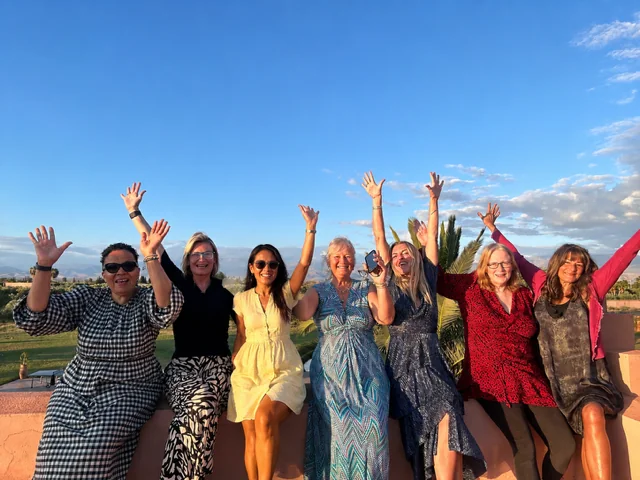
Today, we help people navigate major life transitions, rebuild confidence, reconnect with themselves, and begin embracing the next chapter of their lives with optimism rather than fear.
Every retreat is designed to support emotional healing and personal growth.
Alongside professionally facilitated group therapy and individual therapy sessions with qualified therapists, our guests experience yoga, mindfulness, guided visualisations, meaningful excursions, and opportunities to challenge themselves in gentle, supportive ways.
Just as importantly, we create space for conversations, laughter, reflection, and genuine connection because healing rarely happens in isolation.
Perhaps the thing I am most proud of is not only what happens during the retreat itself, but what happens afterwards.
When guests leave, they do not leave behind the support they have found. They become part of an ongoing community.
Friendships formed during the retreat continue through WhatsApp groups, regular reunions, holidays together, and the simple reassurance of knowing there is someone at the end of the phone who truly understands.
For many people, that is the first time in years they have felt part of a community where they do not have to explain themselves.
I have always believed that healing is not measured by how little you think about the past. It is measured by how excited you begin to feel about the future.
If you are considering attending any retreat, do your research.
Find out how long it has been running, who is facilitating it, and what support is available both during and after your stay.
A beautiful venue and stunning photographs are important, but they should not be the reason you choose somewhere that is going to support you through one of the most significant chapters of your life.
Look for experience. Look for qualified therapists rather than relying only on coaching.
Ask what happens once you return home because real life begins the moment your suitcase is unpacked.
Most importantly, choose a retreat where you feel understood, not judged, and where the people around you are likely to become part of your journey rather than simply people you happened to meet on holiday.
It is also important to recognise that healing is not the same for everyone.
For some people living with severe depression, PTSD, or more complex mental health conditions, intensive residential treatment may be the most appropriate first step.
Programmes such as those offered by New Paradigm provide specialist clinical care for people who need a higher level of therapeutic support.
Mending Hearts Retreat was created for a different stage of the journey. We support people who are ready to move beyond surviving and begin rebuilding their lives after grief, divorce, or another significant life transition.
None of us would choose loss if we were given the option. We would not choose bereavement, divorce, or the unexpected moments that turn our world upside down.
But we can choose what we do next.
We can choose whether we spend years looking back at the life we have lost or begin taking small, courageous steps towards creating a life that still holds purpose, friendship, adventure, and joy.
Because although life may not have turned out the way you planned, that does not mean it cannot still become a life you truly love.
About the Author
Gilly Da Silva is the founder of Mending Hearts Retreat, a therapist-led wellbeing retreat supporting people through grief, divorce, and major life transitions.
Having rebuilt her own life after divorce, she now helps others rediscover confidence, purpose, and connection through transformational retreats in Morocco and Thailand.
To learn more about Mending Hearts Retreat, visit www.mendingheartsretreat.com.