Why does the search for intensive trauma care so often feel like a choice between a $60,000 monthly bill for clinical coldness in the West and a tropical wellness retreat that offers little more than yoga and a temporary distraction? You've likely spent months on a waiting list or faced costs that feel like a second mortgage, only to find that the care provided doesn't reach the root of your nervous system regulation. It's a common struggle for those who are high-functioning on paper but privately falling apart. Understanding the cost of private mental health care in Thailand is not just about finding a lower price point; it's about finding a sanctuary where clinical depth meets human compassion.
This 2026 guide provides the clarity you need to move past marketing fluff and examine what your investment truly buys in terms of clinical expertise and uninterrupted recovery. We'll explore three distinct price tiers found across the region, verify the specific clinical qualifications you must demand from any facility, and provide a transparent roadmap for budgeting a four-week residential stay. You don't need to cope more elegantly; you deserve a path to recover from the inside out.
Key Takeaways
- Navigate the 2026 pricing landscape for outpatient and residential care, where expert psychotherapy rates reflect a commitment to deep, uninterrupted recovery.
- Distinguish between "wellness-led" marketing and clinically-led intensity to ensure your investment targets the root of your exhaustion rather than just masking symptoms.
- Compare the cost of private mental health care in Thailand with Western alternatives to understand how immediate access provides a value that public waiting lists cannot match.
- Learn to identify red flags in budget facilities by scrutinizing clinical credentials and founder experience, protecting your journey from programs that prioritize scale over healing.
- Discover how staff-to-client ratios directly impact your recovery, ensuring you find a sanctuary that offers the clinical depth required for true nervous system regulation.
Breaking Down the Tiers of Private Mental Health Care in Thailand
You might be high-functioning on paper, yet privately falling apart. When you search for the cost of private mental health care in Thailand, you are often looking for a sanctuary rather than just a transaction. The healthcare system in Thailand offers a three-tiered approach to mental wellness: specialized outpatient clinics, large-scale psychiatric hospitals, and intimate residential centers. This structure allows the country to function as a middle way, providing Western clinical standards without the prohibitive price tags of London or New York.
To better understand how the broader medical landscape operates here, watch this helpful video:
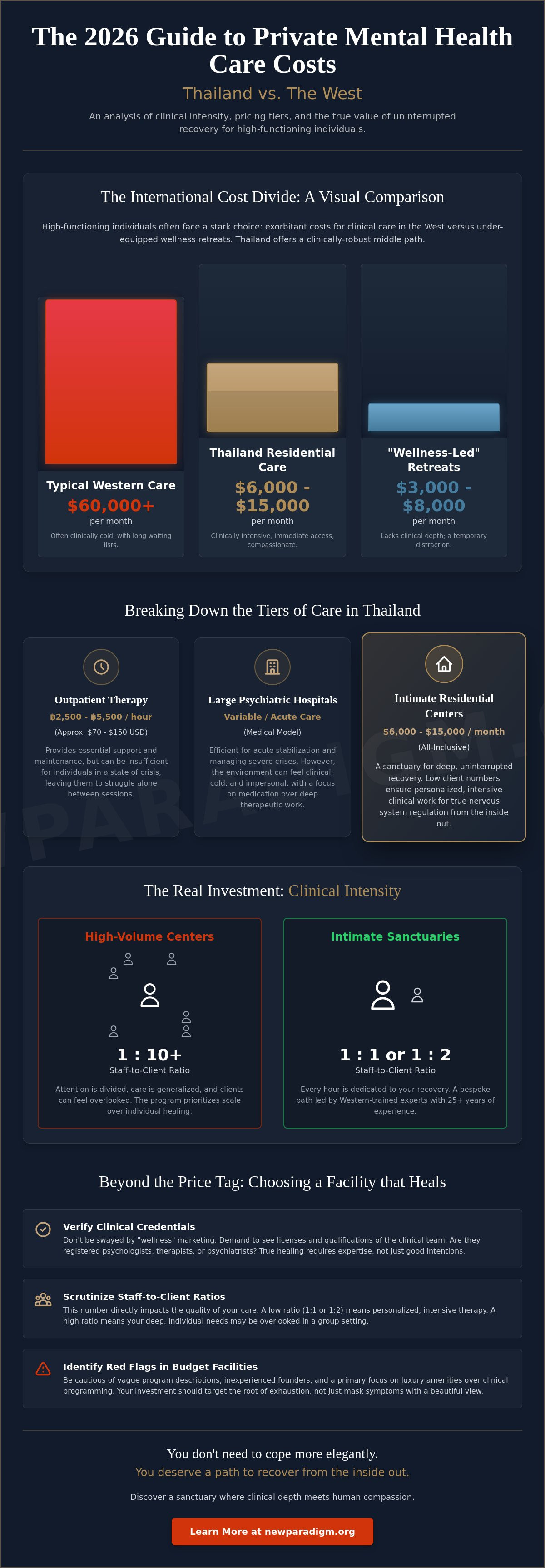
In 2026, the average hourly rate for private psychotherapy in Bangkok or Chiang Mai ranges from ฿2,500 to ฿5,500. While these sessions provide essential support, intensive recovery often requires a residential setting. These programs typically cost between $6,000 and $15,000 per month. This investment covers your housing, nutrition, and multiple hours of daily clinical work. It's a path designed for those who need to step away from the noise to begin nervous system regulation in a secluded environment.
Outpatient Therapy vs. Residential Treatment Costs
Weekly therapy is sufficient for maintenance, but it can become a financial leak if you are in a state of constant crisis. You pay for an hour, but the remaining 167 hours of the week are spent struggling alone. Residential care at a facility like New Paradigm offers a different math. The cost per clinical hour is often lower in a residential setting because intensive emotional processing is built into the daily rhythm. It's not just a room; it's uninterrupted time to heal from the inside out.
The Range of Private Facilities: From Boutique Clinics to Medical Hospitals
Large psychiatric hospitals in Bangkok provide a medical model that is efficient but can feel clinical and cold. These facilities handle acute stabilization well. Boutique residential centers offer a different experience. By limiting client numbers to a maximum of four or six, these sanctuaries provide a level of focus that a 50-bed hospital cannot match. You aren't a patient in a ward; you are an individual doing deep work. Luxury in this context isn't about gold faucets; it's about the luxury of being truly seen and heard by an experienced team.
The Hidden Drivers of Cost: Why Clinical Intensity Matters
When you look at the cost of private mental health care in Thailand, it's tempting to compare room sizes or infinity pools. However, the true driver of your investment is clinical intensity. This refers to the depth, frequency, and expertise of the therapeutic intervention you receive. High-functioning individuals who are privately exhausted need more than a relaxing environment; they require a rigorous clinical framework to address unresolved pain. A program led by clinical experts functions differently than one led by wellness practitioners, and that difference is reflected in the price.
Staff-to-Client Ratios and Personalized Care
The difference between a 1:10 ratio and a 1:1 ratio isn't just a number. It's the difference between being a face in a crowd and receiving a bespoke recovery path. In a 1:1 or 1:2 environment, every hour is dedicated to your nervous system regulation. Employing Western-trained, licensed psychologists in Thailand carries a premium. These practitioners often bring over 25 years of experience in evidence-based trauma recovery to the table. High-volume centers lower their cost of private mental health care in Thailand by sacrificing this individual attention, often leaving clients feeling overlooked. This is a critical distinction found in the WHO report on Thailand's mental health system, which highlights the complexities of staffing and service delivery in the region.
Specialized Modalities: The Cost of EMDR and Somatic Healing
Effective trauma recovery requires more than talk therapy. Modalities like Eye Movement Desensitization and Reprocessing (EMDR) and Somatic Experiencing are resource-heavy. They require practitioners with specialized certifications and the time to conduct intensive, multi-session weeks. These sessions don't just talk about the problem; they process the trauma stored in the body. Specialized clinical care justifies a higher price point than generic counseling because it targets the physiological roots of trauma rather than merely managing its surface-level symptoms.
The value of 24/7 support in a residential environment is often the most overlooked expense. It means having a clinical safety net at 3:00 AM when the weight of the past feels unbearable. This constant presence provides a sanctuary where you can finally stop holding everything together. If you feel like you're falling apart despite your outward success, reaching out for a private consultation can help clarify the level of intensity your recovery requires.
Thailand vs. The West: Evaluating the International Value Proposition
You may be high-functioning on paper, yet privately you feel like you're falling apart. When the nervous system is stuck in a state of perpetual high alert, the search for a way out often leads to a frustrating realization. In the West, the choice is usually between an overstretched public system and a prohibitively expensive private sector. The cost of private mental health care in Thailand offers a different path, focusing on depth, intimacy, and immediate intervention rather than institutional bureaucracy.
Comparing Costs: Thailand, USA, UK, and Australia
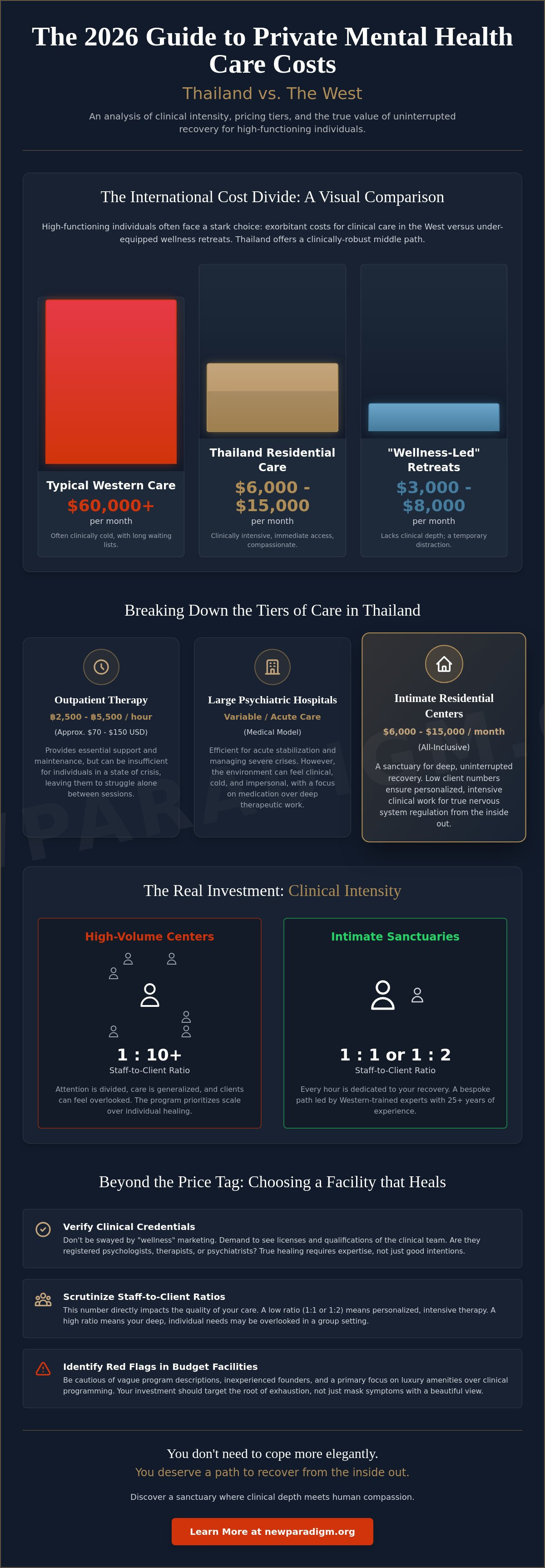
In 2026, the price of private residential care in the United States continues to climb, with premium facilities in states like California or Connecticut averaging between $30,000 and $50,000 per month. In the UK and Australia, while public options exist, wait times for specialized trauma or depression treatment frequently exceed 18 weeks. This delay carries a heavy hidden cost: the further erosion of your career, relationships, and health. Thailand provides a sanctuary where your investment goes directly into clinical hours rather than inflated real estate costs. Clients from the West often find that the currency exchange benefits allow for a level of personalized care, including a maximum of four clients per intake, that would be financially impossible in their home countries.
- USA: $30,000 to $55,000 per month for high-end residential care.
- UK/Australia: Significant waitlists for public care; private clinics average $20,000 to $35,000 per month.
- Thailand: Premium clinical care in a secluded environment at a fraction of Western prices.
Regional Variations: Why Chiang Mai Offers Superior Value to Bangkok
While Bangkok is a global medical hub, Chiang Mai has emerged as the premier location for deep emotional processing. The lower overheads in Northern Thailand mean that facilities can invest more heavily in their clinical teams and evidence-based protocols. It's not about providing more "amenities" like gold-plated lobbies; it's about providing more time with experienced clinicians. This is the "Chiang Mai Effect." The natural, mountainous landscape serves as a clinical tool, reducing the need for expensive, artificial distractions common in urban centers. For international travelers, Chiang Mai is accessible via direct flights from major Asian hubs, and the 2026 visa regulations remain supportive of those seeking long-term wellness stays.
If you're tired of just "coping" and want to start recovering from the inside out, we're here to help you find the way back. Reach out to our team for a private consultation
Beyond the Price Tag: How to Choose a Facility That Actually Heals
When you are high-functioning on paper but privately falling apart, the financial investment in your recovery is a significant decision. However, the true cost of private mental health care in Thailand isn't just the monthly invoice; it's the cost of a failed intervention. Choosing a facility based solely on a low price point often leads to a cycle of "rehab-cycling" where the underlying trauma remains untouched. You don't need a holiday; you need a clinical sanctuary that understands the gravity of your exhaustion.
Red Flags in 'Affordable' Mental Health Care
Low-cost centers often subsidize their rates by cutting corners in areas that are vital for deep recovery. You should be cautious of facilities that exhibit these specific warning signs:
- The 'Spa' Trap: Centers that focus heavily on infinity pools, excursions, and massage hours while offering fewer than 15 hours of direct clinical contact per week.
- Credential Obscurity: A lack of transparency regarding the names, specific licenses, and years of experience of the primary clinical team. If the website only shows "expert staff" without names, they likely rely on junior facilitators.
- Volume Over Value: Large group sizes of 10 to 20 people. Deep trauma work and nervous system regulation cannot happen in a crowd; it requires an intimate, safe environment where you aren't just another bed number.
The New Paradigm: A Sanctuary for Deep Recovery
We believe that healing from the inside out requires an environment of absolute focus. This is why we maintain an intentionally small client base, limited to a maximum of four individuals at any given time. This small-scale model ensures that every hour of your stay is high-intensity and tailored to your specific history of unresolved pain. When calculating the cost of private mental health care in Thailand, you must weigh the value of 25 years of clinical expertise against the generic protocols of larger, corporate-run institutions.
Your assessment should also include the transition back to your daily life. Effective treatment must include a robust aftercare plan in the initial cost. Without a structured bridge to help you integrate your new tools into your professional and personal life, the progress made in seclusion can quickly fade. We don't want you to cope more elegantly; we want you to recover fully. You can discover our private trauma treatment programs to see how this clinical depth makes the difference. To understand more about the structural requirements of this work, you can also learn more about residential trauma treatment and why it remains the gold standard for lasting change.
Moving Toward a Sustainable Recovery
Understanding the cost of private mental health care in Thailand is the first step in reclaiming a life that has perhaps become a performance of success while you're privately falling apart. You now recognize that clinical intensity and evidence-based protocols are what separate a temporary escape from a permanent shift in your nervous system. Thailand offers an international value proposition that combines world-class clinical standards with a level of personal attention that's rare in traditional, high-volume medical settings.
New Paradigm is built on this foundation of depth over scale. This isn't a crowded clinic or a noisy rehab; it's a secluded sanctuary where our founders have spent 25 years refining a recovery process for a maximum of 4 clients at any given time. We provide evidence-based EMDR and trauma protocols that focus on deep emotional processing rather than just "coping" more elegantly. It's time to stop managing your symptoms and start resolving the pain that keeps you exhausted.
Request a confidential cost breakdown for your recovery journey
You've carried this weight for long enough. There's a practical, clinical way through the dark, and we're ready to help you find it.
Frequently Asked Questions
Is private mental health care in Thailand as good as in the US or UK?
Private mental health care in Thailand often exceeds Western standards because it prioritizes individual nervous system regulation over high-volume patient turnover. While the US and UK healthcare systems are frequently overwhelmed; Thailand hosts 60 JCI-accredited medical facilities as of 2024. You aren't just a number in a crowded ward. Instead, you receive evidence-based clinical care combined with a level of personal attention that is rarely affordable in London or New York.
What is the average cost of a 4-week residential trauma program in Thailand?
The average cost of private mental health care in Thailand for a 4-week residential program typically ranges between $12,000 and $30,000. This price includes 24-hour clinical support, private accommodation, and intensive emotional processing. In contrast, a similar high-end facility in the United States often costs between $45,000 and $65,000 per month. This price gap allows for more one-on-one sessions with senior clinicians; especially in boutique facilities that limit intake to four clients.
Does international health insurance cover mental health treatment in Thailand?
Most international insurance providers, including Cigna, Bupa, and Allianz, provide coverage for residential mental health treatment in Thailand. Approximately 70% of premium international plans include provisions for inpatient psychiatric care or substance use recovery. You should request a Letter of Medical Necessity from your clinician to facilitate the claims process. It's common for facilities to provide detailed invoices that meet the specific coding requirements for global insurance reimbursement.
Are there hidden costs I should be aware of when traveling for treatment?
Beyond the program fee, you should budget for long-haul airfare, visa extensions, and specialized psychiatric medications. A 60-day tourist visa typically costs around $40, but frequent extensions can add up quickly. If your treatment requires specific imported medications, these can cost 20% more than local equivalents. We recommend keeping a $1,500 contingency fund to cover emergency medical needs or unexpected travel changes during your recovery journey.
How do I verify the clinical credentials of a Thai mental health facility?
You can verify a facility's legitimacy by checking its registration with the Thai Ministry of Public Health's Department of Health Service Support. Legitimate clinics must display their license number prominently on their website and physical premises. Ensure the lead clinicians hold degrees from recognized international institutions or are registered with the Medical Council of Thailand. This verification process ensures your care is anchored in clinical expertise rather than just wellness marketing.
Why is Chiang Mai specifically recommended for mental health recovery?
Chiang Mai is recommended because its unique geography and 300 Buddhist temples foster a natural environment for monastic mindfulness and nervous system regulation. The city offers a slower pace of life that is essential for deep work. Unlike the chaotic energy of Bangkok, Chiang Mai provides a secluded sanctuary where you can focus on trauma, PTSD, and depression. It's a place where you can stop being high-functioning and start recovering from the inside out.

Article by
Dirk J. Lambert (MSc. - CCTS-I)
Dirk J. Lambert is a Licensed Psychotherapist, Mentor, Author, and Certified Trauma & EMDR Specialist with more than 25 years of experience helping people recover from trauma, depression, burnout, emotional abuse, and long-standing unresolved pain. His work is known for being direct, compassionate, and highly practical.
A twice-ordained Buddhist monk, Dirk bridges clinical trauma care with mindfulness, discipline, self-observation, and deep emotional honesty. He does not hide behind jargon, labels, or unnecessary complexity. He listens carefully, speaks plainly, and works toward meaningful change.
New Paradigm reflects the philosophy he has built over decades: intentionally small, deeply personal, private by design, and focused on what actually helps people recover from the inside out rather than simply cope more elegantly.