Why does your nervous system still feel like it's on fire even though you've "done the work" in talk therapy for years? You might be high-functioning on paper, yet you're privately falling apart from chronic exhaustion and a sense of being perpetually on guard. It's a common struggle. The number of people seeking mental health treatment in Thailand rose to 4.4 million in 2024, yet many find that standard outpatient sessions, which often cost around ฿2,500 in the local area, barely scratch the surface of deep-seated trauma.
You deserve more than just learning to cope more elegantly with your pain. This article explores how a specialized, small-scale clinical approach to trauma treatment Chiang Mai offers the profound nervous system regulation necessary for a functional life. We'll examine why a secluded sanctuary, limited to just four clients, provides the uninterrupted focus needed to move beyond the intellect and into true clinical recovery. You'll discover a path toward internal peace that finally bridges the gap between understanding your past and actually feeling safe in your present.
Key Takeaways
- Understand why intellectual insight often fails to soothe a dysregulated amygdala, leaving you stuck in a cycle of chronic hyper-vigilance.
- Explore how clinical tools like EMDR allow the nervous system to finally "digest" unresolved pain instead of just teaching you to cope with it.
- Discover why a secluded, small-scale sanctuary for trauma treatment Chiang Mai provides the safety and focus required for deep clinical recovery.
- Learn why the transition back to daily life is a critical phase and how structured integration ensures your internal peace remains functional and lasting.
Beyond "Coping More Elegantly": Why Traditional Therapy Often Fails Complex Trauma
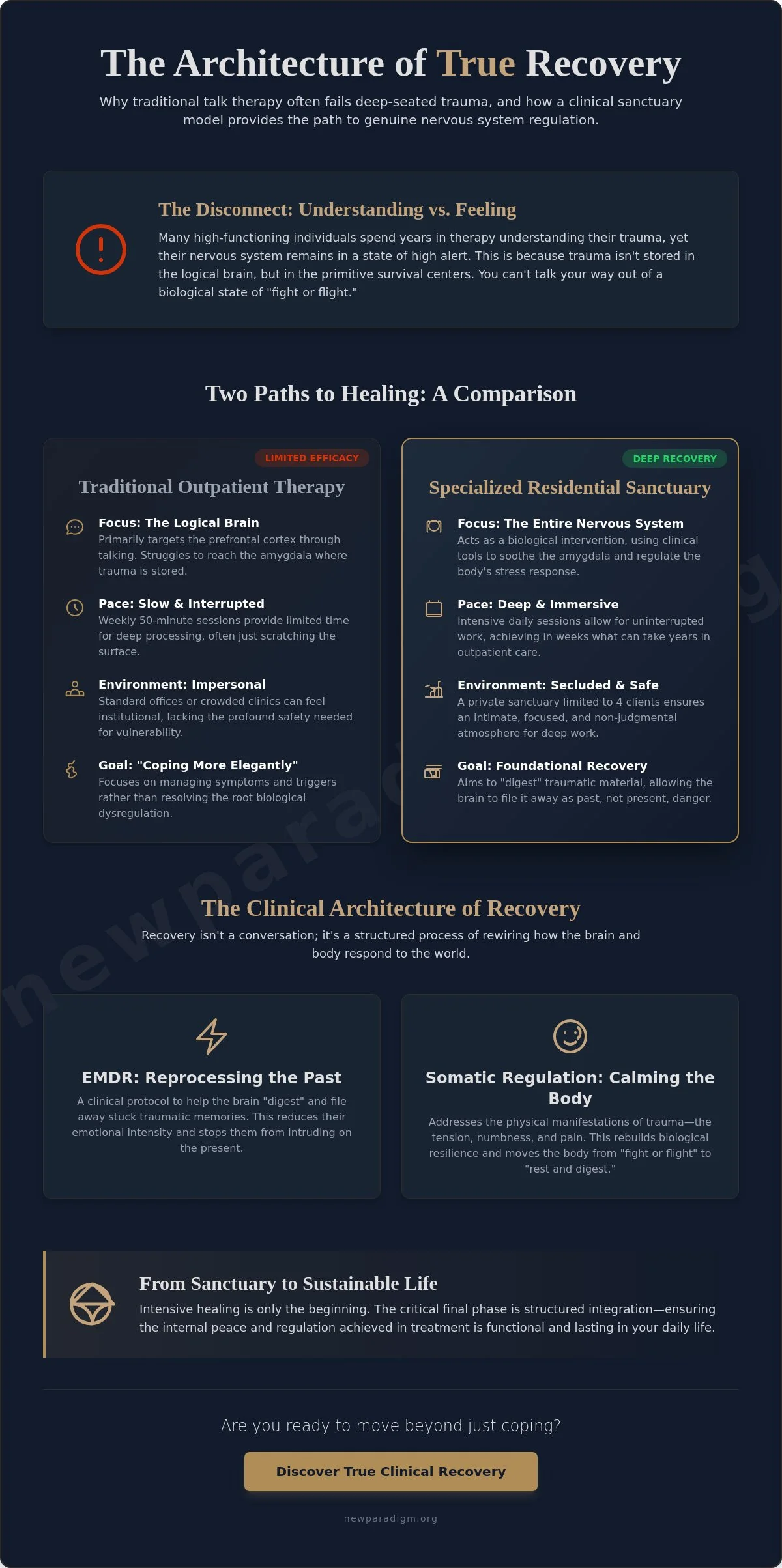
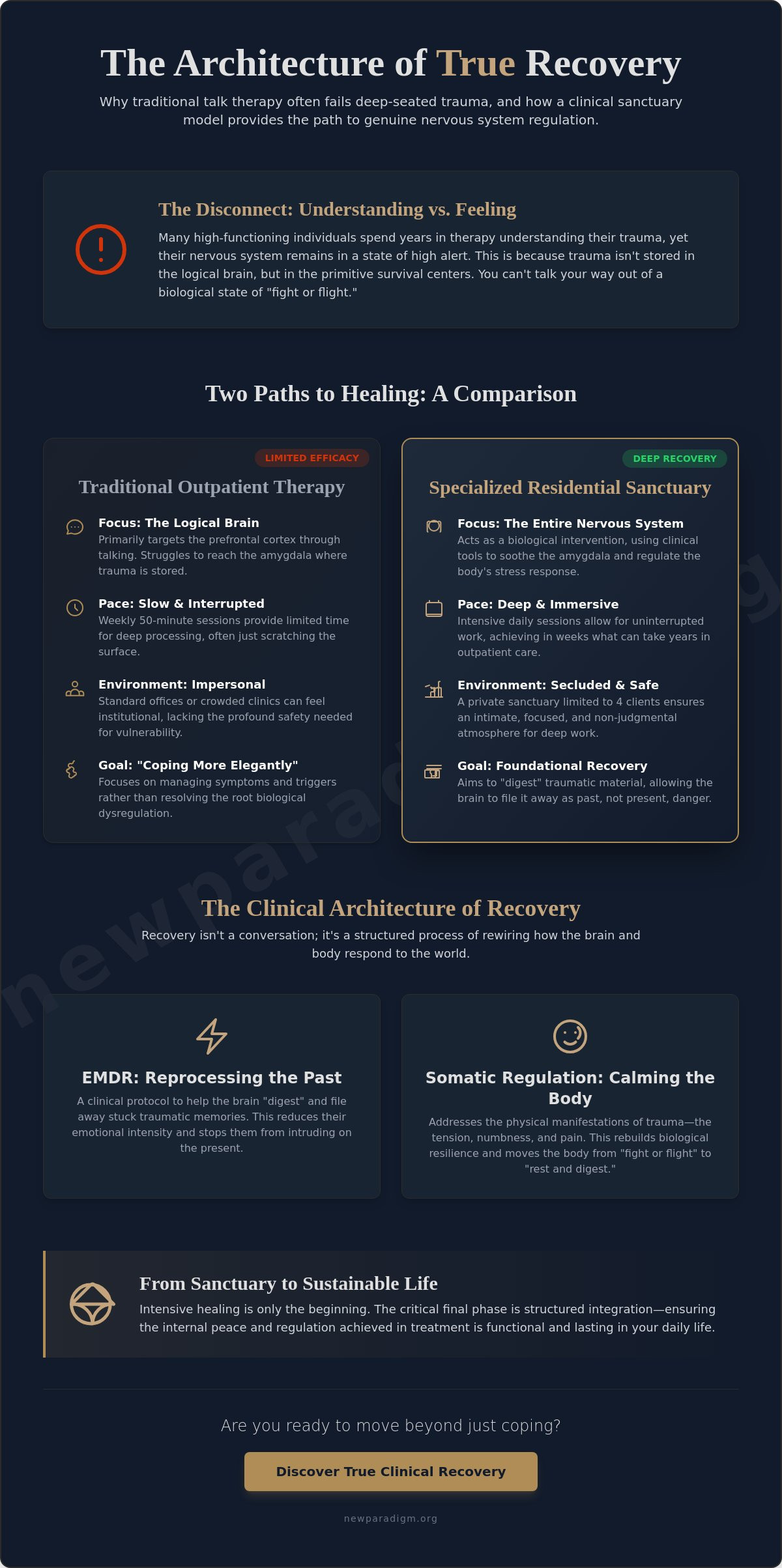
Many individuals arrive in Thailand having already spent years in weekly therapy sessions. They're often high-achieving executives, clinicians, or creatives who appear remarkably successful on paper, yet they're privately falling apart. This paradox exists because traditional talk therapy primarily targets the prefrontal cortex, the logical part of the brain. However, trauma doesn't live in your logic. It lives in the amygdala and the autonomic nervous system. You simply cannot intellectually reason with a part of the brain that's stuck in a survival loop.
When dealing with Complex Post-Traumatic Stress Disorder, the goal isn't just to talk about what happened. It's to fundamentally change how your body responds to the world today. Effective residential trauma treatment acts as a biological intervention rather than just a psychological one. It moves beyond the idea of "coping more elegantly" with your triggers and focuses on recovering from the inside out. This is why specialized trauma treatment Chiang Mai has become a global destination for those who need a deeper level of clinical care that their local outpatient therapist cannot provide.
The "Exhausted Professional" Syndrome
High-achievers often use professional drive as a shield to outrun unresolved pain. They push harder, work longer, and achieve more until their internal system finally crashes. This isn't just standard burnout. It's a physiological collapse where the body can no longer sustain the "fight or flight" energy required to perform. A week at a wellness spa or a luxury resort is insufficient for this level of clinical-grade nervous system exhaustion. You don't need a vacation; you need a recalibration of your biological stress response.
Clinical Sanctuary vs. Institutional Hospital
True healing requires a profound sense of safety that institutional hospitals often lack. A "rehab factory" with dozens of patients can feel overwhelming, noisy, and impersonal. It's difficult to do deep work when you feel like just another number in a crowded clinic. Instead, a grounded, private environment creates the stability needed for emotional processing. By limiting intake to a maximum of four clients, the experience remains intimate and focused. It's a clinical sanctuary designed for those who value depth, privacy, and uninterrupted care over the scale of a traditional medical facility.
The Clinical Architecture of Recovery: EMDR and Somatic Regulation
Recovery is not a linear conversation. It is a precise architectural process of restructuring how the brain stores and reacts to past events. While traditional therapy might revisit a memory for fifty minutes once a week, an intensive approach to trauma treatment Chiang Mai allows for the deep, uninterrupted processing required to move the needle on chronic symptoms. This structure acknowledges that for the high-functioning professional, time is both a luxury and a necessity for deep clinical work.
The goal is to move beyond the intellectual understanding of your past. We focus on the "digestion" of traumatic material, allowing the brain to file away memories that currently feel like they're happening in the present moment. By integrating evidence-based clinical protocols with the quiet discipline of monastic mindfulness, we create a path for the nervous system to finally find its way back to a state of equilibrium.
The Science of EMDR in Residential Care
EMDR is a specialized clinical protocol designed to reprocess stuck emotional data that the brain could not resolve at the time of the original trauma. For an authoritative overview of EMDR, the U.S. Department of Veterans Affairs provides extensive data on its effectiveness in reducing the vividness and distress of traumatic memories. In our secluded environment, we work carefully within your "window of tolerance." This ensures you remain grounded and safe while processing difficult material, avoiding the retraumatization that can occur in less focused settings. Intensive daily sessions accelerate this progress, often achieving in weeks what would take years in a standard outpatient office.
Nervous System Regulation as a Foundation
True healing requires moving the body from a state of hyper-vigilance into a functional state of "rest and digest." We utilize somatic experiencing to address the unresolved pain that lives in your physical body, targeting the tension and numbness that talk therapy cannot reach. This process builds biological resilience, teaching your system how to handle stress without falling back into old patterns of exhaustion or collapse. If you feel ready to move beyond talking and begin the work of biological recovery, speak with our clinical team to explore your options for deep work.
A Sanctuary for Deep Work: The Residential Experience in Chiang Mai
Recovery isn't just about what happens in the therapist's chair; it's about the air you breathe and the silence you inhabit. For those seeking trauma treatment Chiang Mai, the geographic choice is as clinical as the therapeutic modality itself. While a city center clinic still carries the hum of urban anxiety, a secluded sanctuary in the Mae Rim valley provides the distance needed to look inward without distraction. This environment serves as a physical container for the intense psychological work of reprocessing a life's worth of unresolved pain.
The goal is to create a space that feels like a home rather than a hospital. In an institutional setting, the nervous system often remains on high alert, scanning for clinical threats or the judgment of a crowd. By maintaining a strict maximum of four clients, we ensure that the environment remains quiet, private, and entirely focused on your individual needs. This exclusivity isn't about luxury for its own sake; it's about removing every possible barrier to your safety and regulation.
Why Chiang Mai Heals
Northern Thailand offers a unique cultural backdrop of mindfulness and patience that naturally supports the therapeutic process. The transition from the high-pressure "noise" of Western professional life to the stillness of the mountains allows for a measurable drop in cortisol levels. This shift is essential because a brain flooded with stress hormones cannot effectively engage in deep emotional processing. The local culture's emphasis on presence and groundedness provides a supportive "field" that makes the difficult work of recovery feel possible rather than overwhelming.
What to Expect: The Daily Rhythm
A typical day is structured to balance intensive clinical work with restorative rest. Mornings are generally dedicated to deep processing, such as EMDR or targeted trauma therapy, when the mind is most alert. Afternoons shift toward integration and somatic regulation. We incorporate body-based practices backed by Somatic Experiencing research to help release the physical tension that trauma leaves behind. This rhythm ensures you don't leave a session feeling "raw" and then return immediately to a stressful environment. Instead, you have the time and support to settle back into a state of calm before the day ends. If you're ready to step out of the chaos and into a space designed for your recovery, reach out to our admissions team today.
From Intensive Healing to Sustainable Life: Aftercare and Integration
The sanctuary of Northern Thailand provides a vital container for deep work, but the true measure of clinical recovery is how it functions in the high-pressure environment of your daily life. It's easy to feel regulated in the mountains. It's much harder when you return to the professional demands and personal complexities that originally contributed to your exhaustion. This is why the transition phase is the most critical part of the process. The real work begins when you step back into your world with a newly regulated nervous system.
The aftercare program at New Paradigm Mental Health Retreat provides a structured bridge between the safety of the clinic and the reality of your career. We understand that international clients require a specific type of remote support that acknowledges their high-functioning professional roles. We don't just provide a list of suggestions; we offer a clinical partnership that ensures the nervous system regulation you cultivated during your trauma treatment Chiang Mai remains your new baseline. This continuity is essential for preventing the system from sliding back into old patterns of hyper-vigilance or numbness.
The Integration Process
We prepare you for the return by identifying the precise triggers that previously led to collapse. This involves creating a biological relapse prevention plan that prioritizes the health of your nervous system over the demands of your inbox. We focus on maintaining the mindfulness practices developed during residency, ensuring they don't become just another task on your to-do list. The goal is to integrate these tools into your lifestyle so they become the foundation of your functional stability, even when the environment around you is chaotic.
Sustainable Success: A New Paradigm
True recovery changes the trajectory of your professional career. High-achievers often fear that healing their trauma will mean losing their "edge." In reality, when your drive is no longer fueled by unresolved pain, you become more effective and discerning. You move from a state of frantic survival to a state of calm, quiet authority. This is a more sustainable form of success that includes mental well-being and emotional regulation as core components. If you're ready to move from privately falling apart to a life of functional peace, speak with our clinical team at New Paradigm Mental Health Retreat about your recovery journey.
Reclaiming Your Internal Peace
The path out of chronic exhaustion requires more than just another intellectual insight. It requires a fundamental shift in how your body processes stress and past pain. By moving beyond surface-level talk therapy and utilizing intensive EMDR and somatic integration, you can finally resolve the biological "stuckness" that holds you back. This is not about learning to manage your triggers more skillfully; it is about reaching a state where those triggers no longer govern your life.
At New Paradigm Mental Health Retreat, we provide a strictly private environment with a maximum of four clients to ensure the individual focus your recovery requires. Our clinical team, anchored by over 25 years of professional experience, specializes in the deep work required for lasting nervous system regulation. Choosing trauma treatment Chiang Mai offers you a secluded space to prioritize your recovery without the distractions of your everyday environment. Begin your journey to recovery at New Paradigm Mental Health Retreat and step into a life of functional peace. You've spent years taking care of everything else; it's time to finally take care of yourself.
Frequently Asked Questions
Is trauma treatment in Chiang Mai safe and clinically regulated?
Private mental health facilities in Thailand are strictly regulated under the Mental Health Act of 2008 and the 2019 amendment. Licensed clinics are overseen by the Department of Mental Health, which ensures that clinical standards are maintained across the country's private sector. This regulatory framework ensures that trauma treatment Chiang Mai is conducted by qualified professionals within a safe, professional, and ethical environment.
How long does the residential trauma program typically last?
A standard residential program generally lasts for 28 days. This four-week cycle is clinically recognized as the minimum time required to move the nervous system out of a chronic "fight or flight" state and into a receptive window for deep emotional processing. While some individuals with complex histories may choose to stay longer, this initial month provides the necessary foundation for stabilization and intensive EMDR work.
Do I need to be "sober" to attend a trauma treatment program at New Paradigm Mental Health Retreat?
Yes, clients must be medically stable and sober before they begin their work at New Paradigm Mental Health Retreat. We are not a primary detoxification hospital. Because our clinical interventions target the deep architecture of the brain, a sober baseline is required for the nervous system to effectively reprocess traumatic data without the interference of numbing substances.
What is the difference between a wellness retreat and a clinical trauma facility?
The distinction lies in the clinical objective and the expertise of the staff. A wellness retreat focuses on relaxation, leisure, and temporary stress relief. A clinical facility focuses on the resolution of psychological injury through evidence-based protocols like EMDR and somatic regulation. You aren't simply resting; you are engaging in a structured biological intervention designed to repair your stress response system from the inside out.
Will my insurance cover trauma treatment in Thailand?
Many international insurance providers do cover licensed residential mental health care, though it often operates on a "pay and claim" basis. We provide the comprehensive clinical documentation and official invoices required for you to seek reimbursement from your provider. It's advisable to confirm with your insurance company whether they cover out-of-network residential services before you arrive.
Can I continue to work remotely while in residential treatment?
We strongly recommend a full break from professional obligations to allow your nervous system to settle. Intensive trauma work is cognitively and emotionally demanding. If your attention is divided by a high-pressure inbox, your brain cannot fully drop into the state of safety required for deep recovery. While we allow for limited, scheduled communication if necessary, your primary focus must remain on your clinical restoration.
Article by
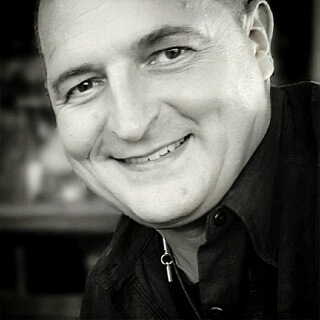
Dirk J. Lambert (MSc. - CCTS-I)
Dirk J. Lambert is a Licensed Psychotherapist, Mentor, Author, and Certified Trauma & EMDR Specialist with more than 25 years of experience helping people recover from trauma, depression, burnout, emotional abuse, and long-standing unresolved pain. His work is known for being direct, compassionate, and highly practical.
A twice-ordained Buddhist monk, Dirk bridges clinical trauma care with mindfulness, discipline, self-observation, and deep emotional honesty. He does not hide behind jargon, labels, or unnecessary complexity. He listens carefully, speaks plainly, and works toward meaningful change.
New Paradigm reflects the philosophy he has built over decades: intentionally small, deeply personal, private by design, and focused on what actually helps people recover from the inside out rather than simply cope more elegantly.