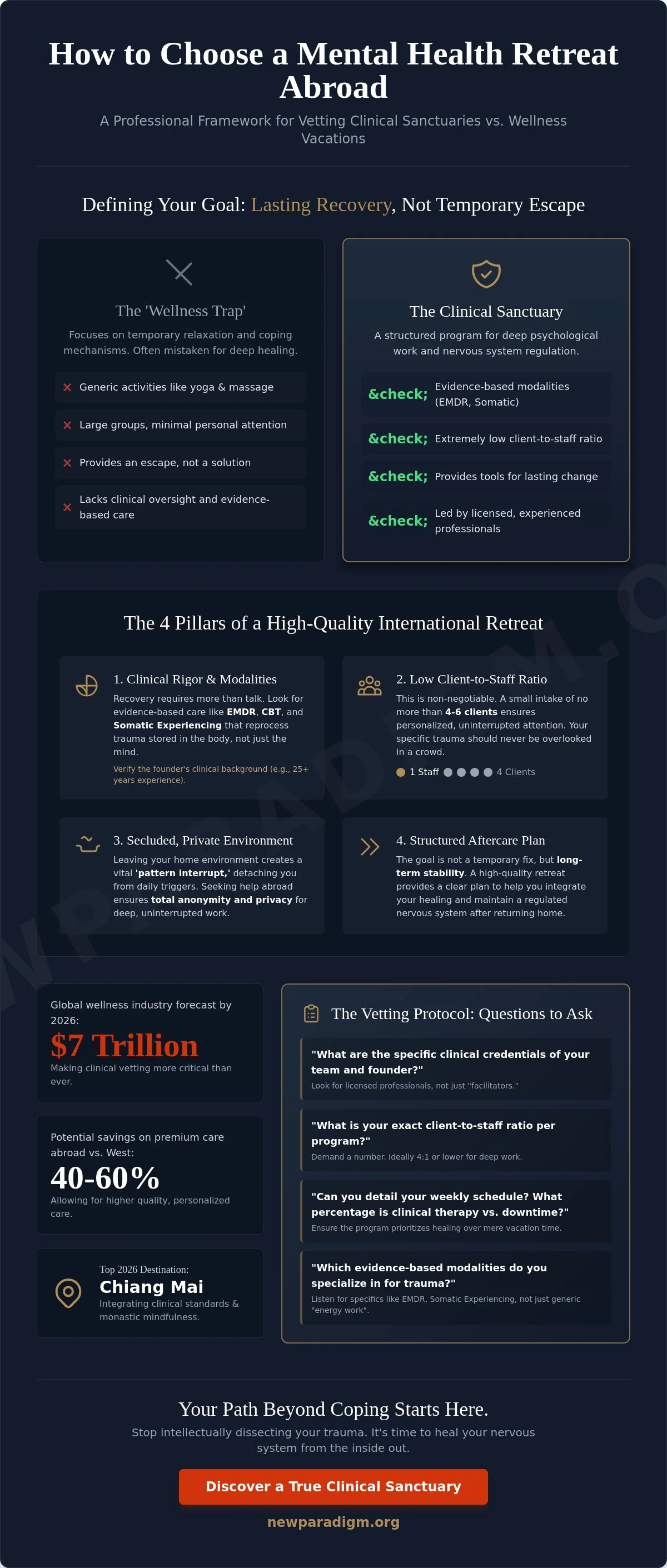
What if the reason you haven't healed isn't a lack of effort, but the fact that your brain knows the solution while your nervous system is still trapped in the past? You’ve likely spent years in traditional talk therapy, intellectually dissecting your trauma until you could teach a course on it. Yet, despite this high-functioning exterior, you remain privately exhausted; you're still falling apart when the doors are closed. It's a common frustration for those who understand their pain but cannot seem to release it. Understanding how to choose a mental health retreat abroad requires more than looking at beautiful landscapes or infinity pools. It requires a clinical eye to distinguish between a generic wellness spa and a true sanctuary for deep recovery.
You deserve a path that moves beyond simply coping more elegantly with your symptoms. This article provides a professional framework to help you identify international facilities that prioritize evidence-based care and nervous system regulation over marketing fluff. By 2026, the global wellness industry is expected to reach a value of 7 trillion dollars, which makes the vetting process more critical than ever to ensure your safety. We will examine the specific clinical standards, staffing ratios, and therapeutic modalities you must verify to find a private environment that offers long-term stability after you return home.
Key Takeaways
- Learn how to distinguish between a standard wellness holiday and a true clinical sanctuary designed for deep nervous system regulation and trauma recovery.
- Identify the essential clinical criteria for how to choose a mental health retreat abroad, focusing on evidence-based modalities like EMDR rather than generic wellness trends.
- Understand why a low client-to-staff ratio—ideally no more than four to six individuals—is non-negotiable for receiving the personalized, uninterrupted attention required for deep work.
- Discover the specific vetting protocol to verify a founder’s clinical background and evaluate whether a facility’s weekly schedule prioritizes healing over mere downtime.
- Explore why Chiang Mai has emerged as the premier 2026 destination for those seeking a unique integration of high-end clinical standards and ancient monastic mindfulness.
Defining the Goal: Wellness Vacation vs. Clinical Mental Health Retreat
You are likely high-functioning on paper. You lead teams, manage complex budgets, and maintain a facade of total control, yet you are privately falling apart. Understanding how to choose a mental health retreat abroad starts with a fundamental distinction. It isn't a holiday. A genuine clinical mental health retreat is a structured, residential program designed for deep psychological work, not a standard vacation. It offers evidence-based interventions like EMDR and trauma-focused therapy for those who are intellectually exhausted and stuck in a cycle of unresolved pain.
To better understand the core differences between various types of residential care, watch this helpful video:
The 'Wellness Trap' and Why It Fails for Trauma
The Wellness tourism market reached a valuation of $814.6 billion in 2022. High-functioning individuals often mistake temporary relaxation for true recovery. Yoga and massage feel good, but they don't resolve complex PTSD or deep-seated burnout. We focus on recovering from the inside out rather than just teaching you how to cope more elegantly. A spa provides an escape; a sanctuary like New Paradigm provides the tools for lasting nervous system regulation.
Why Seek Mental Health Support Abroad?
Leaving your home environment creates a vital 'pattern interrupt.' It detaches you from the triggers of your daily exhaustion. Traveling abroad ensures total anonymity and privacy in a foreign jurisdiction. Additionally, premium clinical care in 2023 international hubs often costs 40% to 60% less than private Western clinics. This allows for a higher staff-to-client ratio and uninterrupted emotional processing in a secluded setting. When you are deciding how to choose a mental health retreat abroad, consider these clinical markers:
- Clinical Supervision: Programs must be led by licensed professionals, not just "facilitators."
- Small Intake: A maximum of four clients ensures your specific trauma is never overlooked.
- Evidence-Based Care: Look for modalities like EMDR, CBT, and somatic experiencing rather than just "energy work."
The goal isn't to return to your life with a tan. It's to return with a regulated nervous system and a clear path out of the darkness. This requires a clinical sanctuary that understands the gravity of your suffering and provides a practical, grounded way through it.
To support your physical well-being during your travels, you can visit Cuisine Unplugged in Bangkok to enjoy a menu dedicated to fresh, organic ingredients that complement a holistic recovery process.
The 4 Pillars of a High-Quality International Retreat
Selecting a facility for deep emotional work requires a move beyond aesthetic appeal. When you are deciding how to choose a mental health retreat abroad, you must look for a clinical foundation that supports a nervous system in crisis. A high-quality program is defined by its evidence-based modalities, a restricted client-to-staff ratio, a secluded environment, and a structured aftercare plan. These pillars ensure that you aren't just coping more elegantly, but actually recovering from the inside out.
Clinical Rigor: EMDR and Beyond
True recovery demands more than just talking. It requires a sophisticated approach to trauma, PTSD, and depression. You should prioritize facilities that offer EMDR therapy sessions to reprocess traumatic memories that keep you stuck in a state of high alert. While talk therapy has its place, it often fails to reach the unresolved pain stored in the body. Somatic healing addresses this by regulating the nervous system directly. Verify that the clinical team is led by experts with decades of experience; for instance, the New Paradigm model is anchored by a founder with over 25 years in the field. This level of expertise is critical when you are following CDC guidelines on medical tourism to ensure your international care meets rigorous safety standards.
Radical Privacy and the Boutique Model
Large-group retreats often fail high-functioning individuals because they lack the safety required for true vulnerability. When groups exceed six people, the environment can trigger social anxiety and dilute the focus of the clinical team. An intentionally small facility, serving a maximum of four clients at a time, is the gold standard for personalized care. This boutique model provides several benefits:
- Uninterrupted Focus: Your recovery is the sole priority, not a secondary concern in a crowded schedule.
- Radical Privacy: High-profile individuals can do their work without the fear of being recognized or judged.
- Intimate Safety: A small group fosters a sense of sanctuary where you can finally admit you are privately exhausted.
The environment also plays a functional role in the healing process. A secluded, nature-based setting in a location like Chiang Mai provides the silence necessary for mindfulness, discipline, and self-observation. This isolation isn't about hiding; it's about creating a space where the noise of your daily life can finally fade. Finally, remember that the retreat should start, not end, your journey. A robust aftercare infrastructure is essential to bridge the gap between the sanctuary and your reality. If you feel ready to begin this transition, you can reach out to our clinical team to discuss your specific needs.
The Vetting Protocol: Questions to Ask Before Booking
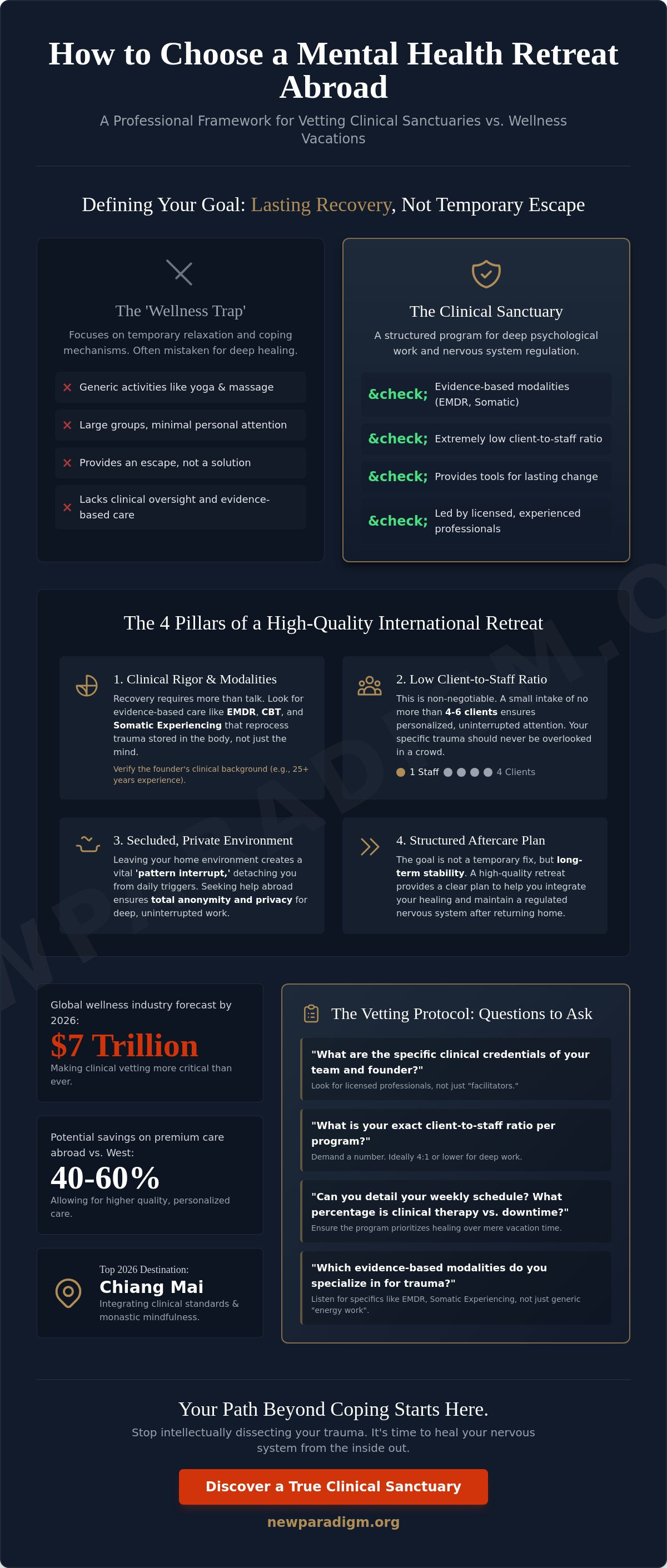
Choosing a path toward healing is a heavy decision, especially when you are privately exhausted and falling apart despite your outward success. When learning how to choose a mental health retreat abroad, you must look past the aesthetic of infinity pools and tropical sunsets. A true sanctuary is defined by its clinical depth, not its decor. Start by scrutinizing the founder's history. You aren't looking for a life coach or a wellness influencer with a large following; you are looking for a clinician with decades of experience in nervous system regulation and trauma recovery. A founder with a 25-year clinical background provides a level of safety that an "inspired" amateur cannot replicate.
Ask for a granular weekly schedule. If the itinerary is packed with back-to-back workshops and group excursions, it likely lacks the space required for deep emotional processing. A 2018 systematic review on the health impact of residential retreats highlights that while these interventions offer significant benefits, the quality of supervision and the specific therapeutic model are paramount. Verify if the facility is a "catch-all" center or if they specialize in complex trauma and burnout. At New Paradigm, we limit our intake to a maximum of four clients to ensure that every hour of your stay is intentional and uninterrupted. This small scale is a deliberate choice to prioritize depth over volume.
Verifying Professional Credentials
Confirm that therapists hold active, verifiable licenses in their home countries, such as the UK, USA, or Australia. A major red flag is any facility that remains vague about their team's specific qualifications or clinical registrations. Their communication should reflect a Compassionate Realist tone. It should feel grounded and honest, acknowledging the difficulty of the work ahead rather than promising a quick fix through toxic positivity. If they avoid discussing the specific therapeutic modalities they use, they are likely not equipped to handle unresolved pain.
Logistics and Safety in International Settings
In locations like Thailand, the distance from your home requires a rigorous safety protocol. Inquire about their medical backup and how they handle psychiatric emergencies.
If you are ready to move beyond merely coping and want to begin the real work of recovery, reach out to our clinical team for a private consultation.
Why Chiang Mai is the 2026 Destination for Deep Recovery
Chiang Mai has transitioned from a simple wellness hub into a global epicenter for clinical excellence. By 2026, the city is recognized for its unique ability to blend high-end clinical standards with ancient monastic mindfulness traditions. This isn't about luxury for the sake of aesthetics. It's about creating a physiological environment where the nervous system can finally downregulate. When you're researching how to choose a mental health retreat abroad, the external environment is a vital component of the clinical outcome.
The city's "Spiritual Calm" serves as a biological facilitator for healing. For those who are privately exhausted, the logistical ease of Southeast Asia combined with world-class care makes it a pragmatic choice. You aren't entering a sterile hospital; you're entering a sanctuary designed for deep work. This atmosphere is often supported by the broader heritage of Thailand, where a visit to a historic beachfront setting like Baan Dum Oceanfront Seafood can offer a grounding connection to the natural world. This boutique clinical model prioritizes depth over scale, ensuring that every therapeutic hour is focused entirely on your individual recovery, providing the quiet authority needed to lead you out of the darkness.
The New Paradigm: Clinical Trauma Care Meets Monastic Mindfulness
The New Paradigm approach integrates 25 years of clinical expertise with a philosophy grounded in self-observation and discipline. It moves away from the traditional medical model that often leaves patients feeling like a diagnosis rather than a human being. Instead, it offers a definitive residential trauma treatment plan designed for the specific stressors of 2026. This isn't about learning to cope more elegantly with your pain. It's about resolving the underlying trauma that keeps you in a state of high-alert. The private, supportive environment is essential for individuals who feel they're falling apart behind closed doors. You'll find the space to do the heavy lifting of emotional processing without the noise of a large facility.
Aftercare: Ensuring the Healing Sticks
True recovery requires a bridge between the clinical sanctuary and the reality of your home country. A structured aftercare program is the most important factor in preventing relapse once the initial retreat ends. Remote support ensures that the insights gained in Thailand aren't lost in the transition back to work and family life. When you consider how to choose a mental health retreat abroad, look for programs that offer this continuity of care. You must be willing to commit to the process of recovering from the inside out. It's a somber, honest journey, but it's the only one that leads back to a functional, peaceful life.
Your Path Toward Lasting Recovery
Understanding how to choose a mental health retreat abroad is the first step toward reclaiming a life that feels authentic. You've learned to distinguish between a simple wellness vacation and a clinical environment that prioritizes nervous system regulation. True recovery isn't about coping more elegantly. It's about resolving the pain that keeps you privately exhausted while you appear successful to the outside world. At New Paradigm, our founders bring over 25 years of clinical expertise to every interaction. We intentionally limit our intake to just 4 clients at a time to ensure your privacy is absolute and your care is uninterrupted. Our specialized approach uses evidence-based protocols like EMDR to address deep-seated trauma rather than just masking symptoms. You don't have to navigate this darkness alone. We've seen the depths of suffering and we know the practical path through it. The sanctuary you need is ready for you in Chiang Mai for your 2026 recovery journey. It's time to move from surviving to truly living again.
Apply for a Private Consultation at New Paradigm
Frequently Asked Questions
Is a mental health retreat abroad safe for someone with severe trauma?
A retreat abroad is safe for severe trauma only if it offers 24 hour clinical supervision and a minimum of 15 hours of individual therapy per week. You're likely exhausted from managing triggers alone. Ensure the facility utilizes evidence based protocols like the 3 Phase Model of Trauma Treatment. This ensures you aren't retraumatized by deep work before your nervous system is regulated and stabilized.
How do I know if a retreat in Thailand meets international clinical standards?
Verify that the facility holds JCI accreditation, which currently certifies over 60 healthcare organizations in Thailand. When researching how to choose a mental health retreat abroad, check that the clinical lead holds a Doctorate or Master’s degree from a globally recognized institution. Don't settle for wellness coaches when you require psychological intervention. A legitimate sanctuary will provide transparent data on their clinical staff’s credentials upon request.
What is the difference between a rehab and a mental health sanctuary?
Rehabs are designed for acute addiction and often house 20 to 50 patients in a clinical, group focused setting. A mental health sanctuary is not a hospital or a crowded clinic. It's a private environment for deep work, typically limited to 4 clients at a time. These sanctuaries focus on nervous system regulation and the unresolved pain that makes you feel like you're falling apart despite your outward success.
Can I continue my current therapy while attending a retreat abroad?
You usually can't continue external sessions during the intensive phase because it interrupts the immersion required for deep emotional processing. Most clinical programs mandate a 21 day period of uninterrupted focus with their internal team. However, a high quality retreat will facilitate a formal clinical handoff to your primary therapist during the final 48 hours of your stay. This ensures your transition home is seamless and supported.
What should I look for in a retreat's aftercare program?
A robust aftercare program must include at least 90 days of scheduled integration sessions to prevent a relapse into old survival patterns. Research indicates that therapeutic gains can diminish by 40% within six months without structured follow up. Ensure your plan includes specific milestones for nervous system regulation. It should also include direct communication between the retreat staff and your local medical team to maintain your progress.
Is EMDR therapy available at most international mental health retreats?
EMDR is not a standard offering; it's available at approximately 20% of high end clinical facilities that employ certified practitioners. Understanding how to choose a mental health retreat abroad involves asking if the therapist is specifically trained by an accredited body like EMDRIA. This specialized eye movement therapy is essential for processing traumatic memories that you can't simply talk your way through or intellectually understand.
Article by
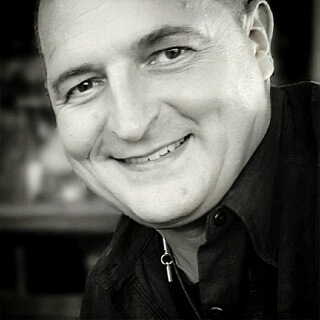
Dirk J. Lambert (MSc. - CCTS-I)
Dirk J. Lambert is a Licensed Psychotherapist, Mentor, Author, and Certified Trauma & EMDR Specialist with more than 25 years of experience helping people recover from trauma, depression, burnout, emotional abuse, and long-standing unresolved pain. His work is known for being direct, compassionate, and highly practical.
A twice-ordained Buddhist monk, Dirk bridges clinical trauma care with mindfulness, discipline, self-observation, and deep emotional honesty. He does not hide behind jargon, labels, or unnecessary complexity. He listens carefully, speaks plainly, and works toward meaningful change.
New Paradigm reflects the philosophy he has built over decades: intentionally small, deeply personal, private by design, and focused on what actually helps people recover from the inside out rather than simply cope more elegantly.