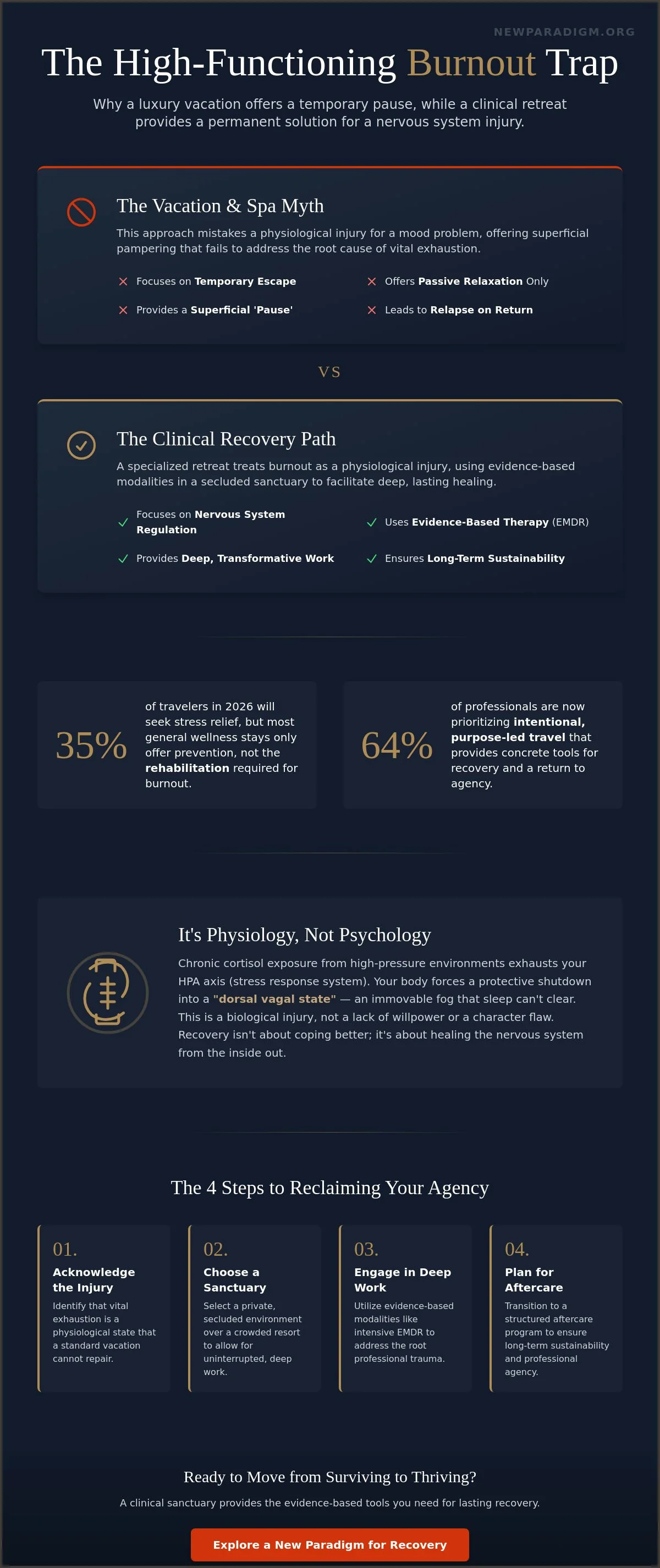
You've likely spent the last few months telling yourself that a week on a beach or a weekend at a luxury spa will finally fix the exhaustion that sleep won't touch. But for the 35% of travelers in 2026 seeking relief from chronic stress, a simple vacation often serves as little more than a temporary pause on a downward spiral. If you're high-functioning on paper but privately falling apart, you aren't suffering from a lack of willpower; you're living with a physiological injury to your nervous system. Choosing a burnout recovery retreat requires more than a search for a beautiful view. It requires a clinical sanctuary that understands the difference between temporary relaxation and deep, evidence-based recovery.
We understand the specific weight of feeling like a fraud while maintaining outward success. It's a heavy, isolating burden that demands more than a massage or a yoga class. This guide will help you distinguish between general leisure stays and the specialized clinical intervention necessary to reclaim your professional spark. You'll learn how to identify programs that utilize tools like EMDR and nervous system regulation to facilitate true healing from the inside out. We'll explore why 64% of professionals are now prioritizing intentional, purpose-led travel and how you can find a private, secluded environment that offers the concrete tools needed for long-term sustainability and a return to your former level of agency.
Key Takeaways
- Identify why the "High-Functioning Trap" creates a state of vital exhaustion that simple rest or a standard vacation cannot repair.
- Distinguish between the superficial pampering of a luxury spa and the clinical rehabilitation required for true nervous system recovery.
- Discover how evidence-based modalities like intensive EMDR therapy address the deep professional trauma underlying your burnout.
- Learn why a specialized burnout recovery retreat in a secluded sanctuary provides the uninterrupted space necessary for deep, transformative work.
- Understand how transitioning to a structured aftercare program ensures you maintain your agency and professional sustainability after returning home.
Understanding Burnout: Why a Vacation is Not a Burnout Recovery Retreat
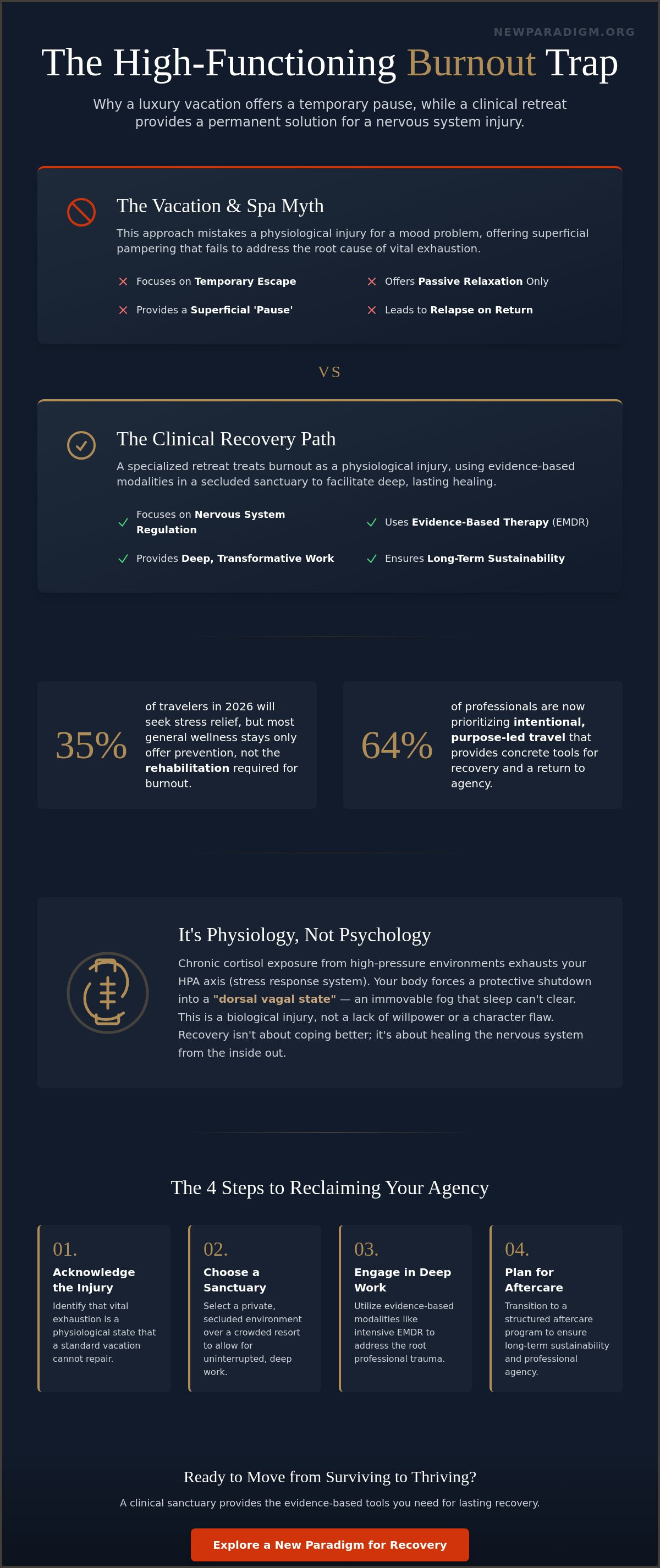
Many professionals believe a week on a beach will reset their drive and clear the mental fog. It won't. If you've reached a point of vital exhaustion, a vacation is just a temporary pause on a deeper collapse. Understanding occupational burnout means recognizing that it isn't a mood; it's a physiological injury. Unlike a standard holiday, a dedicated burnout recovery retreat focuses on the biological reality of your state rather than just providing a change of scenery. A vacation is an escape from your life, while a clinical sanctuary is a return to yourself.
We often see clients who are high-functioning on paper but privately falling apart. You might still be hitting your KPIs and leading meetings, but the internal cost is unsustainable. This "High-Functioning Trap" is dangerous because your external success masks the internal crash. It creates a sense of being a fraud, which only adds to the emotional burden. We approach this reality with compassionate realism. We don't offer flowery marketing fluff or toxic positivity. We acknowledge the gravity of your suffering and provide a structured, evidence-based path back to the light.
The Physiology of Professional Collapse
Your body isn't failing you; it's trying to protect you. Years of chronic cortisol exposure have likely exhausted your HPA axis, the system that manages your stress response. When the "fight or flight" response stays active for too long, the nervous system eventually forces a shutdown to prevent further damage. This is the dorsal vagal state. It feels like a heavy, immovable fog that sleep cannot clear. Burnout is a physiological injury to the nervous system rather than a mental weakness or a lack of character.
Why "Coping More Elegantly" is the Wrong Goal
Generic advice often suggests better time management or "coping more elegantly" with the pressure. This approach is flawed. If you return to the same high-pressure environment without a fundamental internal shift, you'll relapse within weeks. Recovery is not about learning to endure more pain. It's an inside-out transformation that requires uninterrupted space and professional guidance. At New Paradigm, we focus on nervous system regulation and emotional processing. We help you move beyond external management so you can reclaim your agency and professional sustainability.
The Wellness Spa Myth: Why Luxury Alone Fails to Heal
You've likely checked into a five-star resort hoping the thread count and the infinity pool would finally quiet the noise in your head. Instead, you found yourself sitting at an expensive dinner feeling more hollow than when you arrived. This is the central paradox for the high-performer in crisis. Pampering is not a cure for a nervous system that has forgotten how to feel safe. While 35% of travelers in 2026 are booking retreats specifically for stress relief, most will find that a general wellness stay is merely a preventative measure. If you are already in the depths of vital exhaustion, you don't need prevention; you need rehabilitation.
Luxury alone is often frustrating for someone in a deep burnout crisis. The social pressure to "enjoy yourself" at a crowded resort can feel like another performance. Knowing how to spot job burnout is the first step toward admitting that a massage won't fix a fractured identity. A true burnout recovery retreat is not defined by its amenities, but by its clinical depth and its ability to provide a trigger-free environment. It is the difference between a hotel that serves your needs and a sanctuary that facilitates your healing.
The Limitations of General Leisure
Passive relaxation doesn't reprocess the root causes of workplace trauma. Lying by a pool allows your mind to wander back to the very stressors you're trying to escape. Generic wellness settings often lean on toxic positivity, encouraging you to "just breathe" when your physiology is stuck in a state of collapse. High-performers require a peer group of only three or four people. Large resorts cannot offer the uninterrupted, private focus necessary for deep work. If you're ready to move beyond the spa myth, you can reach out to our clinical team for a grounded, honest conversation about your recovery.
Clinical Evidence vs. Spa Trends
There's a significant difference between a "digital detox" and actual nervous system regulation. One is a temporary break from screens; the other is an evidence-based process of retraining your body to exit the "fight or flight" state. When choosing a facility, look for these non-negotiables:
- Clinical Oversight: Does the program include licensed therapists or just "wellness coaches"?
- Intensive Modalities: Are they using proven tools like EMDR or just general meditation?
- Small Scale: Is the environment private and secluded, or are you one of fifty guests?
- Duration: Does the program offer enough time for biological resets, such as the 7-night intensive models common in 2026?
A medical facility focuses on your capacity to function without the weight of unresolved pain. A wellness hotel focuses on your temporary comfort. True recovery requires the former.
The Clinical Path: EMDR and Nervous System Regulation
Recovery from a deep-seated professional collapse requires more than conversation; it requires a direct intervention in the way your brain processes stress. While 37% of retreat attendees in 2026 are seeking mental health support, many are met with spiritual abstractions rather than clinical science. A professional burnout recovery retreat bridges this gap by utilizing Eye Movement Desensitization and Reprocessing (EMDR). This modality isn't just for acute trauma. It's a powerful tool for reprocessing the "stored" professional stress that keeps your body in a constant state of high alert. It moves the experience of your career from a place of active pain to a place of historical fact.
Standard outpatient care often fails because one hour of therapy per week cannot compete with forty hours of professional pressure. Intensive residential treatment provides multiple hours of therapeutic work daily, allowing for deep emotional processing that is impossible in a traditional setting. This is why we created our clinical guide on burnout recovery to help you understand the necessity of this depth. By combining clinical tools with somatic experiencing, we address the physical sensations of anxiety and exhaustion. We move beyond intellectual understanding to provide true biological relief for your nervous system.
Reprocessing the Professional Identity
When your self-worth is tied to your productivity, every setback feels like a threat to your existence. EMDR helps untangle this knot, allowing you to separate who you are from what you do. We often address "Moral Injury," which occurs when your professional environment forces you to act against your core values. This isn't just stress; it's a wound to your identity. Uninterrupted psychological work in a secluded sanctuary provides the safety needed to face these wounds without the distraction of your daily obligations or the noise of a crowded resort.
Monastic Mindfulness Meets Modern Science
Our approach blends the quiet discipline of Buddhist-influenced mindfulness with the latest findings in neuroscience. We intentionally limit our occupancy to a maximum of four clients. This small scale ensures that our clinical team can provide the uninterrupted focus your recovery demands. Through the mechanism of neuroplasticity, the brain can unlearn the habitual burnout response and build new, more resilient neural pathways for processing stress. If you're ready to stop coping and start recovering from the inside out, you can book a private consultation with our founder today.
Planning Your Recovery: The Chiang Mai Sanctuary
Chiang Mai serves as more than a beautiful backdrop; it acts as a "geographical cure" by physically removing you from the environments that triggered your collapse. Unlike the fast-paced hubs of Western life, this region offers a cultural rhythm that values stillness and presence. When you choose a burnout recovery retreat in this setting, you're choosing a space where the external noise finally matches the silence you're trying to cultivate internally. It's an environment where you can stop performing and start being. This distance is essential for breaking the cycle of chronic cortisol exposure and allowing your HPA axis to reset.
The transition into our sanctuary is a deliberate, supportive process. We move from an initial crisis assessment to a structured residential stay, eventually leading to a comprehensive aftercare program. This continuity is essential for long-term success. For more context on why this level of care is necessary, you can consult our 2026 guide to residential trauma treatment. We don't just help you recover; we help you build the psychological infrastructure to stay well once you return to your professional life.
A Private Sanctuary for Deep Work
New Paradigm is intentionally small. We strictly limit our occupancy to four clients at any given time. This exclusivity ensures that you are never just a number in a crowded clinic or a guest at a busy resort. You're in a secluded environment designed for deep work. Being "off the grid" here doesn't mean being alone. It means being under the expert care of a team led by a founder with over 25 years of experience in trauma and recovery. This level of clinical oversight provides a safety net that generic retreats simply cannot offer. It allows for a level of intimacy and focus that facilitates true nervous system regulation.
Next Steps: From Exhaustion to Agency
Assessing your readiness for a residential program requires honesty. If you've reached a point where your agency feels lost and your professional identity is a source of unresolved pain, it's time to step away. We don't believe in one-size-fits-all schedules. Each treatment plan is personalized to your specific nervous system needs and professional history. Choosing a specialized burnout recovery retreat is an investment in your long-term capacity to lead and create. The goal isn't just to return to work; it's to return to your life with concrete tools for sustainability. If you're ready to begin this journey, you can Speak with a clinical expert at New Paradigm to explore your options.
Reclaiming Your Agency and Vitality
The path out of vital exhaustion isn't found in a crowded resort or a generic wellness schedule. It's a deliberate process of retraining your nervous system to feel safe again. You've seen why a standard vacation fails to address the physiological dysfunction that keeps you privately exhausted. True healing requires a transition from external management to an inside out transformation. By choosing a specialized burnout recovery retreat that prioritizes clinical depth over aesthetic pampering, you're investing in your long term professional sustainability. You don't have to keep performing while you're falling apart inside.
New Paradigm offers a strictly private sanctuary with a maximum of four clients at a time. This ensures you receive the uninterrupted focus your recovery demands. Our founder led team brings over 25 years of clinical experience to every session, utilizing evidence based EMDR and trauma informed care to reprocess unresolved pain. We provide the grounded, expert guidance needed to lead you back to the light. If you're ready to move beyond coping and begin the work of real restoration, we're here to help. You can begin your recovery journey in our private clinical sanctuary today. There is a practical way through the darkness, and you don't have to walk it alone.
Frequently Asked Questions
What is the difference between a burnout retreat and a mental health facility?
A clinical burnout recovery retreat provides a private, secluded environment for rehabilitative work rather than the sterile, crowded atmosphere of a traditional hospital. While a mental health facility might focus on acute stabilization, our sanctuary is designed for high-performers who are high-functioning on paper but privately falling apart. We limit occupancy to four clients to ensure an intimate connection and uninterrupted clinical focus that larger clinics cannot replicate.
How long should a burnout recovery retreat last to be effective?
Effective recovery typically requires a minimum of seven nights to allow the nervous system to move out of a constant "fight or flight" state. Data from 2026 indicates that 35% of attendees seek retreats for stress relief, yet true biological resets often take longer than a few days. Longer residential stays facilitate deeper neuroplastic changes, helping you move beyond temporary relaxation into sustainable agency and professional sustainability.
Is burnout recovery covered by insurance as a clinical treatment?
Insurance coverage varies based on your specific provider and whether your burnout is clinically diagnosed as an anxiety or depression disorder. While we don't bill insurance companies directly, we provide the evidence-based documentation necessary for you to seek reimbursement for clinical services. Many high-performers find that their professional insurance covers specialized trauma-informed care when it's administered by licensed clinicians with 25 plus years of experience.
Can I still work or check emails during a burnout recovery program?
We require a complete disconnect from professional obligations to facilitate true nervous system regulation. Checking emails triggers the HPA axis and keeps your body in a state of vital exhaustion, which negates the benefits of the intensive clinical work. Our sanctuary provides the secluded space needed to step away from the noise of Western life so you can focus entirely on recovering from the inside out.
Why is EMDR used for burnout if I haven’t experienced a major trauma?
EMDR is a powerful tool for reprocessing "moral injury" and the chronic stress of maintaining an identity tied strictly to productivity. You don't need a single catastrophic event to benefit from this modality; years of professional pressure create "stored" stress that deregulates your physiology. This evidence-based approach helps untangle your self-worth from your KPIs, allowing your brain to unlearn the habitual burnout response and regain its former level of agency.
What happens after I leave the retreat? Is there an aftercare plan?
Sustainable recovery depends on a structured Aftercare Program that bridges the gap between the sanctuary and your daily life. We provide a personalized transition plan to ensure you don't relapse when returning to high-pressure environments. This includes ongoing emotional processing and concrete tools designed to maintain your regulated nervous system and ensure your return to professional life is both healthy and permanent.
Article by
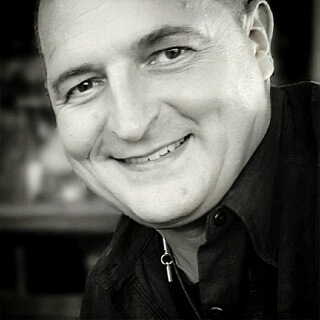
Dirk J. Lambert (MSc. - CCTS-I)
Dirk J. Lambert is a Licensed Psychotherapist, Mentor, Author, and Certified Trauma & EMDR Specialist with more than 25 years of experience helping people recover from trauma, depression, burnout, emotional abuse, and long-standing unresolved pain. His work is known for being direct, compassionate, and highly practical.
A twice-ordained Buddhist monk, Dirk bridges clinical trauma care with mindfulness, discipline, self-observation, and deep emotional honesty. He does not hide behind jargon, labels, or unnecessary complexity. He listens carefully, speaks plainly, and works toward meaningful change.
New Paradigm reflects the philosophy he has built over decades: intentionally small, deeply personal, private by design, and focused on what actually helps people recover from the inside out rather than simply cope more elegantly.