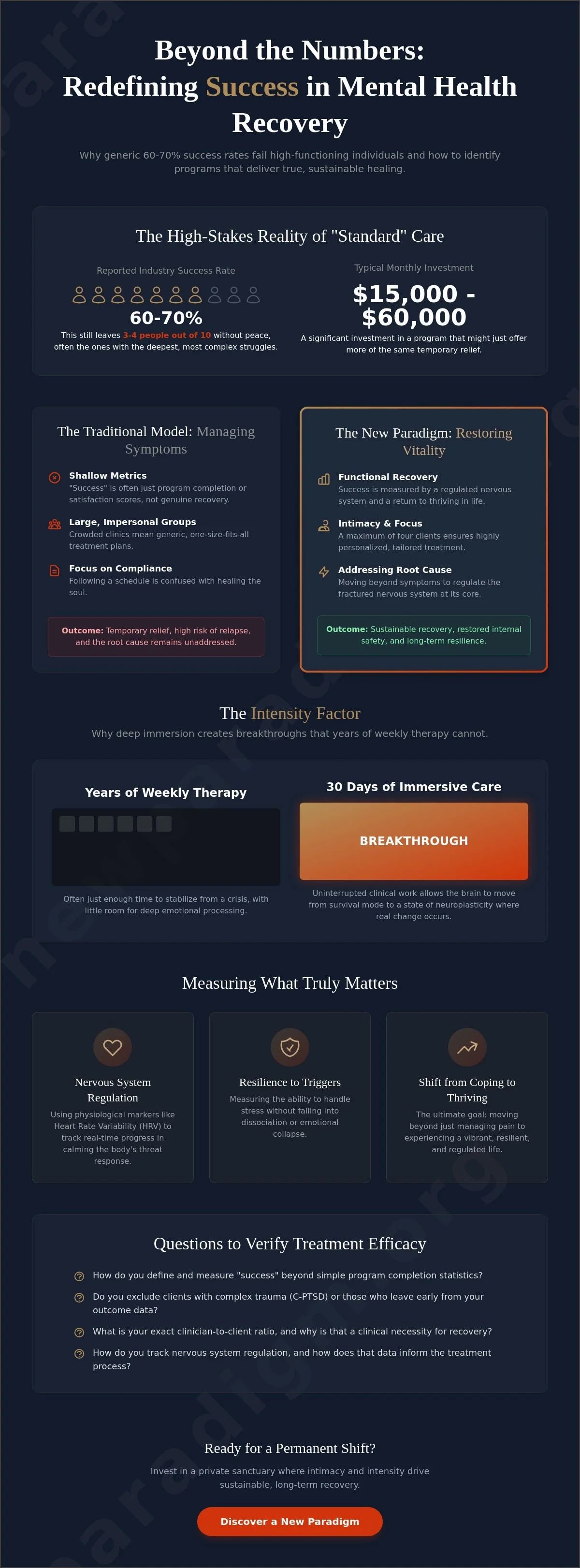
A 70% success rate sounds promising until you realize you are the one person who still cannot find peace. While the reported success rates of residential mental health programs for improved functioning currently sit between 60% and 70%, these statistics often feel hollow when you are high-functioning on paper but privately falling apart. You have likely spent years in standard talk therapy only to find that your nervous system remains stuck in a loop of trauma or burnout. It is natural to feel skeptical about investing $15,000 to $60,000 a month in a program that might just offer more of the same.
We agree that generic percentages do not account for the depth of your specific experience. In this guide, you will discover the clinical reality behind treatment statistics and learn how to identify programs that deliver sustainable, long-term recovery instead of temporary relief. We will examine why true success is measured by the restoration of your internal safety, the specific ROI of intensive intervention, and how to find a sanctuary that addresses the root cause of your suffering rather than just managing your symptoms.
Key Takeaways
- Learn why generic statistics often fail those who are high-functioning on paper but privately falling apart, and how to identify metrics that prioritize long-term functional recovery.
- Understand the "intensity factor." Discover why thirty days of immersive, evidence-based care can facilitate deeper emotional processing than years of standard talk therapy.
- Gain the specific questions needed to interrogate the success rates of residential mental health programs during admissions to ensure you're investing in clinical excellence, not just a luxury retreat.
- Discover why a strictly private environment with a maximum of four clients is a clinical necessity for the deep work required to regulate a fractured nervous system.
Beyond the Percentages: Redefining Success in Residential Mental Health Care
Generic numbers often mask a deeper, more painful truth. When a facility claims an 80% success rate, they rarely define what that success looks like for the individual who is privately falling apart while maintaining a high-level career. For many, success rates of residential mental health programs are calculated based on simple program completion rather than the actual restoration of a person's vitality. True recovery isn't just the absence of a crisis; it is the presence of a regulated, resilient life.
We must distinguish between clinical stabilization and functional recovery. Stabilization is what happens in a hospital; it's about keeping you safe for the next forty-eight hours. Functional recovery is about returning to your professional and personal life with a nervous system that no longer perceives every challenge as a threat. This requires moving beyond anecdotal wellness claims toward a rigorous, evidence-based approach that addresses the root of your exhaustion.
To better understand the complexities and risks within the broader industry, watch this helpful video:
The Limitations of Traditional Outcome Data
Many large facilities "cherry-pick" their data by excluding clients with complex C-PTSD or those who leave early, creating an inflated sense of efficacy. There is also a significant gap between "satisfaction" scores and actual clinical symptom reduction. You might enjoy the scenery, but if your anxiety remains at a baseline of eight out of ten, the program hasn't succeeded. According to this Residential Treatment Center Overview, these facilities serve diverse populations, yet the success rates of residential mental health programs often rely on compliance rather than long-term integration. Compliance is not healing; following a schedule is not the same as recovering your soul.
New Metrics: Nervous System Regulation and Integration
Modern clinical work uses physiological markers like Heart Rate Variability (HRV) to track real-time progress in nervous system regulation. We measure success by your ability to handle triggers without falling into dissociation or a total emotional collapse. Success is the movement from "coping" to "thriving" through the deliberate and sustained regulation of the nervous system. This shift ensures that the work done within a private sanctuary translates into a sustainable reality once you return home. By prioritizing these metrics, we move away from temporary relief and toward a permanent shift in how you experience the world.
Clinical Pillars of High Success Rates: Why Intensive Intervention Works
Thirty days of uninterrupted clinical work often produces breakthroughs that five years of standard weekly therapy cannot reach. This is known as the "Intensity Factor." When you're high-functioning on paper but privately falling apart, your nervous system is likely stuck in a state of high alert. Weekly sessions often only provide enough time to stabilize after a difficult day, leaving no room for the deep work of emotional processing. The success rates of residential mental health programs are fundamentally tied to this depth of immersion. By stepping away from the triggers of daily life, you allow your brain to move from survival mode into a state of neuroplasticity where real change occurs.
High success is also a result of intimacy. In a crowded clinic, you're a number; in a private sanctuary limited to a maximum of four clients, every hour is tailored to your specific history. This high clinician-to-client ratio accelerates recovery speed because the treatment is never generic. Research found in the Mental Health System Capacity Data brief underscores the critical need for high-quality, focused care in a system that is often overstretched. When we address the root causes of suffering rather than just managing symptoms like anxiety or insomnia, we reduce the risk of relapse and create a foundation for lasting vitality.
The Power of EMDR in Residential Settings
Standard talk therapy relies on the prefrontal cortex, the part of the brain that already "intellectually understands" your problems. Trauma, however, lives in the body and the limbic system. Intensive EMDR (Eye Movement Desensitization and Reprocessing) sessions, conducted multiple times per week, allow for the rapid reprocessing of traumatic memories. In a secluded, safe environment, this modality moves beyond "coping" and facilitates a profound recovery from the inside out. For a deeper look at these methods, explore our guide to Residential Trauma Treatment.
The Statistical Impact of Structured Aftercare
Recovery doesn't end at the gates of a sanctuary. Data indicates that success rates drop significantly if a client is simply "dropped" back into their old life without a transition plan. A structured 90-day aftercare program is essential to prevent re-entry shock. This includes remote therapeutic support for international clients and a clear roadmap for integrating new disciplines into their professional and personal routines. If you feel ready to move beyond temporary relief and toward a life of regulated peace, reach out to our clinical team to discuss a personalized path forward.
Navigating Outcome Data: How to Verify Treatment Efficacy Before Enrollment
Choosing a program is an act of profound vulnerability. You aren't just looking for a room; you're looking for a result. When evaluating the success rates of residential mental health programs, you must look past the polished brochures and generic marketing claims. Any facility that "guarantees" a specific outcome or makes vague promises of a total "transformation" in a few weeks is ignoring the clinical reality of trauma. Healing is a disciplined, evidence-based process, not a marketing event. You should feel empowered to ask hard questions about how a facility collects its data and how they define a successful discharge.
A one-size-fits-all approach is a significant red flag. High-functioning individuals often require specialized tracks that address the intersection of professional burnout and unresolved pain. When you speak to an admissions team, ask about the credentials of the lead clinicians. A team led by experts with a twenty-five-year career provides a level of discernment that a newly licensed therapist simply cannot. Inquire about their specific protocols for treatment-resistant depression or complex trauma. A true continuum of care ensures that the work done in a residential setting is integrated into your life through a structured outpatient plan.
The Clinical Vetting Checklist
To ensure you're investing in a program that delivers sustainable recovery, use this clinical vetting checklist during your search:
- Clinical Experience: Does the lead team have at least 20 years of experience in trauma-informed care?
- Specialized Protocols: Do they offer evidence-based modalities like EMDR or somatic processing specifically for your diagnosis?
- Integration Strategy: Is there a clear path from intensive residential care to long-term outpatient support?
Why Environment Matters for Psychological Safety
The physical environment is not a luxury; it's a clinical tool. A crowded hospital model can inadvertently keep your cortisol levels high, making it nearly impossible for your nervous system to regulate. In contrast, the sanctuary model uses seclusion and nature to create psychological safety. This environment allows for deeper therapeutic receptivity. If you're considering international options, researching a Mental Health Facility Thailand can provide insight into how a serene, private setting accelerates the healing of deep-seated trauma. If you'd like a clinical consultation to see if our approach aligns with your needs, schedule a private call with our team.
The New Paradigm Model: Why Intimacy and Intensity Drive Sustainable Recovery
The standard success rates of residential mental health programs often fail to account for the unique needs of the high-functioning professional. While a 60% to 70% success rate is the industry average for functional improvement, these figures typically reflect outcomes in large-scale facilities with twenty or more beds. For someone who is privately falling apart while managing significant responsibilities, these crowded environments can feel like another form of performance. New Paradigm Mental Health Retreat implements a "Maximum of Four" philosophy as a clinical necessity because deep trauma work requires a level of nervous system attunement that is impossible in a large group. We prioritize depth over scale to ensure that your investment leads to a genuine restoration of your vitality.
We blend advanced clinical trauma care with the spiritual calm of monastic mindfulness. This integration happens in Chiang Mai, Thailand, where the secluded environment facilitates the deep, uninterrupted work required for lasting stability. It's a path designed for those who don't just want to survive their exhaustion but want to recover from the inside out. By combining evidence-based modalities like EMDR with the discipline of self-observation, we address the root causes of suffering that standard talk therapy often misses.
A Personal Environment for Deep Work
Large facilities often force clients into a "social performance" where they feel the need to appear "fine" for the sake of the group. In a private sanctuary, this mask can finally be dropped. Because we only work with four individuals at a time, we can pivot treatment plans in real-time based on your daily emotional processing and progress. New Paradigm Mental Health Retreat is a clinical sanctuary, not a hospital or a resort. This distinction is vital; we prioritize clinical results over general leisure, ensuring every hour spent in our care serves your long-term functional recovery and nervous system regulation.
Your Path to Lasting Stability
True recovery is not about learning to cope more elegantly with your pain. It's about the genuine internal resolution of the trauma that drives your burnout or anxiety. This journey begins with a thorough clinical assessment to understand the specific architecture of your suffering. We invite you to move beyond the intellectual understanding of your problems and into a state of regulated peace. If you're ready to reclaim your vitality and professional focus, contact our clinical team to discuss your recovery path.
Reclaiming Your Vitality Through Regulated Peace
You deserve a recovery that honors your complexity. We have explored how the success rates of residential mental health programs are often misleading when they ignore the necessity of genuine nervous system regulation. True healing requires more than stabilization; it demands a deep, uninterrupted focus on the root causes of your pain. By choosing a sanctuary that limits its intake to a maximum of four clients, you ensure that every clinical hour is dedicated to your specific history. Our team brings over 25 years of clinical experience to every session, utilizing specialized EMDR and somatic trauma protocols to help you recover from the inside out.
The path back to yourself isn't found in a crowded clinic or a leisure resort. It's found in the quiet work of emotional processing and the restoration of internal safety. You don't have to keep falling apart in private. There's a practical, evidence-based way through the darkness and into a life of sustainable vitality. We're ready to walk this path with you whenever you're ready to begin.
Begin your journey to lasting recovery; Contact our clinical team today.
There's a version of your life where peace is your baseline. Let's start the work of finding it together.
Frequently Asked Questions
What is the average success rate for residential mental health programs?
Industry data from 2025 shows that 60% to 70% of clients in structured, evidence-based programs report improved functioning and quality of life one year after discharge. However, the success rates of residential mental health programs vary significantly based on the facility's clinical depth. While general stabilization is common, long-term functional recovery depends on whether the program addresses the underlying nervous system dysregulation or simply manages the immediate crisis.
How is success measured in trauma-focused residential treatment?
Success is measured through validated physiological markers and psychological assessments rather than just program completion. Clinicians track Heart Rate Variability to monitor nervous system regulation and use standardized tools to measure a 41% or higher reduction in distress and anxiety symptoms. We also evaluate functional metrics, such as your ability to return to professional life without experiencing dissociation or emotional collapse when triggered by stress.
Why do some people relapse after completing a residential program?
Relapse often occurs when a program focuses on "coping more elegantly" rather than resolving the root cause of the trauma. If the nervous system remains in a state of high alert, returning to a high-stress environment eventually triggers old survival mechanisms. Additionally, a lack of a structured 90-day aftercare plan contributes to re-entry shock. Without ongoing integration support, the brain often defaults to familiar patterns of exhaustion.
Does a higher price tag guarantee a better success rate in mental health care?
A higher price does not guarantee healing, but it often reflects the resource intensity required for individualized care. As of January 2026, premium programs costing between $500 and $2,000 per day typically provide higher clinician-to-client ratios and specialized modalities like intensive EMDR. While a luxury setting provides peace, the clinical success depends on the expertise of the team and their ability to provide uninterrupted emotional processing.
How long should a residential program last to be effective?
Clinical evidence suggests that a minimum of 30 days is necessary to move the brain from survival mode into a state of neuroplasticity. This timeframe allows for the deep work of nervous system regulation that weekly therapy cannot reach. For complex trauma or severe burnout, extending treatment to 45 or 60 days can increase the success rates of residential mental health programs by allowing more time for the integration of new emotional disciplines.
Is residential treatment more successful than outpatient therapy for depression?
Residential treatment is often more successful for treatment-resistant depression because it provides an immersive sanctuary away from daily triggers. While outpatient therapy is valuable for maintenance, the 24/7 clinical support in a residential setting allows for a 42% decrease in depressive symptoms in a shorter period. This intensity is particularly effective for high-functioning individuals who are privately falling apart and need a total break from their responsibilities to recover.
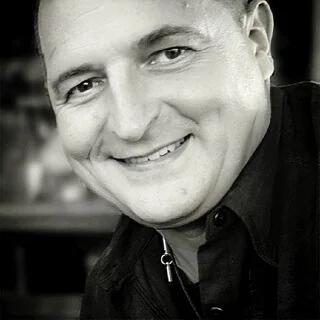
Article by
Dirk J. Lambert (MSc. - CCTS-I)
Dirk J. Lambert is a Licensed Psychotherapist, Mentor, Author, and Certified Trauma & EMDR Specialist with more than 25 years of experience helping people recover from trauma, depression, burnout, emotional abuse, and long-standing unresolved pain. His work is known for being direct, compassionate, and highly practical.
A twice-ordained Buddhist monk, Dirk bridges clinical trauma care with mindfulness, discipline, self-observation, and deep emotional honesty. He does not hide behind jargon, labels, or unnecessary complexity. He listens carefully, speaks plainly, and works toward meaningful change.
New Paradigm reflects the philosophy he has built over decades: intentionally small, deeply personal, private by design, and focused on what actually helps people recover from the inside out rather than simply cope more elegantly.