What if your inability to think your way out of trauma isn't a failure of willpower, but a biological limitation of the analytical mind? You likely understand your history with clinical precision. You can map the cause and effect of your burnout, yet the physical weight in your chest remains. It's exhausting to maintain a successful facade while your nervous system feels like it's perpetually on fire. We recognize that cognitive awareness is not the same as emotional relief. This is where the primary EMDR therapy benefits become clear. This approach isn't a superficial management technique or a leisure based distraction; it's a biological reset that succeeds where traditional methods often stall.
You deserve a path to recovery that respects the depth of your struggle without getting lost in endless cycles of intellectualization. We promise to show you how EMDR therapy bypasses your protective mental barriers to provide direct physiological relief from trauma and anxiety. This guide provides a clinical checklist for deep recovery, explaining how to integrate fragmented memories and restore the internal spark that burnout has dimmed. It's time to move beyond simply managing symptoms and begin the work of genuine, internal transformation.
Key Takeaways
- Understand why cognitive awareness often fails to provide emotional relief; EMDR functions as a physiological intervention rather than a purely psychological one.
- Explore the specific EMDR therapy benefits that allow for rapid desensitization of triggers, helping your body finally realize that the danger has passed.
- Assess your current emotional stability against a clinical readiness checklist to ensure you're within the necessary window of tolerance for deep reprocessing.
- Learn how the intensity of a residential framework acts as a force multiplier for healing, providing the focused isolation required for profound internal transformation.
The Clinical Case for EMDR: Why It Surpasses Traditional Talk Therapy
Traditional talk therapy often hits a ceiling when dealing with deep-seated trauma or complex PTSD. You may have spent years in psychotherapy, gaining a masterful understanding of your history, yet your body remains trapped in a state of hyper-vigilance. You can explain the "why" behind your exhaustion, but the physical sensation of internal collapse doesn't disappear. This is the paradox of intellectualized pain. It's a state where the mind is informed, but the nervous system is still reacting to a threat that ended years ago. We recognize that understanding a wound is not the same as healing it.
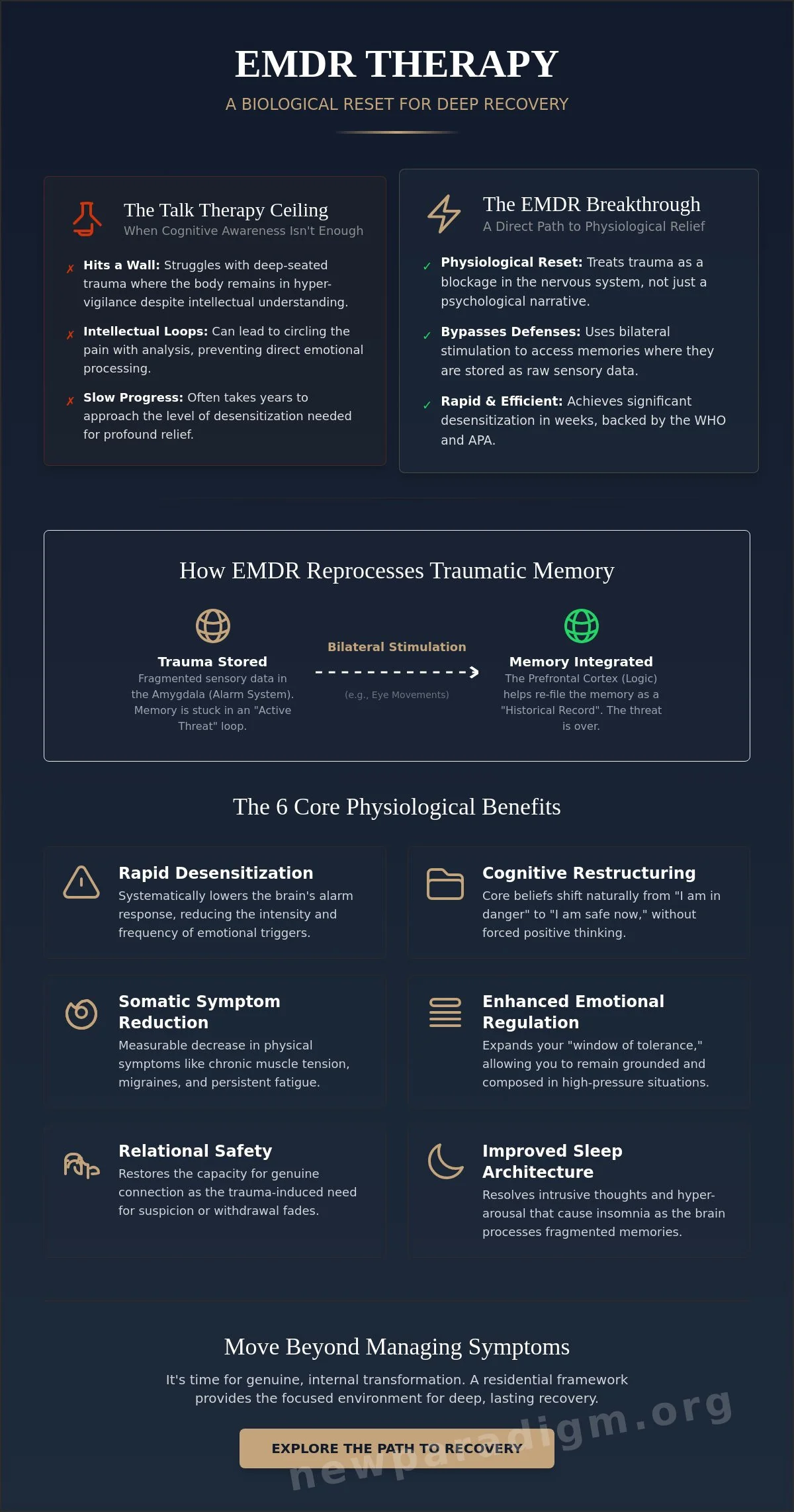
EMDR therapy addresses this by treating trauma as a physiological blockage rather than just a psychological narrative. It's based on the Adaptive Information Processing (AIP) model, which suggests that the brain has an innate capacity to heal if the obstacles are removed. One of the primary EMDR therapy benefits is its ability to access the parts of the brain where traumatic memories are stored as raw, sensory fragments, rather than cohesive stories. This isn't just about changing how you think; it's about changing how your body remembers.
Bypassing the Analytical Mind
For the high-achiever, logic is often a double-edged sword. You've likely used your analytical skills to build a successful life, but those same skills can act as a sophisticated defense mechanism in therapy. You might use "talk" to circle around the pain without ever touching it. Traumatic memories are primarily stored in the amygdala, which functions as the brain's alarm system. The prefrontal cortex, the seat of logic, cannot simply "reason" the amygdala out of a survival response. Bilateral stimulation disrupts the repetitive loop of traumatic rumination by facilitating communication between the brain's hemispheres. This process allows the brain to move a memory from the "active threat" category into the "historical record" category.
The Evidence for Rapid Reprocessing
The timeline for recovery is often a point of frustration for those seeking relief from burnout or anxiety. Clinical data and endorsements from the World Health Organization (WHO) and the American Psychological Association (APA) confirm that EMDR is an exceptionally efficient intervention. It isn't a passive leisure experience or a quick fix. It's a rigorous, evidence-based methodology that often achieves in weeks what traditional talk therapy takes years to approach. At New Paradigm, we view this not as a magic cure, but as a practical biological reset. One of the most significant EMDR therapy benefits is this rapid desensitization. It requires courage and a stable environment to perform this intensive work, but the result is a profound restoration of the professional "spark" that trauma often extinguishes.
The 6 Core Benefits of EMDR Therapy: A Physiological Perspective
Understanding the brain's mechanics is only the first step toward recovery. The true value lies in the tangible EMDR therapy benefits that manifest as a physical release of long-held distress. This process is not a re-living of the past. It is a targeted intervention that allows the body to finally drop its guard. When the nervous system is no longer stuck in a survival loop, the following six shifts begin to take hold:
- Rapid Desensitization: The amygdala's hyper-reactive alarm response is systematically lowered, reducing the intensity of emotional triggers.
- Spontaneous Cognitive Restructuring: Core beliefs shift naturally. You move from "I am in danger" to "I am safe now" without having to force the thought.
- Somatic Symptom Reduction: There is a measurable decrease in chronic muscle tension, migraines, and the "hidden exhaustion" that plagues high-achievers.
- Enhanced Emotional Regulation: Your window of tolerance expands, allowing you to remain grounded and composed even in high-pressure environments.
- Relational Safety: The capacity to connect with others restores as the trauma-induced need for constant suspicion or withdrawal fades.
- Improved Sleep Architecture: As the brain processes fragmented data, the intrusive thoughts and hyper-arousal that cause insomnia often resolve.
From Fragmented Memory to Integrated Narrative
Traumatic memories are often stored as raw sensory fragments. They exist as isolated smells, sounds, or physical sensations that feel stuck in the present. Research highlighting EMDR's effectiveness in treating PTSD shows how bilateral stimulation helps move these fragments into long-term, narrative memory. This integration is essential for those in a residential trauma treatment setting. It ensures that your history becomes a story you tell, rather than a reality you are forced to repeat every day.
Restoring the Professional Spark
Professional burnout is rarely just about a heavy workload. It's often the result of a nervous system that has lost its ability to reset after a period of prolonged stress. One of the primary EMDR therapy benefits is the restoration of the creative energy that once fueled your career. By regulating the autonomic nervous system, a burnout recovery program utilizing EMDR allows you to shift from merely enduring your responsibilities to thriving within them. If you feel the weight of intellectualized pain and are ready for a different approach, you may wish to explore our personalized intake process.
Is EMDR Right for You? A Readiness Checklist for Intensive Recovery
While the primary EMDR therapy benefits are compelling, this methodology is not a passive experience. It's an intensive physiological process that requires a specific level of internal readiness. Before beginning, it's vital to determine if you possess the necessary emotional stability to engage with traumatic material without becoming overwhelmed or completely shut down. We call this the window of tolerance. It is the specific neurological space where healing is possible. Outside of this zone, the brain simply cannot process the data we are trying to move.
Consider the following indicators as you assess your own readiness for deep recovery:
- Do you find yourself over-thinking your trauma with clinical precision, yet you never feel "done" with the emotional weight of it?
- Are you experiencing persistent physical symptoms, such as a perpetually tight chest, chronic tension, or gut issues, specifically when recalling the past?
- Do you maintain a successful outward facade while feeling a sense of internal collapse or hidden exhaustion?
- Have you reached a plateau in traditional talk therapy where you understand your "why" but haven't found relief?
Assessing Your Window of Tolerance
The window of tolerance is the optimal zone where healing occurs. If you are too "high" in a state of hyper-arousal or too "low" in a state of numb dissociation, the brain cannot effectively reprocess information. Attempting to "push through" trauma is often counterproductive and can lead to further destabilization. Utilizing EMDR for anxiety requires staying within this regulated space to ensure the nervous system can integrate the work. One of the most significant EMDR therapy benefits is the eventual widening of this window, allowing you to handle life's pressures without collapsing into old survival patterns.
The Role of Preparation and Stability
Effective EMDR is not a "dive in and see" approach. We utilize a phase called Resource Development and Installation (RDI). This phase focuses on building your internal anchors before we ever touch the core traumatic memory. It's the reason why a thorough clinical assessment is the mandatory first step in any New Paradigm journey. We must differentiate between a general wellness retreat and a clinical EMDR intervention. A retreat offers temporary peace; a clinical intervention offers structural change. If you are ready to move beyond intellectualized understanding and begin the work of physiological recovery, speak with our clinical team to begin your assessment.
Maximizing EMDR Benefits within a Residential Treatment Framework
The decision to step away from professional responsibilities for a period of intensive recovery is rarely an easy one. You likely feel the weight of an mounting to-do list and the pressure to remain "on," even as your internal resources dwindle toward total collapse. However, we must weigh the perceived cost of time against the actual cost of prolonged suffering. Residential care is not a luxury or a leisure based distraction. It's a clinical force multiplier for the EMDR therapy benefits we have explored. By removing yourself from the environments that trigger your survival responses, you create the space necessary for a genuine biological reset.
One of the most critical advantages of this framework is the concept of clinical containment. In a standard outpatient setting, you might spend an hour reprocessing a difficult memory and then immediately face the "re-entry shock" of a commute, a board meeting, or family obligations. This can leave the nervous system in a state of raw vulnerability. Within our Residential Trauma Treatment Program, you have clinical support available long after the session ends. This safety net allows you to go deeper into the work, knowing you don't have to navigate the emotional aftermath in isolation.
The Power of Intensive Reprocessing
Traditional "once-a-week" therapy often feels like taking one step forward and two steps back as the stressors of daily life intervene. Intensive reprocessing changes the rhythm of healing. When you engage in daily clinical work, the brain remains in a focused state of neuroplasticity. Isolation from external noise accelerates internal transformation by allowing the nervous system to remain within the window of tolerance without constant interruption. This concentrated approach often achieves structural changes in weeks that would otherwise take years of fragmented effort.
A Holistic Paradigm: Clinical Depth Meets Contemplative Peace
At New Paradigm, we don't view EMDR as an isolated tool. We integrate it with somatic experiencing and mindfulness to ensure the body and mind heal in tandem. The spiritual calm of Chiang Mai is not a decorative backdrop; it's a clinical component that provides the stillness required for deep internal work. We maintain a strictly limited capacity to ensure that every individual receives a level of personalized focus that is impossible in larger, scale-driven facilities. This intentional environment respects the gravity of your struggle and provides a clear, authoritative path toward reclaiming your life. If you're ready to move beyond managing exhaustion and begin a true recovery, contact New Paradigm for a confidential clinical consultation.
Reclaiming Your Internal Peace
The path out of hidden exhaustion requires more than just a new perspective. It demands a structural change in how your nervous system processes the past. We've explored how the primary EMDR therapy benefits stem from its ability to bypass intellectual defenses and address trauma at its physiological source. By honoring your window of tolerance and seeking a contained, clinical environment, you can finally move beyond the loop of intellectualized pain. This isn't about superficial management; it's about a deep, lasting integration of your experiences.
At New Paradigm, we operate as a privately owned boutique clinical facility where depth is valued over scale. Our evidence-based intensive trauma interventions are delivered within a framework of limited capacity. This ensures you receive the highly personalized care your recovery deserves. We provide the isolation from external noise that high-achievers need to facilitate profound internal transformation. If you're ready to restore the professional spark that burnout has dimmed, we are here to guide you through the process with quiet authority and clinical rigor.
Begin Your Journey to Lasting Recovery at New Paradigm. You don't have to carry the weight of the past alone; there is a practical methodology for navigating through the struggle and finding your way back to a grounded, certain future.
Frequently Asked Questions
Is EMDR therapy effective for complex PTSD and childhood trauma?
Yes, EMDR is highly effective for complex PTSD and childhood trauma because it addresses the physiological roots of distress rather than just the narrative. Childhood trauma often leaves the nervous system in a state of perpetual hyper-vigilance. By targeting the fragmented sensory data stored in the amygdala, we help the brain finally categorize these events as historical rather than active threats. This leads to a profound reduction in the hidden exhaustion often felt by survivors.
Can EMDR therapy make my symptoms worse before they get better?
You may experience a temporary increase in emotional vulnerability or vivid dreams as your brain begins to reprocess stored data. This is often referred to as a processing hangover and is a sign that the nervous system is actively working to integrate fragmented memories. It's not a sign of regression; it's a necessary part of the biological reset required for recovery. We emphasize the importance of a safe, contained environment to manage these shifts effectively.
How many sessions of EMDR are usually needed to see benefits?
The number of sessions required depends on the complexity of your history, but many individuals begin to notice EMDR therapy benefits within 6 to 12 sessions. For those with a single traumatic event, progress can be rapid. Individuals dealing with systemic burnout or complex childhood trauma often require a more extended, intensive approach. We focus on the quality of the reprocessing rather than a fixed timeline to ensure the results are structural and lasting.
What happens if I cannot visualize my traumatic memories during EMDR?
You don't need to have clear visual imagery for EMDR to be successful. Many people process trauma through physical sensations, specific sounds, or visceral emotions rather than seeing a movie in their mind. The bilateral stimulation facilitates the brain's natural processing regardless of which sensory channel is most prominent. If you struggle with visualization, we focus on the somatic weight in your chest or the gut issues that arise during recall.
Is EMDR therapy a permanent solution for anxiety and burnout?
EMDR offers a structural reset of the nervous system, which can provide a permanent shift in how you respond to old triggers. While it's not a cure for the ongoing stresses of a high pressure life, it resolves the underlying trauma that makes burnout feel inevitable. By clearing the physiological backlog of distress, you restore your capacity for resilience. One of the greatest EMDR therapy benefits is the ability to face future challenges without the baggage of past survival patterns.
How does EMDR differ from hypnosis or traditional talk therapy?
EMDR differs from traditional talk therapy by bypassing the analytical mind to target the nervous system directly. Unlike hypnosis, which often involves a passive or suggestive state, you remain fully conscious and in control during the session. It isn't about analyzing your problems or receiving suggestions for change. Instead, it's a clinical methodology that allows your brain to perform its own natural corrective work, moving memories from a place of distress to a place of peace.

Article by
Dirk J. Lambert (MSc. - CCTS-I)
Dirk J. Lambert is a Licensed Psychotherapist, Mentor, Author, and Certified Trauma & EMDR Specialist with more than 25 years of experience helping people recover from trauma, depression, burnout, emotional abuse, and long-standing unresolved pain. His work is known for being direct, compassionate, and highly practical.
A twice-ordained Buddhist monk, Dirk bridges clinical trauma care with mindfulness, discipline, self-observation, and deep emotional honesty. He does not hide behind jargon, labels, or unnecessary complexity. He listens carefully, speaks plainly, and works toward meaningful change.
New Paradigm reflects the philosophy he has built over decades: intentionally small, deeply personal, private by design, and focused on what actually helps people recover from the inside out rather than simply cope more elegantly.