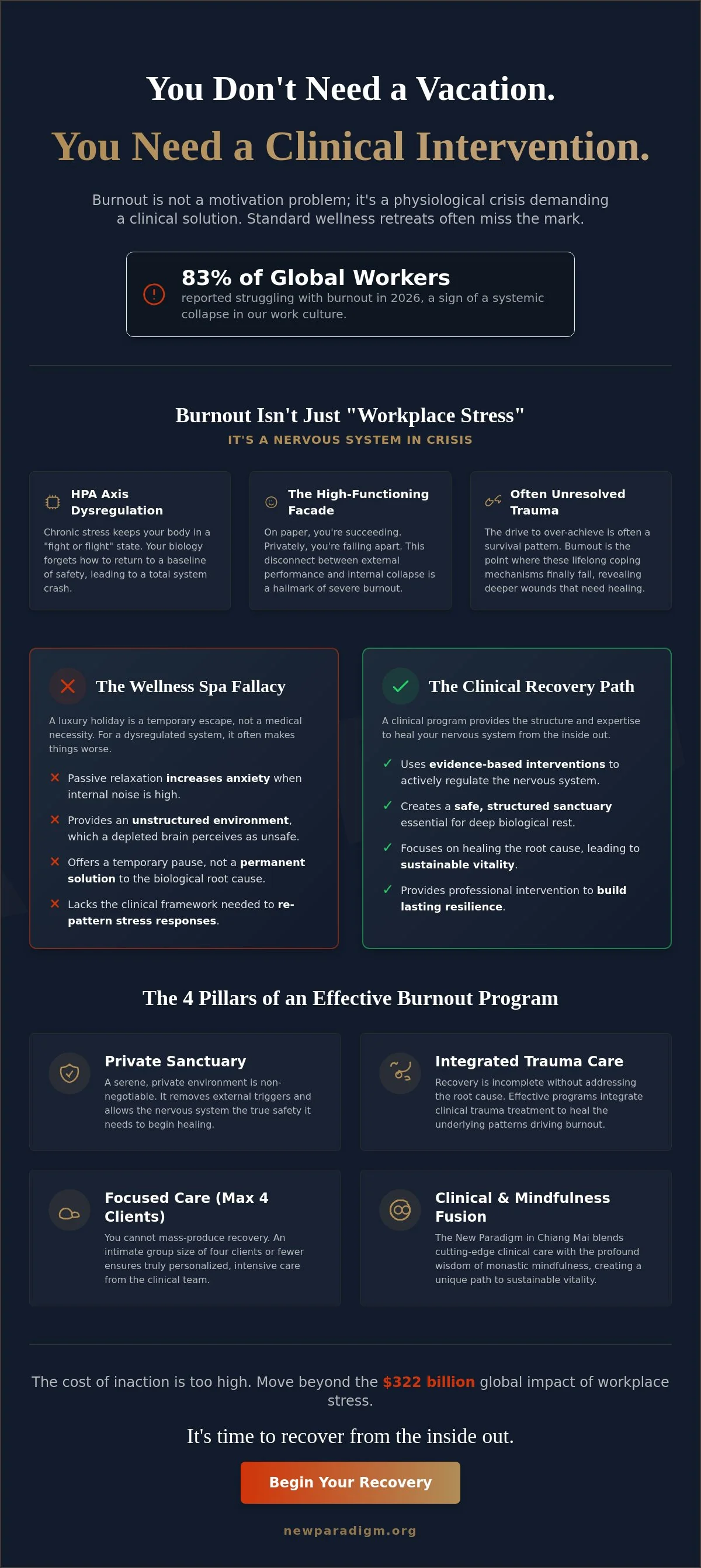
You don't need a vacation; you need a clinical intervention for your nervous system. In 2026, 83% of global workers report struggling with burnout, yet many high-performers still believe a week of silence or a luxury spa stay will fix the deep, visceral exhaustion they carry. You've likely spent months being high-functioning on paper while privately falling apart, searching for a burnout recovery program that actually addresses the shell of a person you've become. When brain fog and chronic fatigue become your daily reality, the joy of achievement disappears; it leaves you wondering if you're simply broken forever.
You aren't broken, but your biology has reached its limit. This guide explains how a clinical, nervous-system-led approach provides the essential bridge between collapse and sustainable vitality. We'll examine the shift from merely coping more elegantly to recovering from the inside out. By providing a clear roadmap to restore your cognitive function and regulate your internal state, we offer a path back to life. You'll discover how to move beyond the $322 billion global impact of workplace stress into a life of grounded, uninterrupted peace and lasting health.
Key Takeaways
- Understand that burnout is a physiological crisis of the nervous system that demands clinical regulation, not just a temporary break from work.
- Recognize why a standard wellness spa often fails to address clinical burnout and can actually worsen anxiety in a dysregulated body.
- Explore the essential components of an effective burnout recovery program, including the necessity of a private sanctuary and a maximum of four clients for focused care.
- Shift your focus from coping more elegantly to recovering from the inside out by addressing the specific needs of high-performers who are privately falling apart.
- Discover the unique advantages of intensive residential treatment in Chiang Mai, where clinical trauma care and monastic mindfulness create a path to sustainable vitality.
Beyond Workplace Stress: Understanding Burnout as a Nervous System Crisis
In 2026, the clinical definition of burnout has evolved far beyond professional dissatisfaction. It's a profound state of physiological and psychological depletion that affects 83% of global workers. While Occupational burnout is often categorized as a workplace phenomenon, the reality is much more visceral. For high-performers, this often looks like being high-functioning on paper while privately falling apart. You meet your deadlines, you lead your teams, and you maintain the facade of success; yet, internally, you feel like a hollow shell.
Traditional advice suggests taking a vacation or working fewer hours, but these are surface-level fixes for a systemic collapse. Burnout isn't a time-management issue; it's a nervous system crisis. To find a path back to vitality, you need a burnout recovery program that prioritizes biological restoration over simple rest. True recovery requires moving beyond the myth that you can just "push through" the fatigue.
To better understand the mechanics of this collapse and the path to healing, watch this helpful video:
The HPA Axis and the Biology of Exhaustion
When you experience chronic stress, your body remains in a permanent state of fight or flight. This constant activation taxes your endocrine system, leading to a sustained flood of cortisol that eventually results in a total biological crash. The HPA axis is the body's central stress response system. When this system is perpetually active, it loses the ability to regulate itself. This is why you can't simply relax your way out of severe depletion; your biology has forgotten how to return to a baseline of safety.
When Burnout is Actually Unresolved Trauma
For many, the drive to over-achieve is rooted in early survival patterns rather than healthy ambition. This internal pressure makes professional boundaries impossible to maintain, leading directly to the need for a specialized burnout recovery program. Adult burnout is frequently the point where these lifelong coping mechanisms finally fail. When your nervous system is stuck in an overactive state, it's often a signal of deeper, unresolved pain. Integrating residential trauma treatment into your recovery is often the only way to heal the root cause. This approach allows you to recover from the inside out, ensuring you don't return to the same destructive cycles once you re-enter your professional life.
Why a 'Wellness Spa' Is Not a Burnout Recovery Program
High-performers often mistake a luxury holiday for a medical necessity. You might book a two-week stay at a secluded resort, hoping that white sand and silence will mend the exhaustion. However, for a dysregulated nervous system, "doing nothing" is often terrifying rather than restorative. A leisure spa stay offers a temporary escape; a clinical burnout recovery program offers a permanent solution. Without professional intervention, the silence of a vacation only makes the internal noise of your anxiety louder. You aren't suffering from a lack of pampering, but from a biological system that has lost its ability to find safety.
Passive relaxation fails because it lacks the structure your brain requires to feel safe. When you're privately falling apart, an unstructured environment can trigger a "rebound effect" where your stress hormones spike because the distraction of work has been removed. Clinical care focuses on evidence-based burnout interventions that actively re-pattern your stress response. This transition from leisure to clinical care is the difference between a temporary pause and a genuine recovery from the inside out.
The Danger of Passive Recovery
Doing nothing is a skill that a burnt-out high-performer has usually lost. In a state of chronic depletion, your system interprets stillness as a threat. This is why you feel more anxious on Sunday nights or during the first few days of a trip. A structured clinical environment provides the necessary containment. It allows you to move beyond the goal of coping more elegantly and starts the process of resolving the root cause of your collapse. You need an environment that handles the logistics of life so you can focus entirely on uninterrupted deep work.
What Clinical Evidence-Based Care Looks Like
True recovery involves more than just sleep. It requires sophisticated modalities like EMDR therapy to process the "moral injury" often associated with professional burnout. This is the visceral feeling that you've betrayed your own values or limits for too long. With professional psychiatric and psychological oversight, you can follow a clear path regarding how to recover from burnout through targeted nervous system regulation. A clinical burnout recovery program ensures that you aren't just resting; you're rebuilding. If you're ready to stop the cycle of relapsing after every vacation, you might consider reaching out to speak with a clinical specialist about a tailored path forward.
Essential Components of an Effective Burnout Recovery Program
A truly effective burnout recovery program requires more than just a quiet room or a temporary change of pace. It demands a sanctuary. This is a secluded, private environment designed to provide an immediate sense of safety to those in crisis. At New Paradigm, we maintain a strict maximum of four clients at any given time. This intentional small scale ensures that your clinical team isn't managing dozens of cases; instead, they're focused entirely on your specific path to restoration. It's a personal environment for deep work that acknowledges the gravity of your suffering while providing a clear, evidence-based path out of the darkness.
Recovery is not a passive event. It's an active process of rebuilding a system that has reached its breaking point. To prevent a relapse upon your return to work, your program must integrate clinical expertise with somatic healing and structured aftercare. This comprehensive approach ensures that you aren't just "coping more elegantly" but are actually recovering from the inside out. Without this depth, the risk of a "re-entry crash" remains high once you face professional pressures again.
The Power of Somatic and EMDR Interventions
You cannot intellectually understand your way out of burnout. You likely already recognize the external factors that led to your exhaustion, yet your heart still races and your brain remains trapped in a persistent fog. EMDR therapy sessions are essential because they reprocess the specific stress memories and "moral injuries" stored in your nervous system. Somatic therapy addresses the body's physical memory of stress. By targeting the visceral tension held in your muscles and fascia, these interventions release the physiological grip of burnout that talk therapy alone cannot reach.
Nervous System Regulation and Mindfulness
Grounded recovery differs significantly from generic meditation apps. It involves a sophisticated blending of clinical care with monastic mindfulness practices. This approach emphasizes discipline, self-observation, and the practical application of nervous system regulation in daily life. You learn to recognize the subtle shifts in your internal state before they escalate into a crisis. This level of awareness is what creates long-term stability. If you're ready to move beyond temporary fixes and begin a clinical journey toward lasting vitality, you can reach out to our clinical team for a private consultation.
The New Paradigm: Intensive Burnout Recovery in Chiang Mai
A true recovery requires a physical removal from the environment that triggered your collapse. While some providers offer six-day sprints or generic online modules, these often fail to provide the deep, uninterrupted sanctuary required for clinical restoration. Chiang Mai, Thailand, has emerged in May 2026 as a premier global center for both spiritual and clinical healing. Our burnout recovery program leverages this unique environment to offer a space where high-performers can stop performing and start the visceral work of rebuilding their lives. It's a place for those who are high-functioning on paper but privately falling apart, offering a sophisticated blend of clinical trauma care and monastic mindfulness.
The personality of our care is that of a Compassionate Realist. We don't offer flowery promises or toxic positivity; we provide a grounded, evidence-based path through the darkness. We understand that your exhaustion is not a failure of will, but a biological reality. By choosing a sanctuary that is intentionally small, you ensure that your recovery is the primary focus of an experienced clinical team. This is about moving beyond the idea of "coping" and toward a completely new paradigm of living where vitality is sustainable and the risk of relapse is minimized.
Why Chiang Mai Heals
The spiritual calm and natural beauty of Northern Thailand provide a backdrop that supports immediate nervous system regulation. This location serves as a premier mental health facility Thailand, where the physical distance from the source of your stress accelerates the healing process. When you're thousands of miles away from the boardroom or the office, your body finally receives the signal that it's safe to down-regulate. This environmental shift is a critical component in breaking the cycle of chronic stress and endocrine depletion that we discussed in the biology of exhaustion.
Taking the First Step Toward a New Paradigm
Healing begins with a clear path for inquiry and a thorough clinical assessment. Because we strictly limit our intake to a maximum of four clients, we maintain an atmosphere of absolute exclusivity and privacy. This ensures that every individual receives uninterrupted attention and a tailored therapeutic strategy. You don't have to navigate this collapse alone. If you're ready to reclaim your life from the grip of professional exhaustion, you can Apply for a confidential assessment at New Paradigm to begin your journey toward lasting health.
Moving Toward Lasting Vitality
The path out of deep exhaustion requires more than a temporary pause. It demands a fundamental shift in how you relate to your body and your professional life. Recovery is a biological necessity that involves regulating a collapsed nervous system and addressing the unresolved pain that often drives high-performers to the brink. Choosing a clinical burnout recovery program means prioritizing depth over speed. It's about moving beyond the cycle of being high-functioning on paper while privately falling apart.
At New Paradigm, our approach is anchored by over twenty-five years of clinical experience in mental health and trauma. We provide a secluded sanctuary where we never treat more than four clients at once, ensuring your journey remains private and uninterrupted. Through evidence-based EMDR and trauma-informed care, we help you process the stress memories that keep you stuck in a state of depletion. This is your invitation to stop coping and start healing in an environment designed for your total restoration.
Begin your journey to recovery with a private consultation
You don't have to navigate this darkness alone. With the right clinical support and a dedicated sanctuary, the professional spark you thought was gone can be restored.
Frequently Asked Questions
How long does a typical burnout recovery program last?
Most clinical residential programs last between 14 and 28 days. This timeframe is necessary because the biological resetting of your HPA axis and nervous system requires at least 21 days of consistent regulation to become sustainable. Shorter stays often provide temporary relief but fail to address the deep, systemic depletion that leads to relapse once you return to professional life.
Is a burnout recovery retreat tax-deductible for professionals?
Deductibility depends on your specific jurisdiction and the clinical nature of the facility. If your burnout recovery program is prescribed by a physician as treatment for a diagnosed condition such as clinical depression or anxiety, it may qualify as a deductible medical expense in many regions. You should consult with a tax professional regarding your 2026 filings to determine if your stay meets the necessary medical criteria.
What is the difference between burnout and clinical depression?
Burnout is primarily context-driven, meaning your exhaustion is tied to your professional role or specific environment. Clinical depression is often more pervasive, affecting your sense of self and your ability to find joy in any area of life. However, when you're privately falling apart, these two states frequently overlap. Untreated burnout often transitions into clinical depression as the nervous system moves from a "fight" state into a permanent "freeze" response.
Can EMDR therapy help with professional burnout?
EMDR is highly effective for processing the "moral injuries" and traumatic memories associated with a toxic workplace or professional failure. It targets the physical memories of stress stored in your brain's limbic system. By reprocessing these events, EMDR allows your nervous system to finally archive them as past history rather than active, daily threats. This creates the internal space needed for genuine cognitive restoration.
Why should I choose a residential program over weekly therapy?
Weekly therapy often feels like trying to repair a plane while it's still in flight. You spend your session decompressing from the previous week only to return to the same triggers an hour later. A residential burnout recovery program provides the total removal from stress required for deep work. It offers a secluded sanctuary where your only responsibility is your own healing, which is essential when your system is too fragile to handle daily life.
What happens during a typical day in a burnout recovery program?
A typical day focuses on rhythmic regulation and clinical intervention. You'll participate in one-on-one sessions such as EMDR or somatic therapy, balanced with monastic mindfulness and restorative bodywork. There are no crowded groups or forced social activities. Every hour is intentionally designed to be quiet and supportive, allowing your brain to move out of hyper-vigilance and into a state of uninterrupted peace.
Article by
Dirk J. Lambert (MSc. - CCTS-I)
Dirk J. Lambert is a Licensed Psychotherapist, Mentor, Author, and Certified Trauma & EMDR Specialist with more than 25 years of experience helping people recover from trauma, depression, burnout, emotional abuse, and long-standing unresolved pain. His work is known for being direct, compassionate, and highly practical.
A twice-ordained Buddhist monk, Dirk bridges clinical trauma care with mindfulness, discipline, self-observation, and deep emotional honesty. He does not hide behind jargon, labels, or unnecessary complexity. He listens carefully, speaks plainly, and works toward meaningful change.
New Paradigm reflects the philosophy he has built over decades: intentionally small, deeply personal, private by design, and focused on what actually helps people recover from the inside out rather than simply cope more elegantly.