For the high-achieving professional, severe anxiety isn't a lack of willpower or a failure of logic. It's a physiological hijacking that often occurs while you're leading a boardroom or managing a crisis. You've likely spent years in traditional talk therapy, yet you're still searching for evidence-based therapies for severe anxiety that can actually reach the parts of you that words alone cannot touch. You've become an expert at intellectualizing your pain, explaining your triggers with precision while your body remains trapped in a state of visceral fatigue.
It's exhausting to maintain a facade of composure when your internal world feels like it's in a state of constant collapse. This guide isn't about superficial management or simple breathing exercises. Instead, it provides a clear clinical roadmap toward physiological regulation and lasting recovery. We'll explore why intensive, trauma-informed care is often the missing link for those whose success masks deep private suffering. You'll discover the gold-standard treatments designed to move you from constant hypervigilance back to a state of functional, grounded peace.
Key Takeaways
- Understand why severe anxiety is a physiological state of nervous system dysregulation rather than a lack of mental discipline.
- Discover the clinical efficacy of evidence-based therapies for severe anxiety, including how EMDR reprocesses the deep-seated hyperarousal that talk therapy often misses.
- Identify the specific indicators of functional impairment and visceral fatigue that suggest outpatient care is no longer sufficient for recovery.
- Learn how a controlled, trauma-informed environment provides the necessary isolation from external noise to facilitate profound internal work.
- Gain a clear roadmap for returning to professional and personal functionality by integrating clinical excellence with contemplative calm.
Beyond Coping: Why Severe Anxiety Requires a Clinical Paradigm Shift
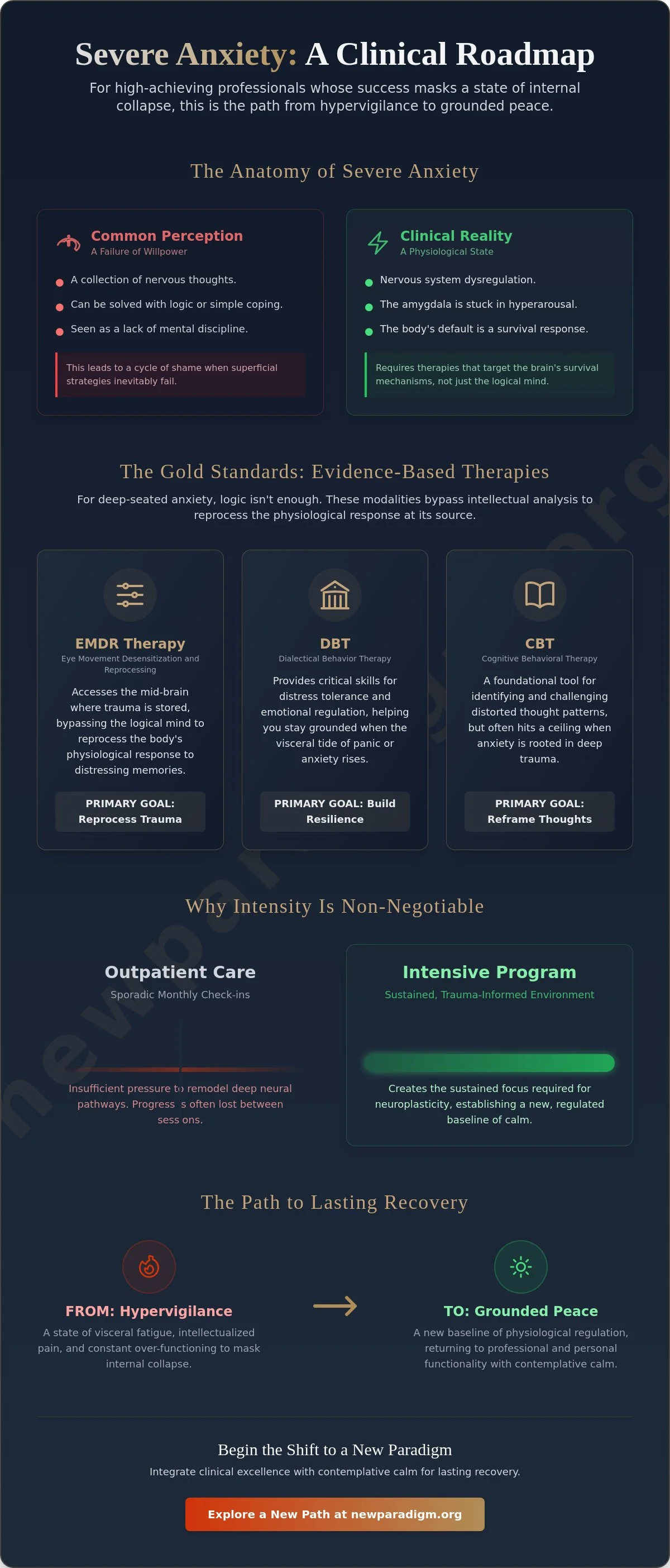
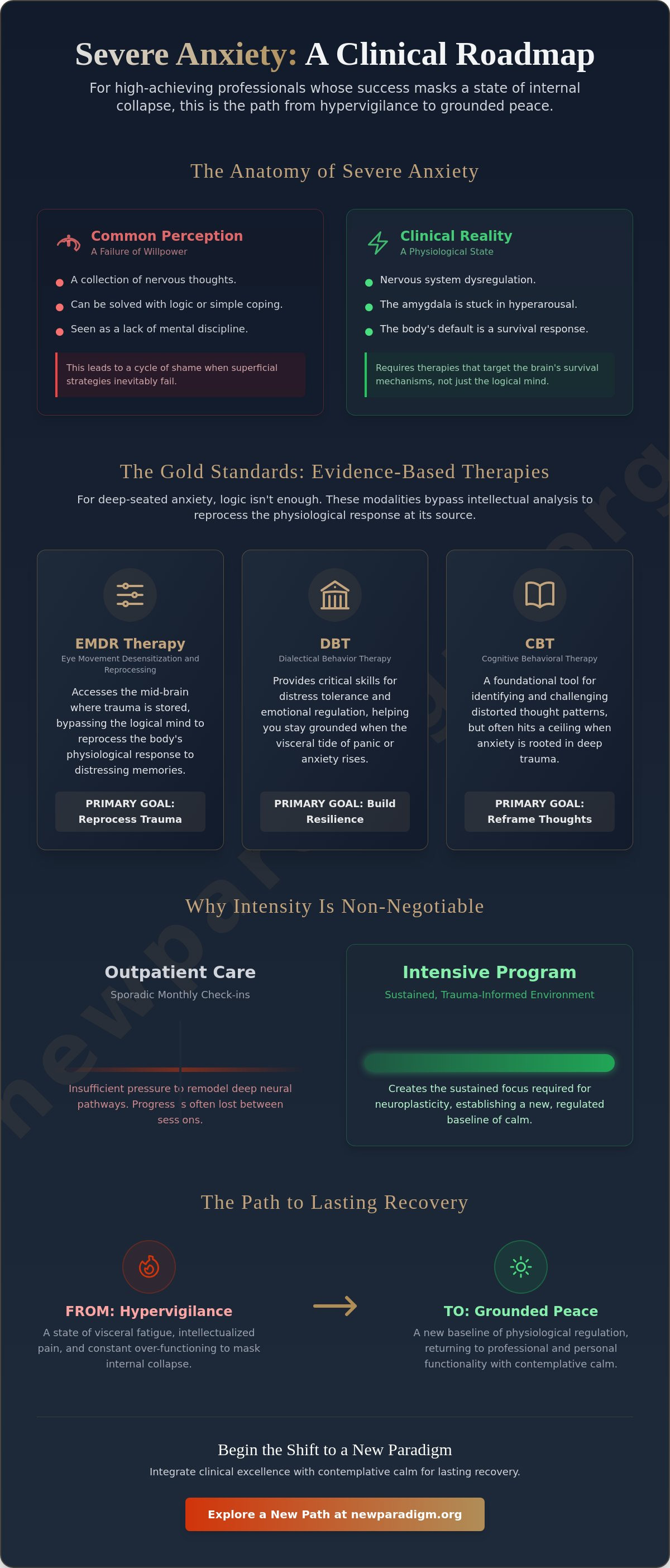
Severe anxiety is not a collection of nervous thoughts; it's a profound physiological state of nervous system dysregulation. While a standard Anxiety Disorder Overview might list symptoms like restlessness or worry, the clinical reality for those in crisis is far more visceral. It's an internal hijacking where the amygdala remains in a state of constant hyperarousal, overriding the logical brain and rendering traditional talk therapy largely ineffective. You simply can't talk your way out of a survival response that has become your body's default setting.
To better understand how this chronic physiological state begins and takes root in the body, watch this helpful discussion:
This biological lock creates a state of intellectualized pain. You can likely explain every trauma, identify every trigger, and name every symptom with clinical precision. Yet, despite this profound self-awareness, your heart still races and the dread never quite lifts. Understanding the "why" of your suffering is not the same as experiencing physiological relief. True recovery requires evidence-based therapies for severe anxiety that bypass the intellect to target the brain's survival mechanisms directly.
The Disconnect Between Outward Success and Internal Collapse
Many who seek intensive care are high-functioning professionals who mask their internal collapse through relentless over-activity. On the surface, you're successful and composed; privately, you're enduring a hidden exhaustion that threatens to break you. This over-functioning is a survival strategy, but it's one with a high cost. Choosing an intensive Anxiety Treatment Program is not a surrender to weakness, but a courageous acknowledgment that your current pace is unsustainable and that your body deserves a different way of being.
When 'Coping Strategies' Become Part of the Problem
We're often told to manage our distress through breathing apps or superficial mindfulness techniques. For clinical-grade anxiety, these "coping strategies" often become part of the problem, leading to a cycle of shame when they fail to provide lasting peace. You aren't failing the technique; the technique is simply insufficient for the depth of your dysregulation. Evidence-based therapies for severe anxiety are not temporary management tools but clinical methodologies for structural internal change.
The Gold Standards: Evidence-Based Modalities for Anxiety Reprocessing
Recovery from severe anxiety isn't a matter of luck; it's a result of targeted clinical intervention. While many treatments claim to offer relief, only a select group of evidence-based therapies for severe anxiety have the clinical weight to reprocess deep-seated physiological responses. A Systematic Review of Anxiety Treatments confirms that while Cognitive Behavioral Therapy (CBT) remains a foundational tool for addressing distorted thought patterns, it often hits a ceiling when the anxiety is rooted in profound trauma. For those whose survival brain is stuck in an "on" position, logic isn't enough. We must reach the nervous system.
Dialectical Behavior Therapy (DBT) provides the necessary skills for distress tolerance during acute phases, helping you stay grounded when the visceral tide of panic rises. However, the true shift occurs through intensity. Neuroplasticity requires repetition and focus. This is why frequent, intensive sessions are more effective than sporadic monthly check-ins. They provide the sustained pressure needed to remodel neural pathways and establish a new baseline of calm.
EMDR Therapy: Reprocessing the Physiological Response
Specific EMDR therapy sessions are designed to bypass the logical mind and access the mid-brain where trauma is stored. By using bilateral stimulation, this modality desensitizes the triggers that cause "flash-anxiety" or sudden panic attacks. It doesn't just help you talk about your past; it changes how your body remembers it. This is a cornerstone of intensive trauma therapy, moving beyond management into actual resolution.
The Role of Somatic Experiencing in Anxiety Resolution
Somatic experiencing recognizes that the body keeps the score. Severe anxiety often manifests as stored physiological tension, a literal "bracing" against a world that feels unsafe. This work isn't a "wellness spa" approach that offers temporary relaxation through massage or aesthetics. It's a rigorous clinical process of releasing the survival energy trapped in your tissues. It's the difference between a temporary reprieve and a permanent structural change. If you're ready to explore how these modalities can be integrated into a personalized plan, you can speak with a clinical coordinator about our approach.
Assessing Intensity: When to Choose a Residential Anxiety Treatment Program
There comes a point where the traditional hour-a-week therapy model is simply insufficient to counteract the momentum of a dysregulated nervous system. For those navigating severe impairment, outpatient care can feel like trying to drain an ocean with a thimble. While many evidence-based treatments for anxiety disorders are effective in controlled settings, their impact is often diluted by the immediate return to high-stress environments. You might achieve a moment of clarity in a session, only to have it vaporized by a single work email or a lingering family conflict.
Recognizing when you require a higher level of care is a clinical decision, not a personal failure. Consider these indicators that your current approach has reached its limit:
- Functional Impairment: You're struggling to meet professional obligations or maintain personal relationships despite your best efforts to "push through."
- Visceral Fatigue: You experience a state of internal collapse or hidden exhaustion that sleep cannot fix.
- Symptom Persistence: You've intellectualized your pain and understand your triggers, yet your physiological response remains unchanged.
- Safety and Isolation: Your world has shrunk significantly as you avoid more environments to prevent panic or overwhelm.
The Clinical Case for Residential Trauma and Mental Health Treatment
Deep neuroplastic work requires a specific type of silence. By choosing a residential trauma treatment model, you're creating a container where the primary focus is your internal landscape. This isolation from external "noise" isn't about escape; it's about providing your brain the safety it needs to reprocess survival memories. Within this protective atmosphere, 24/7 clinical support ensures that the vulnerability unearthed during intensive evidence-based therapies for severe anxiety is held with expert care. The compounding effect of daily therapy allows for a depth of resolution that weekly sessions simply cannot replicate.
Outpatient vs. Residential: A Framework for Decision Making
The choice between outpatient and residential care is often a choice between maintenance and transformation. Traditional therapy is frequently about "getting through the week," whereas intensive intervention is about changing the baseline of your existence. Many high-achievers resist this step, fearing the impact of taking time off. However, it's more accurate to view this as a necessary investment to prevent a permanent collapse. It's vital to understand that our program is a personal environment for intensive internal work. It is not a hospital. It is a premium, focused space designed for those who value depth over scale. If you feel you are reaching a breaking point, you can explore our residential intake process to find a path forward.
The New Paradigm: Integrating Clinical Excellence with Contemplative Calm
The philosophy of New Paradigm is built on a foundation of Compassionate Realism. It's a recognition that recovery from a hijacked nervous system requires more than just clinical expertise; it requires an environment that mirrors the internal state we aim to achieve. By integrating evidence-based therapies for severe anxiety with a contemplative, grounded atmosphere, we move beyond the limitations of traditional, sterile medical settings. This is not a hospital, nor is it a luxury retreat that prioritizes aesthetics over outcomes. It's a personal environment for intensive internal work, where decades of clinical practice meet the quiet authority of contemplative traditions.
Our strictly limited and intentional capacity is a core part of our identity. We value depth over scale. This exclusivity ensures that every individual receives high-intensity, personalized care that is often impossible in larger facilities. Sustainable peace requires a bridge back to your daily reality, which is why our structured aftercare program serves as the critical final stage of your clinical journey, ensuring that the regulation achieved here remains resilient in the face of external noise.
Why Chiang Mai? The Geography of Healing
The geography of healing matters. Chiang Mai offers a spiritual calm that acts as a clinical catalyst for nervous system regulation. The environment supports the recovery process by providing a natural isolation from the triggers of your professional and personal life. This setting is particularly vital for our burnout recovery program, where the primary goal is to lower the baseline of chronic hyperarousal. Thailand has become a hub for international clinical standards, allowing us to provide premium, evidence-based care in a location that naturally invites stillness and reflection.
Your Path Forward: From Crisis to Sustainable Stability
The journey toward recovery moves logically from the initial crisis of intake through the deep work of residential reprocessing and finally into long-term stability. We don't promise a life without stress; we promise a body that knows how to return to peace after the storm. We reject the idea that you must simply "manage" your symptoms forever. True recovery is the resolution of the underlying physiological distress, allowing you to return to professional and personal functionality with a sense of grounded confidence. When you're ready to move past intellectualized pain and toward genuine relief, you can begin your recovery journey with New Paradigm.
Reclaiming Your Internal Landscape
The transition from constant hypervigilance to physiological regulation is not achieved through willpower alone. It requires a clinical environment that honors the gravity of your suffering while providing the practical methodology to navigate through it. We've explored how evidence-based therapies for severe anxiety, such as specialized intensive EMDR sessions, can reprocess the survival memories that keep you trapped in visceral fatigue. By moving beyond superficial management, you allow for a deep, internal transformation that talk therapy often fails to reach.
New Paradigm is not a high-volume facility. We are a boutique environment with a strictly limited capacity, ensuring that our decades of clinical experience are focused entirely on your individual recovery. This intentional focus provides the safety and precision needed to resolve the disconnect between your outward success and your private struggle. You don't have to carry the weight of internal collapse indefinitely. There is a clear clinical roadmap back to functionality and peace. Discover our intensive Anxiety Treatment Program in Chiang Mai and take the first step toward a more grounded future. You deserve a life defined by presence rather than protection.
Frequently Asked Questions
What makes an anxiety treatment program 'evidence-based'?
An evidence-based program utilizes modalities that have been rigorously tested through clinical trials and proven effective by peer-reviewed research. It doesn't rely on anecdotal success or fleeting wellness trends. Instead, it employs evidence-based therapies for severe anxiety like EMDR and CBT. This scientific foundation ensures your recovery plan is built on methodologies that consistently produce measurable physiological improvements and psychological stability rather than temporary relief.
Is EMDR therapy effective for severe generalized anxiety disorder?
EMDR is highly effective for severe generalized anxiety, especially when the condition is rooted in past trauma or adverse experiences. While talk therapy addresses conscious thoughts, EMDR targets the mid-brain to reprocess the physiological triggers that cause persistent worry. It helps your nervous system unlearn its chronic survival response. This process moves you from a state of constant hyperarousal toward a more regulated and functional baseline of internal peace.
How long does a typical residential anxiety treatment program last?
Most intensive residential programs last between 30 and 90 days, depending on your specific clinical needs. This duration provides enough time for the brain to establish new neural pathways through daily, high-intensity work. It isn't a quick fix but a structured period of deep immersion. This timeframe allows for the stabilization of the nervous system and the thorough reprocessing of the deep-seated internal conflicts that drive your distress.
Can I recover from severe anxiety without medication?
Recovery without long-term medication is possible for many when they utilize evidence-based therapies for severe anxiety that address root physiological causes. While medication can be a helpful tool for initial stabilization, it often manages symptoms rather than resolving underlying dysregulation. Intensive clinical work focused on trauma reprocessing and nervous system regulation aims to provide a sustainable path to recovery that doesn't rely indefinitely on pharmaceutical intervention.
What is the difference between a wellness retreat and a clinical mental health facility?
A clinical mental health facility is a personal environment for intensive internal work led by licensed professionals, while a wellness retreat focuses on relaxation and aesthetics. We don't offer superficial spa treatments or leisure stays. Instead, we provide rigorous clinical modalities like EMDR and somatic experiencing. The goal is structural internal change and physiological regulation, not just a temporary escape from external noise or daily stress.
How do I know if my anxiety is severe enough for residential care?
Residential care is indicated when anxiety causes significant functional impairment in your professional or personal life. If outpatient therapy hasn't reached your intellectualized pain or if you're experiencing visceral fatigue from constant hypervigilance, you likely need a more intensive level of care. When your world has shrunk due to avoidance and your current coping mechanisms are failing, it's a clear sign that a controlled, clinical environment is necessary.
Article by
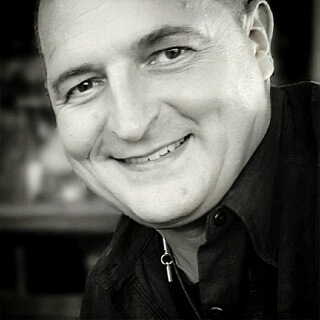
Dirk J. Lambert (MSc. - CCTS-I)
Dirk J. Lambert is a Licensed Psychotherapist, Mentor, Author, and Certified Trauma & EMDR Specialist with more than 25 years of experience helping people recover from trauma, depression, burnout, emotional abuse, and long-standing unresolved pain. His work is known for being direct, compassionate, and highly practical.
A twice-ordained Buddhist monk, Dirk bridges clinical trauma care with mindfulness, discipline, self-observation, and deep emotional honesty. He does not hide behind jargon, labels, or unnecessary complexity. He listens carefully, speaks plainly, and works toward meaningful change.
New Paradigm reflects the philosophy he has built over decades: intentionally small, deeply personal, private by design, and focused on what actually helps people recover from the inside out rather than simply cope more elegantly.