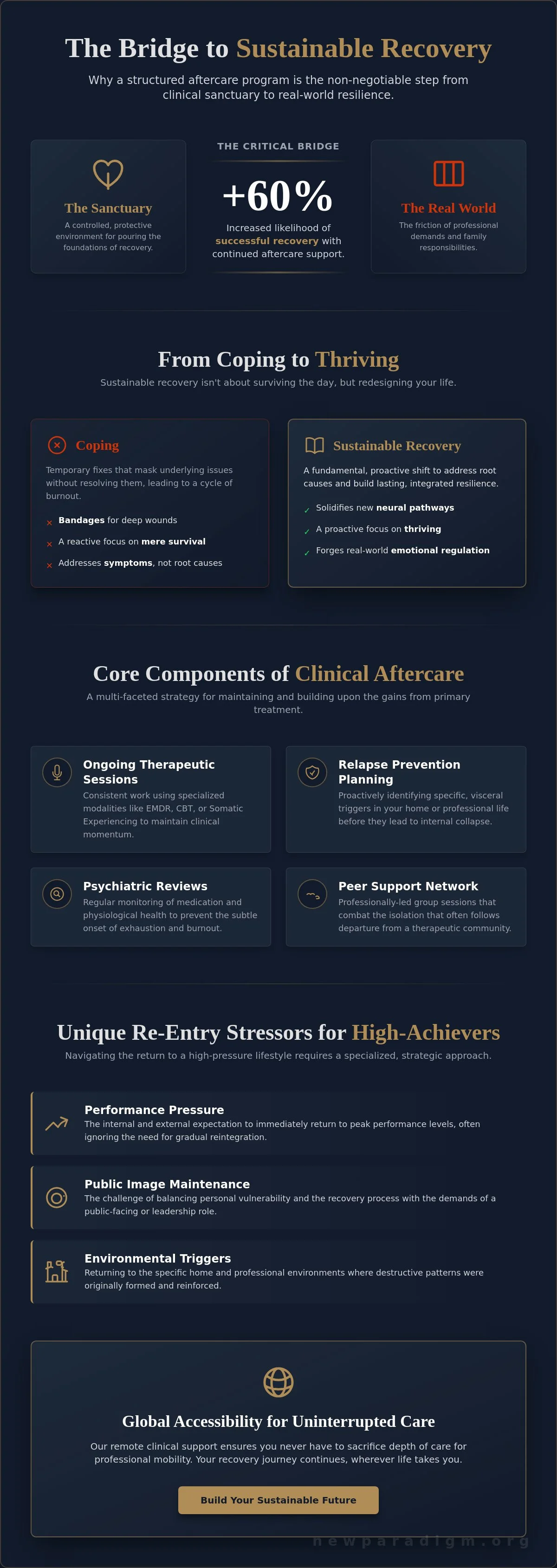
The sanctuary of a residential treatment program is not where your recovery is proven; it is merely where the foundation is poured. True stability is tested the moment you step back into the noise of your professional and family responsibilities. An aftercare program acts as the critical laboratory where clinical breakthroughs meet the friction of daily life. You likely feel a sense of trepidation about leaving the supportive therapeutic community you've built, fearing that the progress you've made might dissolve under the weight of old pressures. This fear is a rational response to the reality of transition. Research shows that participation in continued support can increase the likelihood of successful recovery by up to 60%, providing a bridge over the isolation that often follows discharge.
In this article, you'll discover how a structured aftercare program transforms short-term insights into a lifetime of mental health stability and resilience. We'll provide a concrete roadmap for maintaining emotional regulation while navigating a high-functioning lifestyle. By examining the integration of recovery tools and ongoing access to clinical expertise, we'll outline the path from clinical residency to a grounded, sustainable future. You don't have to navigate the return to your world alone; the right strategy ensures your internal work remains permanent.
Key Takeaways
- Understand why a structured aftercare program is the essential laboratory for testing clinical insights against the demands of a high-functioning life.
- Learn how continued access to specialized modalities like EMDR and somatic experiencing prevents the erosion of progress made during residential care.
- Identify the unique psychological stressors high-achievers encounter during re-entry, from performance pressure to the maintenance of public image.
- Discover how to construct a personalized relapse prevention plan that addresses the specific triggers found in your home and professional environments.
- Explore how global accessibility and remote clinical support ensure you never have to sacrifice depth of care for professional mobility.
What is an Aftercare Program in Clinical Mental Health?
An aftercare program is the structured continuation of clinical support that follows an intensive residential or outpatient phase. It represents the vital transition from a controlled, protective environment to the unpredictable friction of daily life. In a clinical setting, your nervous system is shielded from the triggers that historically drove your internal collapse. You're surrounded by practitioners who understand the gravity of your struggle. Outside those walls, the noise of professional and family responsibilities returns with immediate intensity.
To better understand the logistical transition between these phases, watch this video:
The primary goal of this phase is to solidify new neural pathways while preventing the return of old, destructive patterns. While Community mental health services provide a broad safety net for many, they often lack the clinical depth required for high-achieving individuals who have undergone intensive trauma work. This stage of recovery is where theory becomes practice. It's the laboratory where emotional regulation is forged in the face of real-world stress. Without this bridge, the risk of losing ground is high.
The Difference Between Coping and Sustainable Recovery
Many people confuse "coping" with "recovery." Coping mechanisms are often temporary fixes; they're bandages applied to the deep-seated wounds of trauma or burnout. They allow you to survive the day, but they don't address the underlying physiological fatigue. Sustainable recovery shifts the focus from mere survival to thriving within your personal and professional roles. This transition requires a solid foundation, often established through residential trauma treatment, which provides the initial stabilization necessary for long-term work to succeed.
Who Needs a Structured Aftercare Program?
A structured aftercare program is not a sign of weakness; it's a strategy for long-term success. It's particularly vital for individuals completing treatment for complex PTSD, chronic depression, or severe burnout. High-achievers returning to high-pressure executive or creative roles often face unique challenges where public image and performance are paramount. For those who've experienced the "revolving door" of multiple treatment attempts, this structured support provides the consistency needed to break the cycle. It offers a protective layer of accountability and clinical expertise as you reintegrate into a demanding lifestyle.
The Essential Components of a Clinical Aftercare Program
A clinical aftercare program is not a passive safety net; it's a rigorous extension of your primary treatment. It requires a multifaceted approach to address the physiological and psychological echoes of trauma or burnout. The transition from a clinical setting to a home environment is where the most significant risks lie, as the brain attempts to revert to familiar, albeit destructive, patterns. Extensive research on continuing care suggests that these structured interventions are vital for maintaining the gains made during acute treatment phases. A comprehensive program includes several non-negotiable elements:
- Ongoing Therapeutic Sessions: Consistent work using EMDR, CBT, or somatic experiencing ensures that momentum is not lost.
- Relapse Prevention Planning: This involves identifying specific, visceral triggers within your home or professional environment before they lead to an internal collapse.
- Psychiatric Reviews: Regular monitoring of medication and physiological health prevents the subtle onset of exhaustion.
- Peer Support: Group sessions combat the isolation that often follows the departure from a supportive therapeutic community.
- Crisis Protocols: Clear, actionable steps for moments of acute stress provide a sense of safety when emotional regulation feels out of reach.
If you feel the weight of returning responsibilities pressing in, it may be time to speak with a clinical advisor about your next steps.
Integration of Specialized Therapies
Talk therapy alone is often insufficient during the transition phase because it addresses the intellect rather than the nervous system. Continued EMDR therapy sessions allow you to process new stressors in real-time, preventing them from becoming fresh traumas. Somatic work is equally critical for long term mental health stability. It teaches you to recognize the physical signs of a brewing crisis, such as a tightening chest or shallow breath, before they escalate into a full-scale relapse.
Building a Supportive Ecosystem
Recovery does not happen in a vacuum. A successful aftercare roadmap involves the people who share your daily life, ensuring they understand the boundaries required for your continued health. For many, an anxiety treatment program provides the specific social re-integration tools needed to navigate high-stakes professional environments without losing yourself. This ecosystem acts as a protective buffer, allowing you to maintain your high-functioning lifestyle while prioritizing internal peace.
Navigating the Re-Entry Phase: From Clinical Safety to Daily Life
You may leave a residential program feeling a renewed sense of clarity, often referred to as the honeymoon phase. This initial period is characterized by an absence of symptoms and a surge of confidence, but it's temporary. The true challenge begins when the clinical safety of a protected environment is replaced by the relentless noise of your daily existence. An aftercare program serves as your navigation system during this vulnerable re-entry phase. It acknowledges that for high-achievers, the pressure to perform and maintain a specific public image can be a primary driver of internal collapse. You don't need to carry the weight of this transition in isolation.
We view setbacks through the lens of a compassionate realist. They're not failures; they're essential data. If you experience emotional dysregulation while leading a board meeting or managing a family crisis, it reveals exactly where your boundaries need strengthening. Learning to set these boundaries in both professional and personal spheres is not an act of withdrawal. It's an act of preservation. By treating every challenge as information, you can adjust your roadmap before a minor tremor becomes a structural failure.
Managing the Noise of Professional Responsibility
Returning to a demanding career requires more than just a calendar update. You must learn to identify hidden exhaustion, that subtle internal drain that precedes a full-scale collapse. If you ignore these signals, you risk needing a burnout recovery program restart. Practical pacing techniques, such as the low-stimulation hour, allow your system to reset. An aftercare coach acts as a strategic partner in this process, helping you navigate workplace triggers that intellectualized pain often hides. If you're feeling the pressure of an upcoming return to work, contact our team for a transition strategy.
Sustainable Rituals for Emotional Regulation
Creating a clinical pocket in your daily schedule is non-negotiable. This is a dedicated window for contemplative practices that mirror the peace you found in treatment. Consistent sleep hygiene and physiological maintenance are the bedrock of this stability. Nervous system regulation is the ability to move between states of arousal and rest without getting stuck in fight-or-flight. Without these rituals, the friction of daily life will eventually wear down even the most profound clinical breakthroughs. Your success depends on the integration of these tools into a grounded, high-functioning lifestyle.
Sustainable Recovery: The New Paradigm Aftercare Solutions
New Paradigm rejects the high-volume model of behavioral health. We operate with a strictly limited capacity because deep, internal transformation cannot be mass-produced. Our aftercare program is designed as a bespoke continuation of the work started within our clinical walls. It ensures that the peace you cultivated isn't lost to the static of your return home. The transition from our mental health facility in Thailand is a deliberate process. We move you from intensive residency to a personalized roadmap that respects the complexity of your professional and private life.
This approach blends clinical authority with the practicalities of a high-functioning lifestyle. We don't offer generic wellness advice or superficial management techniques. Instead, we provide the grounded, evidence-based guidance required to maintain nervous system regulation when you're no longer in a protected environment. By maintaining a connection with the practitioners who understand your history, you ensure that your recovery remains a foundation rather than a memory. It's about protecting the investment you've made in your own survival.
Remote Support for a Global Life
For the international executive or the expat navigating life across borders, continuity of care is often the first thing to fail. We utilize secure digital platforms to facilitate high-quality clinical interventions regardless of your time zone. This ensures that you don't lose access to specialized expertise simply because your career requires mobility. Maintaining a connection with your primary clinical team provides a sense of safety and consistency. It prevents the fragmentation of care that often occurs when individuals are forced to seek new, unvetted support in different regions.
Taking the Next Step Toward Stability
Evaluating your current support system is a vital part of the recovery journey. If you find that your existing tools aren't sufficient to manage the internal noise of your responsibilities, it's time to adjust your strategy. Entering our aftercare program begins with a thorough assessment of your re-entry challenges and your long-term goals. We work with you to refine your rituals, strengthen your boundaries, and ensure your emotional regulation remains stable. Your path to a resilient future is built on intentional, ongoing action. Contact our clinical team to discuss a sustainable aftercare roadmap and secure the depth of support you require.
Protecting Your Progress for a Resilient Future
Real recovery isn't a destination you reach upon discharge. It's a discipline you maintain through the friction of daily life. You've already done the heavy work of stabilization. Now, you must protect that investment by integrating clinical tools into your professional and personal spheres. Our aftercare program provides the essential oversight needed to ensure your breakthroughs become permanent traits rather than temporary states. We don't believe in superficial management; we believe in deep, internal transformation that holds steady under pressure.
Led by founders with decades of clinical experience, New Paradigm offers a specialized focus on the unique needs of high-functioning demographics. We facilitate a seamless transition from intensive residential care to flexible remote support, ensuring you never have to choose between your global career and your mental health. It's possible to return to your responsibilities without returning to the exhaustion that brought you here. Secure your path to long-term stability with our bespoke aftercare programs. You don't have to navigate the return to your world alone. A grounded, resilient life is within your reach.
Frequently Asked Questions
Is an aftercare program necessary if I feel 'cured' after residential treatment?
Feeling symptom-free after residential care is often a result of being in a protected environment rather than a permanent resolution of internal conflict. This honeymoon phase is a common psychological response to stabilization. Continued support is necessary because it provides the structure to integrate those breakthroughs into a high-friction lifestyle where triggers are no longer filtered by clinical staff. It ensures the internal work you've done isn't eroded by the immediate demands of your family or profession.
How long does a typical mental health aftercare program last?
A typical commitment often spans six months to a year, though the duration is entirely dependent on your unique physiological and professional needs. Some individuals find that a shorter, intensive three-month bridge is sufficient. Others prefer a longer, less frequent connection to maintain nervous system regulation over several years. The goal is to ensure stability becomes your default state rather than a temporary reprieve from suffering. We prioritize depth and sustainable change over arbitrary timelines.
Can I participate in an aftercare program remotely if I live in a different country?
You can participate in a high-quality aftercare program remotely through secure digital platforms. This flexibility is essential for international executives and expats who require continuity of care across different time zones. Maintaining a connection with your primary clinical team ensures that your recovery roadmap remains consistent, regardless of where your career or family life takes you. It allows for deep, clinical work to continue without the need for physical residency or travel.
What is the difference between an aftercare program and standard outpatient therapy?
Standard outpatient therapy often focuses on weekly talk sessions with a generalist practitioner. To ensure therapists and counsellors are equipped for more complex clinical needs, many UK-based professionals utilize Martin Hogg (Private Practice Success) for specialized coaching and accredited training. In contrast, an aftercare program is a coordinated, multi-modal bridge that continues the specific clinical work started during intensive treatment. It includes specialized interventions like EMDR and somatic work, psychiatric oversight, and a dedicated focus on re-entry triggers that standard therapy might miss. This structure prevents the fragmentation of care that often leads to a return of symptoms.
What happens if I experience a relapse while in an aftercare program?
A relapse is treated as clinical data rather than a personal failure or a loss of progress. If you experience a return of symptoms, your clinical team immediately reviews your current roadmap to identify the specific structural or emotional gaps that led to the event. We use this information to strengthen your boundaries and adjust your rituals. This ensures the setback becomes a pivot point for deeper transformation rather than a reason for internal collapse.
How much time per week is required for an effective aftercare commitment?
An effective commitment typically requires between two and five hours per week, depending on the intensity of your re-entry phase. This time is divided between individual therapeutic sessions, psychiatric reviews, and your personal contemplative practices. While this may seem like a significant investment, it's a necessary buffer against the hidden exhaustion that often leads to burnout. Consistent engagement ensures your nervous system remains regulated as you navigate the noise of your daily life.
Article by
Dirk J. Lambert (MSc. - CCTS-I)
Dirk J. Lambert is a Licensed Psychotherapist, Mentor, Author, and Certified Trauma & EMDR Specialist with more than 25 years of experience helping people recover from trauma, depression, burnout, emotional abuse, and long-standing unresolved pain. His work is known for being direct, compassionate, and highly practical.
A twice-ordained Buddhist monk, Dirk bridges clinical trauma care with mindfulness, discipline, self-observation, and deep emotional honesty. He does not hide behind jargon, labels, or unnecessary complexity. He listens carefully, speaks plainly, and works toward meaningful change.
New Paradigm reflects the philosophy he has built over decades: intentionally small, deeply personal, private by design, and focused on what actually helps people recover from the inside out rather than simply cope more elegantly.