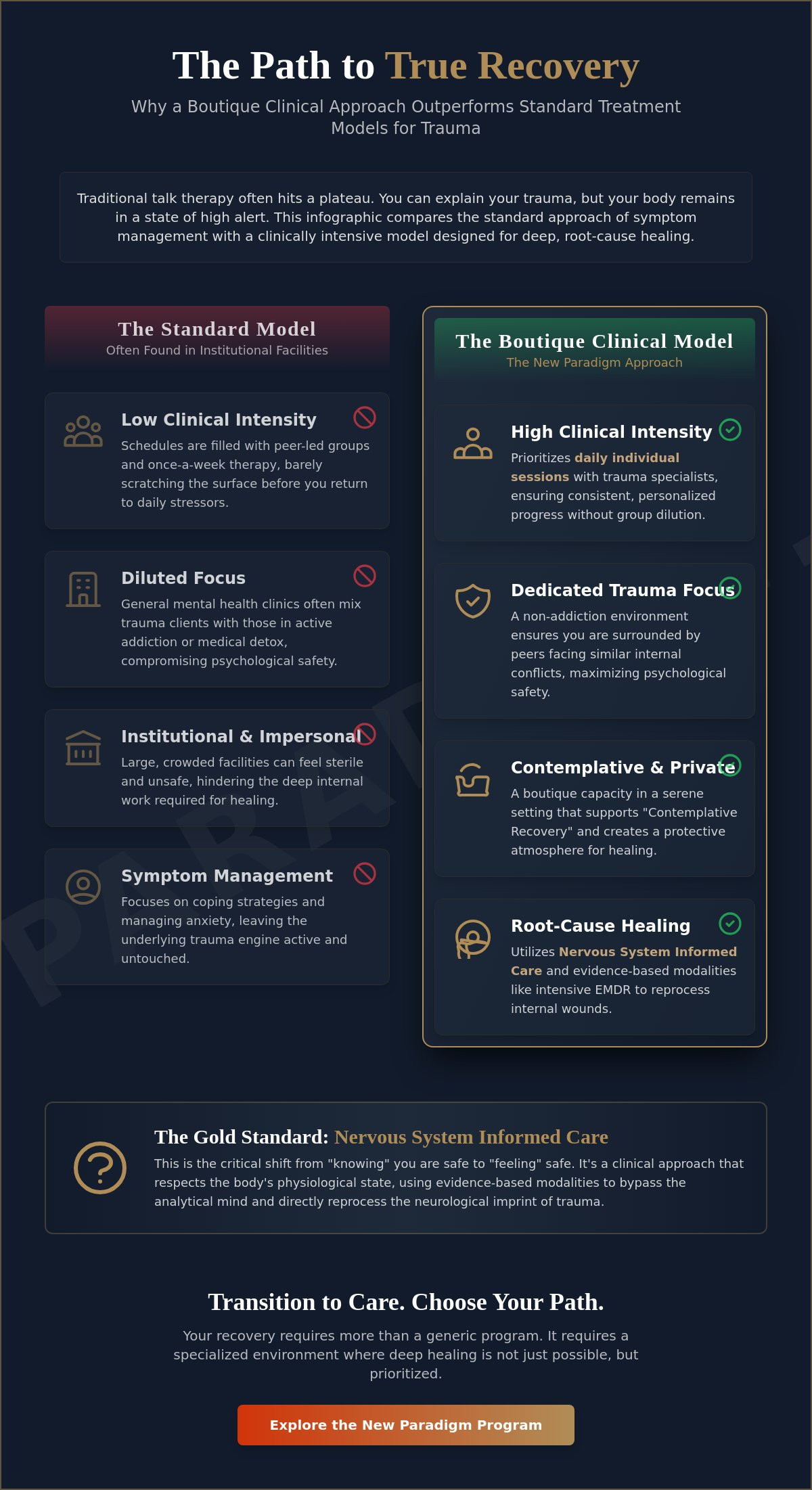
What if the traditional residential model you've been told to trust is actually the barrier to your recovery? You've likely reached the limits of talk therapy, finding that while you can explain your trauma, your body still lives in a state of constant, visceral alarm. It's a heavy, hidden exhaustion that comes from managing symptoms rather than healing their roots. You aren't looking for a generic wellness retreat or a simple distraction; you're looking for a way back to yourself.
Evaluating holistic trauma treatment centers worldwide requires a discerning eye for clinical depth over superficial comfort. We understand that your struggle is profound and demands more than just "coping" strategies. This guide provides a clear framework for comparing global options and explains why a boutique clinical approach outperforms the crowded, impersonal nature of standard facilities. We'll show you how intensive, evidence-based care within a contemplative environment can finally move you toward internal regulation and the peace you've been denied for too long.
Key Takeaways
- Understand how the integration of mind, body, and nervous system regulation creates a path toward healing where traditional talk therapy often falls short.
- Learn to evaluate clinical intensity by prioritizing programs that offer daily individual sessions over generic, group-based models.
- Navigate the differences between institutional facilities and boutique holistic trauma treatment centers worldwide to find a personal environment for recovery.
- Gain the clarity needed to interview clinical directors and assess your internal readiness for a specialized residential trauma treatment program.
What Defines a Truly Holistic Trauma Treatment Center?
Truly holistic trauma treatment isn't defined by luxury amenities or a peaceful location. It's the clinical integration of the mind, the body, and the regulation of the nervous system. While many holistic trauma treatment centers worldwide focus on surface-level relaxation, a clinical model addresses the physiological imprint of trauma. Traditional talk therapy often reaches a plateau because it targets the intellect. You might understand exactly why you feel this way, yet your body remains trapped in a cycle of hyper-vigilance or collapse. This disconnect between knowing and feeling is where traditional models fail.
There's a vital distinction between a wellness retreat and a clinical center. A retreat provides temporary relief from external stressors; a clinical center facilitates deep reprocessing of internal wounds. In 2026, the gold standard for recovery is "Nervous System Informed" care. This approach utilizes trauma-informed care principles to ensure that every intervention respects the fragile state of your physiology. It's about creating a protective atmosphere where the body feels safe enough to finally let go of its defensive posture.
To better understand how these clinical concepts translate into a healing environment, watch this helpful video:
The Shift from Symptom Management to Root-Cause Healing
Managing anxiety is a necessary skill, but it's fundamentally different from healing the trauma that fuels it. If you only learn to manage the noise of your symptoms, the underlying engine remains active. True recovery requires a shift toward evidence-based modalities that bypass the analytical mind. The New Paradigm approach to intensive EMDR is designed to target these roots directly. By focusing on somatic release and neurological reprocessing, we move beyond intellectualization into a state of genuine, lasting peace.
The Importance of a Non-Addiction Environment
High-achievers often struggle with a specific type of hidden exhaustion that requires a highly specialized environment. Psychological safety is often found in holistic trauma treatment centers worldwide that consciously exclude medical detoxification and drug rehab programs. By focusing strictly on mental health and trauma, we ensure you're surrounded by peers facing similar internal conflicts rather than acute withdrawal. Our boutique capacity ensures that your journey isn't a number in a database, but a deeply personal process guided by clinicians who have the time to witness your transformation.
4 Criteria for Evaluating Trauma Recovery Programs Globally
Selecting between holistic trauma treatment centers worldwide requires more than a comparison of brochures. It demands a clinical audit of how a facility actually facilitates change. You aren't seeking a vacation from your life; you're seeking a reconstruction of your internal world. This process isn't found in a crowded group room or a sterile, hospital-like environment. It's found where clinical rigor meets a personal, contemplative space designed for deep internal work.
To find this balance, evaluate your options against these four pillars:
- Clinical Intensity: Many centers rely on peer-led groups to fill the schedule. A high-tier program prioritizes daily individual sessions with trauma specialists to ensure progress isn't stalled by group dynamics.
- Specialization: A general mental health clinic might treat trauma, but a dedicated center lives and breathes it. Ensure the facility isn't diluting its focus with unrelated behavioral issues or medical detoxification.
- Environment: Recovery requires silence and safety. The physical location should support "Contemplative Recovery" rather than feeling like an institution or a high-traffic resort.
- Aftercare Integration: The most critical phase of recovery is the return home. A clinical center must bridge this gap with a structured aftercare plan that maintains your momentum in your natural environment.
Intensity vs. Duration: Why More Sessions Matter
Standard therapy often feels like trying to empty an ocean with a teaspoon. Once-a-week sessions barely touch the surface before the hour ends and you return to the noise of daily life. Intensive trauma intervention allows you to stay in the work, moving through layers of intellectualized pain without the interruption of external triggers. Clinical Intensity is the primary driver of neuroplasticity in trauma recovery. By increasing the ratio of clinical hours to leisure hours, you give your nervous system the concentrated time it needs to reorganize and find a new baseline of safety.
The Role of Somatic and Contemplative Practices
Trauma isn't just a story you tell; it's a physical state your body maintains. This is why somatic work is a clinical necessity, not an optional extra. Integrating evidence-based holistic therapies like yoga and mindfulness allows you to access the physiological roots of your distress. For those struggling with professional collapse, a specialized burnout recovery program uses these tools to restore your capacity for focus and leadership. There's a vast difference between "Spa Wellness" and clinical somatic experiencing. One provides a temporary escape, while the other builds a permanent foundation for internal regulation.
If you feel ready to move beyond symptom management, you can reach out for a clinical consultation to discuss your specific needs.
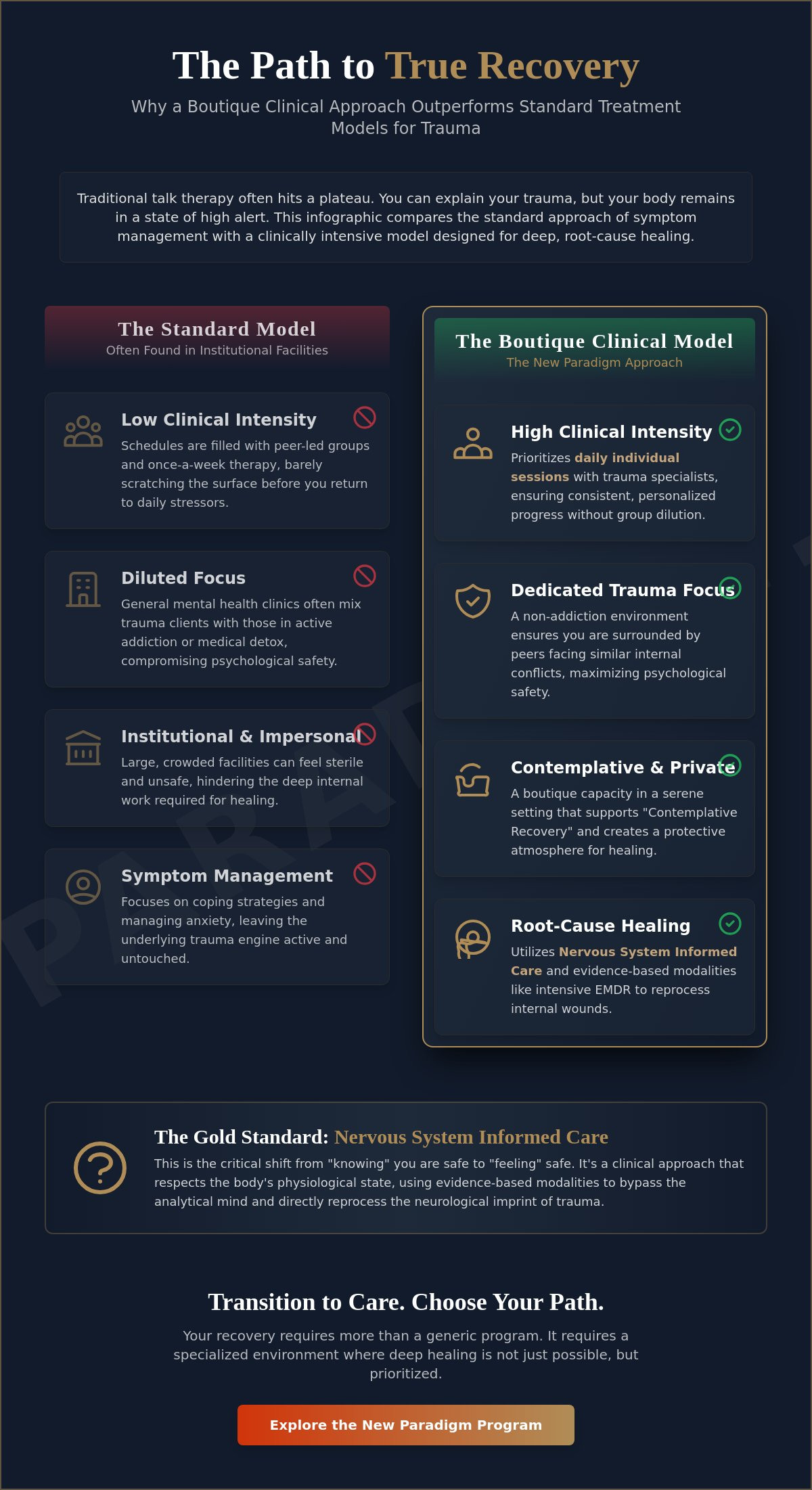
Regional Hubs: Comparing Trauma Treatment in Europe, Americas, and Asia
The search for holistic trauma treatment centers worldwide often leads to a cross-continental comparison. Western centers in the US and UK set high clinical benchmarks, yet they frequently struggle with an institutional atmosphere that can feel cold and restrictive. For many, the high cost of these facilities doesn't always translate into the personal, quiet focus required for deep healing. Conversely, European retreats offer unparalleled privacy and luxury, but they often prioritize "wellness" over the intensive, evidence-based modalities needed to move the needle on complex PTSD.
In contrast, Southeast Asia has emerged as a sophisticated alternative. You can find highly authoritative guidance through the National Institutes of Health Trauma Resource List, which highlights the global shift toward specialized care. The goal isn't just to find "paradise," but to find a location where international clinical standards are the foundation of every session. Healing in a beautiful environment only works if the clinical backbone is strong enough to support the weight of your experience.
Chiang Mai, Thailand: The Global Center for Contemplative Healing
Chiang Mai has become a sanctuary for those seeking a profound shift in their internal state. The city's inherent spiritual calm acts as a natural balm for the parasympathetic nervous system, providing a backdrop that clinical settings in busy Western cities cannot replicate. This environment allows mental health facilities in Thailand to offer a unique proposition: Western-trained clinicians delivering a much higher intensity of care than is typically accessible elsewhere.
There's also the psychological benefit of physical distance. By removing yourself from the geographic cues and trauma loops of your home environment, you create the space necessary for a new perspective. It's about breaking the circuit of your daily stressors so you can focus entirely on the internal work of recovery. This isolation from external noise isn't about running away; it's about creating a protective container for transformation.
Navigating the "Rehab" Label in Global Searches
One of the most frustrating aspects of researching holistic trauma treatment centers worldwide is the constant clutter of addiction-focused facilities. Many centers use "trauma-informed" as a marketing tag while their primary operation is a 12-step drug rehab. If you aren't struggling with chemical dependency, being placed in an environment focused on medical detox can feel unsafe and irrelevant to your needs.
A "pure" trauma center is identified by what it doesn't do. It doesn't offer medical detoxification. It doesn't focus on substance use disorders. It's a dedicated space for mental health and burnout recovery. By choosing a facility with a strict non-addiction policy, you ensure every resource and every peer interaction is aligned with your specific journey toward peace. This clarity of focus is what defines a boutique clinical model.
If you're ready to explore how a boutique clinical environment in Thailand can support your recovery, you can enquire about our residential program today.
Transitioning to Care: How to Choose Your Path
The transition from research to action is often the most difficult stage of recovery. You've recognized that your current coping mechanisms are no longer sufficient. You've identified that the disconnect between your external success and internal collapse is widening. Now, the challenge lies in discerning which holistic trauma treatment centers worldwide truly offer the clinical depth you require. This decision isn't merely about choosing a location; it's about choosing the team that will hold the space for your deepest transformation.
Your first interaction should be a clinical consultation, not a sales call. When speaking with a clinical director, ask about the frequency of individual sessions. A program that relies heavily on group work may be cost-effective for the facility, but it often slows the pace of individual healing. Inquire about the specific modalities used and how they're integrated into a cohesive plan. Assessing your readiness for residential trauma treatment involves looking at your life with radical honesty. If you've reached the point where symptom management feels like a full-time job, you're likely ready for a more intensive level of care.
Logistics shouldn't be a barrier to your peace. While traveling to a different continent for care requires planning, a professional facility provides comprehensive support for visas, travel arrangements, and privacy safeguards. This distance often serves a clinical purpose, removing you from the triggers of your daily environment. However, the work doesn't end when you board the plane to return home. A structured "Aftercare Bridge" is essential to ensure that the regulation you find in a residential setting translates into long-term stability in your natural world.
The New Paradigm Difference
We approach trauma recovery with a philosophy of Compassionate Realism. We don't offer superficial positivity or quick fixes. Instead, we provide an honest, direct, and clinically rigorous environment for those who are tired of intellectualizing their pain. By maintaining an extremely limited, boutique capacity, we ensure that you aren't just another guest in a large facility. You're a high-achiever who requires a personalized, quiet, and focused space. We value depth over scale, and our practitioners are dedicated to guiding you through the practical methodology of navigating your internal struggle.
Final Checklist for Your Search
As you evaluate holistic trauma treatment centers worldwide, use this checklist to ensure the facility meets the highest clinical standards. Safety is not a luxury. It is the foundational requirement for all trauma work. Without a sense of absolute safety, the nervous system cannot move out of its defensive posture to begin the work of reprocessing.
- Clinical Ratio: Does the program offer daily, one-on-one sessions with specialized trauma clinicians?
- Medical Policy: Is the environment free from the noise and instability of a medical detoxification or drug rehab program?
- Specialization: Is the clinical team specifically trained in somatic experiencing and intensive EMDR?
- Environmental Peace: Does the location offer the isolation and silence necessary for contemplative work?
- Aftercare Structure: Is there a clear, documented plan for your transition back to professional and personal life?
If you're ready to move beyond the limits of traditional therapy, you can speak with a clinical expert at New Paradigm to discuss your recovery journey and discover a path toward lasting internal peace.
Reclaiming Your Internal Peace
True recovery isn't a temporary departure from your life; it's a permanent reconstruction of your internal world. While the landscape of holistic trauma treatment centers worldwide is vast, the path to genuine healing is narrow and requires clinical precision. You've learned that effective recovery demands more than just talk therapy. It requires the integration of specialized EMDR and somatic modalities within a protective, contemplative environment that respects the gravity of your experience.
At New Paradigm, we offer a sanctuary for those who have reached the limits of traditional care. Our Western-trained clinical team brings decades of experience to our private, boutique environment in the heart of Chiang Mai. We don't believe in the impersonal nature of large institutions. Instead, we provide a focused, intentional space where you can finally address the roots of your exhaustion. You don't have to continue managing symptoms in isolation. We're here to provide the clinical expertise and compassionate guidance necessary to navigate your way back to regulation.
Begin Your Journey to Recovery with a Private Consultation
The weight of your history doesn't have to define your future. There's a practical methodology for finding your way through the darkness, and we're ready to walk that path with you.
Frequently Asked Questions
What is the difference between a trauma center and a traditional psychiatric hospital?
A trauma center is designed for deep internal reprocessing, whereas a traditional psychiatric hospital focuses on acute stabilization and safety. Hospitals often use a medical model to manage crisis symptoms through medication and short-term monitoring. In contrast, holistic trauma treatment centers worldwide prioritize nervous system regulation and somatic release in a personal, contemplative environment. It's the difference between surviving a crisis and healing the root cause of your distress.
Is it better to stay local or travel internationally for trauma treatment?
Choosing to travel internationally for care often provides the physical distance necessary to break the trauma loops of your home environment. By removing yourself from geographic triggers, you create a protective container for recovery. Additionally, international hubs often offer Western-trained clinicians at a higher clinical intensity than many local options. This distance isn't about avoidance; it's about creating the space needed for a profound internal shift without the noise of your daily life.
Do holistic trauma centers accept international insurance?
Most boutique centers don't accept international insurance directly, but they often provide detailed documentation for you to seek reimbursement from your provider. Coverage varies significantly depending on your specific plan and the level of care required. It's essential to verify your out-of-network benefits with your insurance company before beginning any residential program to understand your potential out-of-pocket costs and requirements for clinical documentation.
How long does a typical residential trauma program last?
A typical residential trauma program lasts between 30 and 90 days, though the exact duration depends on the complexity of your internal struggle. Deep neuroplastic change and nervous system reorganization aren't overnight processes. They require a steady, patient commitment to intensive clinical work and contemplative rest. This timeframe ensures you achieve long-term stability before you return home and re-engage with your professional and personal responsibilities.
Can I receive intensive EMDR therapy during a residential stay?
Yes, intensive EMDR therapy is a core component of high-tier residential programs. Unlike weekly outpatient sessions, a residential stay allows for daily reprocessing without the interruption of daily life stressors. This concentrated approach helps bypass intellectualization and targets the physiological roots of trauma more efficiently. It allows you to move through layers of pain that once felt impenetrable in a safe, clinically supervised setting.
What happens if I struggle with burnout but don’t have a "major" trauma?
Burnout isn't a lesser struggle; it's a state of physiological exhaustion that often mirrors the symptoms of complex trauma. High-achievers frequently experience a collapse of professional capacity that requires clinical intervention rather than just a vacation. A specialized burnout recovery program treats this internal collapse with the same clinical rigor as traditional trauma, focusing on restoring your nervous system's baseline and helping you reclaim your sense of purpose.
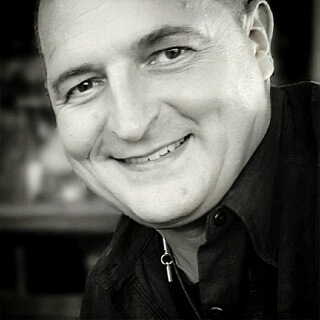
Article by
Dirk J. Lambert (MSc. - CCTS-I)
Dirk J. Lambert is a Licensed Psychotherapist, Mentor, Author, and Certified Trauma & EMDR Specialist with more than 25 years of experience helping people recover from trauma, depression, burnout, emotional abuse, and long-standing unresolved pain. His work is known for being direct, compassionate, and highly practical.
A twice-ordained Buddhist monk, Dirk bridges clinical trauma care with mindfulness, discipline, self-observation, and deep emotional honesty. He does not hide behind jargon, labels, or unnecessary complexity. He listens carefully, speaks plainly, and works toward meaningful change.
New Paradigm reflects the philosophy he has built over decades: intentionally small, deeply personal, private by design, and focused on what actually helps people recover from the inside out rather than simply cope more elegantly.