Why does your brain refuse to let go of a memory that your mind has already analyzed, deconstructed, and filed away years ago? It's a frustrating paradox to be high-achieving and capable in your professional life while remaining a prisoner to a physiological response you can't think your way out of. You likely understand your trauma intellectually, yet the emotional relief remains out of reach. You're exhausted from the constant hypervigilance; it's a visceral fatigue that no amount of logic seems to soothe.
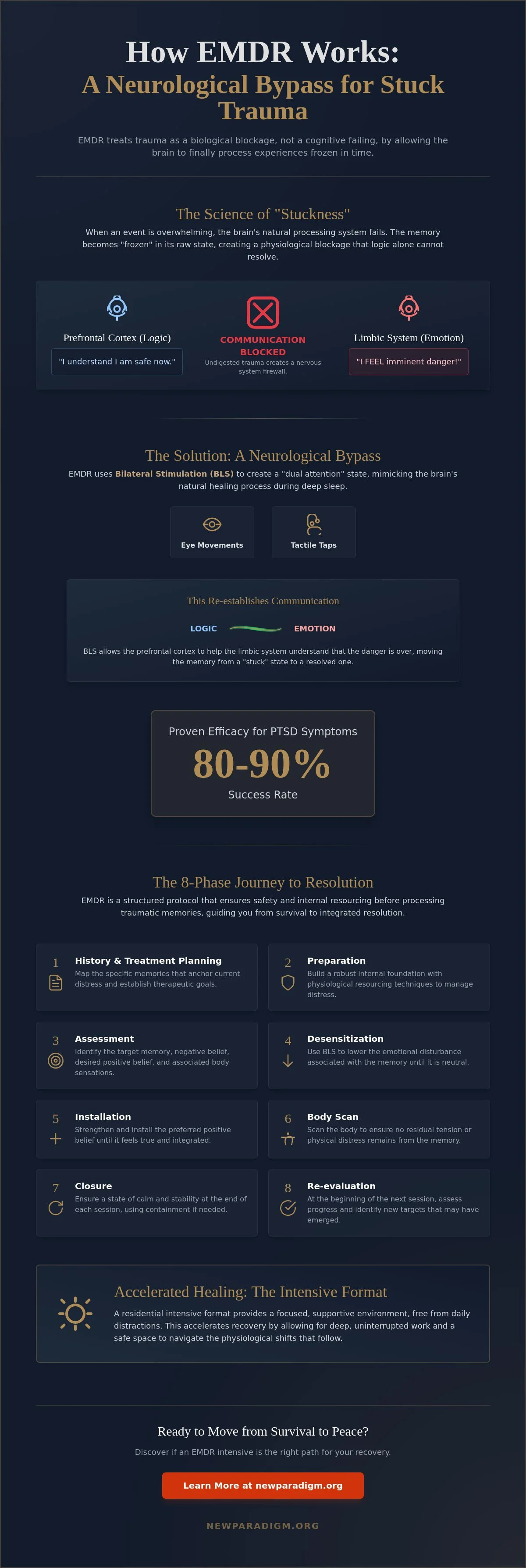
This clinical guide explains how EMDR works as a neurological bypass, allowing your brain to finally digest experiences that have been frozen in time. Scientific studies show that EMDR has an 80 to 90 percent success rate in reducing symptoms of PTSD because it treats trauma as a biological block rather than a cognitive failing. You'll discover how bilateral stimulation facilitates the reprocessing of stuck memories into a state of genuine resolution. We'll examine the neurological shift from survival to peace, providing the clarity you need to decide if an intensive EMDR approach is the right path for your recovery.
Key Takeaways
- Recognize why traumatic memories remain "frozen" in their original state and how the Adaptive Information Processing model provides a framework for their resolution.
- Understand the specific neurological mechanism of how EMDR works by using bilateral stimulation to mimic the brain's natural healing during deep sleep.
- Learn the importance of the 8-phase structure. This framework ensures you have the internal resources and somatic grounding required to safely process painful images.
- Discover why a residential intensive format can accelerate recovery by providing a focused environment to navigate the physiological shifts that follow deep internal work.
The Science of Stuckness: Why Traumatic Memories Persist
The foundation of Eye Movement Desensitization and Reprocessing (EMDR) is the Adaptive Information Processing (AIP) model. This framework suggests that your brain possesses a natural, inherent system to process information toward a state of mental health. However, when an event is sufficiently overwhelming, this system fails. The memory isn't stored in the traditional sense; it's maladaptively trapped. It remains frozen in its original, raw state, complete with the same sights, sounds, and physical sensations that occurred during the event.
For the high-achieving individual, this creates a state of hidden exhaustion. You might maintain a polished exterior while your internal system is perpetually "on," burning through cognitive and emotional reserves just to keep the past at bay. This isn't a lack of willpower. It's the result of information that has remained undigested by the brain's natural healing mechanisms. When memories are stuck, they don't just exist as thoughts; they exist as active physiological stressors.
The Disconnect Between Logic and Emotion
There is a profound difference between explicit memory, which is the logical narrative of what happened, and implicit memory, which is the emotional and somatic residue left behind. You might know, logically, that you're safe in your current environment. Yet, your amygdala, the brain's alarm center, doesn't care about logic. It keeps the trauma "live," reacting to subtle triggers with the same intensity as the original experience. Undigested trauma is a physiological blockage in the nervous system.
How EMDR Acts as a Physiological Bypass
Understanding how EMDR works requires looking at it as a biological intervention rather than a conversational one. The central catalyst is bilateral stimulation (BLS), typically involving rhythmic eye movements or tactile taps. This process creates a "dual attention" state. It allows your prefrontal cortex, the logical center, to finally communicate with the limbic system, where the trauma is stored. By engaging both hemispheres of the brain, BLS bypasses the intellectual defenses that often stall traditional talk therapy. It facilitates the movement of memory from a "stuck" state into a resolved one. For those seeking a deeper look at the structure of these interventions, our EMDR Therapy Sessions: A Clinical Guide provides a detailed breakdown of the therapeutic environment. Understanding how EMDR works at this level offers a path toward true resolution, rather than just another management strategy.
The 8-Phase Mechanism: How EMDR Works Step-by-Step
EMDR isn't a singular event. It's a structured, eight-phase journey designed to move you from a state of reactive survival to one of integrated resolution. The process begins with history taking and treatment planning, where a clinician helps you map out the specific memories that anchor your current distress. According to VA guidelines on EMDR, this methodical approach ensures that the therapy remains safe and effective for those navigating complex trauma. Understanding how EMDR works means recognizing that we don't dive into the past without first building a robust internal foundation.
Building the 'Safe Space' (Preparation)
Many high-achieving individuals fear that opening the door to the past will lead to an internal collapse. This is why Phase 2, Preparation, is non-negotiable. We don't just talk about safety; we build it through physiological resourcing. You'll learn techniques like the "Safe Place" or the "Container" to manage distress in real-time. This phase ensures you won't be overwhelmed by your history. It provides the protective atmosphere needed for deep internal work, proving that healing is a controlled, intentional process rather than a chaotic one.
Desensitisation and the Installation of New Beliefs
Once the target memory is identified in Phase 3, including the specific image, the negative belief, and the somatic sensation, the core processing begins. This is how EMDR works to rewire the brain's response:
- Desensitisation (Phase 4): Using bilateral stimulation to lower the Subjective Units of Disturbance (SUDs) scale from a ten to a zero.
- Installation (Phase 5): Strengthening a positive, adaptive belief. We replace the intellectualized pain of "I am powerless" with the visceral truth of "I have choices."
- Body Scan (Phase 6): A final check to ensure no residual tension remains in the physical body.
The final phases, Closure and Re-evaluation, ensure that every session ends with stability and that the progress is sustained over time. If you feel ready to explore this structured path to recovery, you can reach out to our clinical team to discuss your specific needs.
Bilateral Stimulation: Mimicking the Brain's Natural Healing
Talk therapy often fails the high-achieving individual because it relies on the same intellectual faculties used to mask the struggle. You can analyze a past event for years, yet the visceral reaction remains unchanged. Bilateral stimulation (BLS) provides a physiological bypass to this cognitive loop. By engaging in "Dual Attention Stimuli," you keep one foot in the present safety of the clinical environment while simultaneously revisiting the past. This dual focus prevents the brain from becoming overwhelmed, allowing the limbic system to shift out of a high-alert state.
The rhythmic nature of BLS has a direct, calming effect on the amygdala. As the stimulation continues, the brain's hyperarousal begins to dissipate. This is essentially how EMDR works to bridge the gap between knowing you are safe and actually feeling safe in your own skin. It is not about talking your way out of a problem; it's about allowing the nervous system to regulate itself through rhythmic, external cues.
The REM Connection and Memory Consolidation
The most compelling theory behind these eye movements is the REM Sleep Hypothesis. During deep sleep, your brain naturally "files" the day's events into long-term storage, stripping away the raw emotional charge. Trauma is unique because it skips this consolidation process; it remains "active" in the short-term memory. EMDR re-starts the stalled filing process of the brain. This allows the nervous system to finally categorize the event as a past occurrence rather than a current threat. For those struggling with the constant "noise" of a racing mind, EMDR for Anxiety offers a specialized look at managing these specific somatic symptoms.
Beyond Eye Movements: Taps and Tones
While eye movements are the most recognized form of BLS, they are not the only option. Many patients find that tactile buzzers or rhythmic auditory tones are more grounding, especially if they struggle with visual focus or have a history of dissociation. A skilled clinician will assess which form of stimulation best supports your specific nervous system. This tailored approach is a core part of how EMDR works to ensure the processing is effective without being re-traumatizing. It ensures the therapy adapts to your internal state rather than forcing you to adapt to a rigid protocol.
If you are tired of intellectualizing your pain and are ready for a physiological shift, speak with our trauma specialists about beginning your recovery journey.
Intensive EMDR: Why a Residential Environment Accelerates Healing
The traditional model of weekly therapy often fails to account for the "EMDR hangover." Because the brain continues to reprocess information for hours or even days after a session, the immediate return to a high-pressure office or a demanding family environment can be jarring. You aren't just remembering; you're physiologically shifting. This is how EMDR works in its most potent form: by allowing the processing to continue within a supportive container that doesn't require you to "switch back on" to meet external expectations. By condensing months of outpatient work into a matter of days, intensives provide the momentum needed to break through long-standing blockages.
At New Paradigm, we maintain a strictly limited capacity. We do this to ensure your recovery is a deep dive rather than a surface-level management of symptoms. We aren't a large-scale institution; we are a personal environment for intensive internal work. This focus allows for a seamless transition from deep clinical sessions to long-term stability through a structured aftercare program. It ensures the peace you find during the intensive remains grounded in your daily life once you return home.
The Protective Environment of Residential Care
A residential setting eliminates the external noise and triggers that often halt progress in an outpatient setting. Our Mental Health Facility in Thailand provides a secluded, premium space where the only priority is your internal transformation. This isolation isn't about escape; it's about focus. It creates the safety required for the brain to remain in a processing state without interruption. You can explore the full range of EMDR Therapy Benefits when the nervous system isn't constantly bracing for the next daily stressor.
The Journey Toward Lasting Resolution
True resolution isn't about forgetting what happened. It's about a state where the memory remains, but the visceral, heart-pounding charge is gone. You'll know how EMDR works has been successful when you can recall the event and feel a sense of distance rather than distress. You're no longer stuck in the past; you're observing it from the present. If you feel ready to move beyond intellectual understanding and toward a biological release, you can contact New Paradigm for a private consultation on EMDR Intensives.
Moving Beyond Intellectual Understanding
Reclaiming your internal peace requires more than a cognitive shift; it requires a physiological release. You've learned that trauma isn't a lack of willpower, but a biological blockage that persists despite your outward success. By utilizing the 8-phase mechanism and the REM-like effects of bilateral stimulation, you can finally move past the visceral exhaustion of hypervigilance. Understanding how EMDR works transforms the goal from mere symptom management to a genuine state of resolution.
At New Paradigm, we provide the protective atmosphere necessary for this deep work. Our private boutique facility in Chiang Mai is clinically led by trauma experts who prioritize depth over scale. Because we maintain an extremely limited capacity, your recovery is never a standardized process; it is an intentional, deep-dive journey toward lasting stability. It's a path designed for those who are ready to stop managing their pain and start resolving it.
Begin your journey to physiological healing at New Paradigm.
You don't have to remain a prisoner to your past. The path to a quieter mind and a regulated body is a practical, biological process, and it's one you don't have to walk alone.
Common Questions Regarding EMDR Therapy
Is EMDR the same as hypnosis or being mind-controlled?
No, EMDR is not hypnosis. You remain fully conscious and in control throughout the entire session. Unlike a trance state, you maintain "dual attention," staying grounded in the present while observing the past. This isn't about external suggestion; it is about your brain's own ability to re-file memories. You can pause or stop the process at any moment if you feel uncomfortable.
Can EMDR work if I don't want to talk about my trauma in detail?
Yes, you don't need to provide a detailed verbal account of your history for the therapy to be successful. While you must focus on the memory internally, the processing happens within your own mind. This is a significant relief for high-achievers who find that repeatedly narrating their trauma leads to hidden exhaustion rather than emotional resolution or genuine healing.
How long does it take for EMDR to start working?
While every nervous system is unique, many individuals experience a noticeable shift in their emotional charge within 1 to 3 processing sessions. For single-incident trauma, the relief can be quite rapid. Understanding how EMDR works as a biological intervention explains why it often bypasses the lengthy timelines of traditional talk therapy. It focuses on physiological resolution rather than just building an intellectual understanding of your struggle.
What happens if I get too overwhelmed during an EMDR session?
Your clinician is an expert in monitoring your window of tolerance. If the distress becomes too intense, we use the grounding resources established in the early phases of treatment to stabilize your system. The process is never about pushing you into a collapse; it is about controlled, safe exposure. You are always the one in the driver's seat, and we move at the pace your body allows.
Is EMDR effective for 'small-t' traumas or just major events?
It is effective for any experience that has left you feeling stuck or hypervigilant. We don't distinguish between "major" events and smaller stressors because your nervous system processes them similarly. Whether you are dealing with a specific crisis or the accumulated weight of professional burnout, the goal is the same. We aim to clear the physiological blockage that keeps your body in a state of high alert.
Can I do EMDR online, or is in-person therapy necessary?
You can engage in successful EMDR therapy sessions online, as clinical evidence confirms that virtual delivery provides outcomes equivalent to in-person care. Many clinicians use digital tools to facilitate bilateral stimulation effectively. However, for those seeking deep-dive recovery, a residential setting is often preferred. It provides an exclusive, focused environment that is isolated from the external noise and triggers of your daily life.

Article by
Dirk J. Lambert (MSc. - CCTS-I)
Dirk J. Lambert is a Licensed Psychotherapist, Mentor, Author, and Certified Trauma & EMDR Specialist with more than 25 years of experience helping people recover from trauma, depression, burnout, emotional abuse, and long-standing unresolved pain. His work is known for being direct, compassionate, and highly practical.
A twice-ordained Buddhist monk, Dirk bridges clinical trauma care with mindfulness, discipline, self-observation, and deep emotional honesty. He does not hide behind jargon, labels, or unnecessary complexity. He listens carefully, speaks plainly, and works toward meaningful change.
New Paradigm reflects the philosophy he has built over decades: intentionally small, deeply personal, private by design, and focused on what actually helps people recover from the inside out rather than simply cope more elegantly.