You've become an expert at coping elegantly while you're privately falling apart. On paper, your life looks successful, but your nervous system tells a different story of exhaustion and unresolved pain. Perhaps you've spent years in traditional 50-minute sessions, talking through your past without ever feeling truly healed. It's a common frustration for the 13 million Americans living with PTSD; the intellectual understanding of trauma is not the same as the clinical reprocessing of it. This is why intensive trauma therapy has emerged as the necessary path for those who are done with managing symptoms and ready for a deep recovery.
You don't need another strategy to survive the day; you need a way to return to yourself. In this guide, you'll learn how intensive programs move beyond talk therapy to facilitate profound nervous system regulation and lasting clinical healing. We'll explore the shift from surviving to living, utilizing the 2025 APA clinical guidelines and somatic evidence to move your body out of a state of permanent alert. It's time to trade the slow pace of the weekly hour for an uninterrupted sanctuary of deep work and recovery from the inside out.
Key Takeaways
- Learn why the traditional therapy hour often fails to reach the root and how intensive trauma therapy provides the uninterrupted space required for deep clinical work.
- Discover the mechanism of nervous system regulation and how staying within your window of tolerance facilitates the permanent reprocessing of traumatic memories.
- Understand why a secluded sanctuary is a clinical necessity for down-regulating a hyper-vigilant system and allowing for true emotional processing.
- Explore the vital role of integration in ensuring your recovery is sustainable as you transition from a residential setting back into your professional life.
What is Intensive Trauma Therapy?
You've likely spent years explaining your past. You can describe your trauma with clinical precision, yet the heavy weight in your chest remains. Intensive trauma therapy is a condensed, high-impact therapeutic model designed for deep clinical work that bypasses the limitations of the traditional clock. It is a shift from merely managing symptoms to achieving root-cause resolution through uninterrupted immersion. This approach is specifically for those who are high-functioning on paper but privately falling apart; people who have mastered the art of "coping" while their internal world remains in a state of high alert.
The Limitations of the 'Weekly Hour'
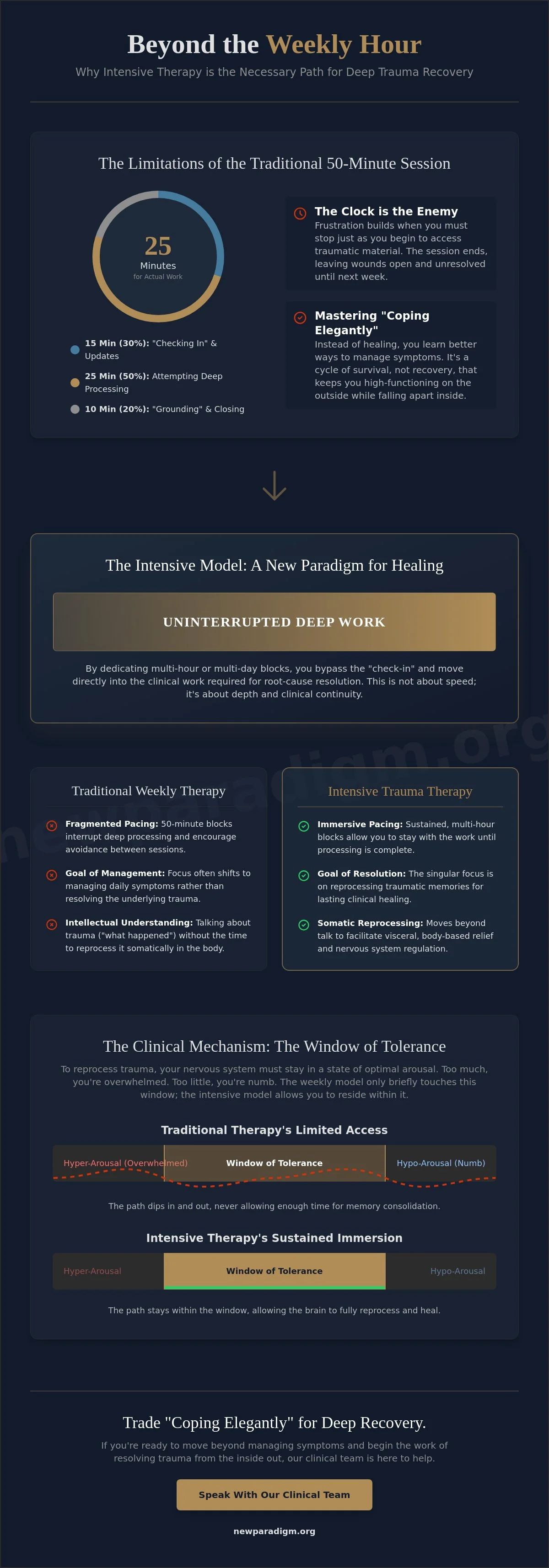
Traditional therapy operates on a 50-minute cycle that often serves the therapist's schedule more than the client's healing. In a standard session, the first fifteen minutes are spent "checking in" and the last ten minutes are spent "grounding" to ensure you can drive home. This leaves a mere 25 minutes for actual processing. For complex trauma and PTSD, this is often insufficient. It's frustrating to open a traumatic wound only to have the session end because the clock ran out. Instead of healing, you learn to cope more elegantly with the pain you've just unearthed.
Intensive vs. Traditional Models: A New Paradigm
True recovery requires an environment that mirrors the depth of the work. We are not a hospital, a crowded clinic, or a conventional rehab; we are a private sanctuary designed for focused, evidence-based intervention. Models like Intensive Short-Term Dynamic Psychotherapy (ISTDP) demonstrate that high-intensity work can produce rapid, lasting changes in the nervous system. By dedicating multi-hour or multi-day blocks to your recovery, you can explore unresolved pain that 50 minutes cannot touch. By choosing intensive trauma therapy, you are opting for a model that values depth over scale. To maintain this level of clinical focus, we limit our intake to a maximum of four clients. This ensures you aren't just another file in a cabinet, but a human being receiving the full, undivided expertise of a specialized team.
The Clinical Mechanism: Why Intensity Works
Intensity isn't just about speed; it's about the biological requirements of the brain. To reprocess a traumatic memory, your system needs time to enter and remain within the "window of tolerance." This is the physiological zone where you are grounded enough to process pain without being overwhelmed or numbing out. In a weekly model, you might touch this zone for ten minutes before the clock runs out. In intensive trauma therapy, you reside within it for hours. This sustained immersion allows for the consolidation of memories that have remained fragmented for years. A clinical study on intensive outpatient therapy highlights that condensed treatment schedules can significantly reduce PTSD symptoms by maintaining this therapeutic momentum and preventing the "avoidance" that often creeps in between weekly appointments.
EMDR and the Power of Reprocessing
Reprocessing is the core of our clinical work. Through EMDR therapy sessions, we use bilateral stimulation to unlock triggers that have been frozen in time. In a residential setting, this isn't a rushed exercise. You have the space to move past the intellectual narrative of "what happened" and reach the visceral, somatic relief your body craves. The science of bilateral stimulation works more effectively when the nervous system is already in a state of down-regulated safety. It's the difference between knowing you're safe and actually feeling safe in your own skin.
Nervous System Regulation and the 'Inside-Out' Approach
We prioritize the body because the mind cannot heal while the nervous system is in a state of high alert. This is why we blend clinical trauma care with monastic mindfulness. It is a quiet, disciplined approach to self-observation that down-regulates the amygdala and restores a sense of internal order. Recovering from the inside out means we aren't just teaching you how to manage a panic attack with a new breathing technique; we are resolving the physiological charge that causes the panic in the first place. If you're ready to move beyond "coping elegantly" and start the work of deep recovery, speak with our clinical team today.
By engaging in daily, focused therapy, you bypass the "checking in" process that eats into traditional sessions. You arrive, you enter the work, and you stay there until the processing is complete. This clinical continuity is what facilitates the shift from surviving to living. It is a rigorous but rewarding path that respects the gravity of your experience while providing a practical, evidence-based way through it.
Choosing the Right Environment for Intensive Recovery
A sanctuary isn't a luxury; it's a clinical requirement for down-regulating a hyper-vigilant nervous system. While APA treatment guidelines for PTSD emphasize the importance of evidence-based protocols, the physical container in which these protocols are delivered is often overlooked. If your system is constantly scanning for threats in a loud, urban environment, your capacity for emotional processing is severely compromised. Nature and silence aren't just aesthetic choices. They are clinical tools that signal safety to the brain, allowing the deep work of intensive trauma therapy to take hold without the constant interruption of external stress.
The Sanctuary Advantage: Seclusion vs. Clinical Isolation
True recovery requires seclusion, but it shouldn't feel like clinical isolation. A crowded hospital or a busy clinic can inadvertently trigger the very trauma you're trying to heal, creating a sense of being trapped. By contrast, a private residential environment allows you to remove yourself from daily triggers, such as professional demands or strained family dynamics. Our approach to trauma treatment in Chiang Mai leverages the natural calm of Northern Thailand to support this process. It's a secluded setting that respects the gravity of your suffering while providing a premium, private space for clinical intervention.
Readiness: Are You Ready for Deep Work?
How do you know if you're ready for this level of work? Many of our clients are high-functioning leaders who are privately exhausted from maintaining a facade of composure. You might find that you're coping, but you aren't living. Often, a burnout recovery program serves as the first realization that unresolved pain is the underlying cause of your persistent fatigue. If you've reached the point where intellectual understanding no longer brings relief, you're likely ready for a deeper clinical encounter. It's the moment you decide that surviving is no longer enough.
Choosing an environment is as important as choosing a therapist. You need a space where you can fall apart safely so you can be put back together with more resilience. If you're ready to step away from the noise and begin your recovery, reach out to our team to discuss your private stay.
Sustainability: Life After Intensive Therapy
Intensive trauma therapy isn't a magic switch; it's a profound physiological recalibration. While the deep clinical work happens within the safety of a sanctuary, the true test of recovery is integration. You've likely spent years being high-functioning on paper while privately falling apart, and the goal of this work is to ensure you never have to return to that state of exhaustion. We reject the myth of the "quick fix" in favor of a sustainable model that balances intensive intervention with lifelong discipline. Recovery doesn't end when you leave the secluded environment; it simply enters a new, more active phase of application.
The Bridge to Aftercare
Transitioning from a residential trauma treatment program back into a high-pressure career requires a deliberate bridge. Without structured support, the old triggers of your professional life can feel overwhelming before your new regulation tools have fully set. A tailored aftercare program provides the necessary scaffolding. By moving from intensive clinical care to remote or outpatient support, you can integrate your progress into your daily rhythm. This ensures that the nervous system regulation you've achieved becomes a permanent trait rather than a temporary state.
From Surviving to Thriving
There is a vast difference between "coping elegantly" and experiencing true emotional freedom. Coping is a series of intellectual strategies used to keep your head above water. Thriving is what happens when the underlying traumatic charge has been clinically resolved. By stepping away to a mental health facility in Thailand, you've given yourself the space to reclaim your professional spark and personal vitality. This sustainable life is built on a foundation of mindfulness, discipline, and consistent self-observation. It's about recognizing the subtle shifts in your body before they become crises. Intensive trauma therapy provides the clinical foundation for a sustainable, grounded life where you're no longer just managing your history, but finally living your future.
Return to a Life of Grounded Presence
You have spent enough time intellectually understanding your pain. It's time to experience the visceral somatic relief that comes from resolving it at the root. intensive trauma therapy provides the clinical container necessary to move beyond the limitations of the weekly hour and into a state of lasting nervous system regulation. By choosing a model that prioritizes depth over scale, you give your body the uninterrupted space it needs to finally exit the cycle of survival.
At New Paradigm Mental Health Retreat, we offer a secluded sanctuary for this deep work. Our approach is anchored by over 25 years of clinical experience and a commitment to evidence-based EMDR and somatic trauma care. We intentionally limit our intake to a maximum of four clients to ensure that your recovery is our singular focus. This is not a crowded hospital or a generic wellness retreat; it's a private environment for those ready to recover from the inside out.
Begin your journey to deep recovery at New Paradigm Mental Health Retreat
You don't have to keep falling apart in private. There is a path back to the light, and it starts with the decision to stop just surviving.
Frequently Asked Questions
What is the difference between intensive trauma therapy and standard outpatient sessions?
Standard outpatient sessions typically last 50 minutes once a week, whereas intensive trauma therapy utilizes multi-hour or multi-day blocks of clinical work. This sustained focus prevents the "checking in and out" process that often stalls progress in weekly models. It allows your nervous system to remain in a state of processing long enough to achieve visceral breakthroughs rather than just intellectual understanding.
How long does a typical intensive trauma therapy program last?
Programs vary based on individual needs, but they often range from a few days of focused work to a 30-day residential stay. The duration depends on the complexity of your unresolved pain and the depth of recovery required. We focus on reaching clinical milestones rather than adhering to a rigid timeline, ensuring you have the uninterrupted space needed to process traumatic memories fully.
Is intensive therapy safe for someone with complex PTSD?
Yes, it's safe and often highly effective for complex PTSD when conducted in a specialized clinical environment. We use the "window of tolerance" to ensure you remain grounded while reprocessing memories, preventing the overwhelm that can occur in less focused settings. By maintaining a maximum of four clients, we provide the intimate, expert-led care necessary to navigate complex triggers without the risk of re-traumatization.
What specific therapeutic modalities are used in intensive trauma treatment?
We integrate evidence-based protocols like EMDR and somatic therapy with monastic mindfulness and self-observation. This combination addresses both the psychological narrative of your past and the physiological charge held in your body. These modalities are chosen specifically to move beyond "coping elegantly" and facilitate a recovery that begins from the inside out, targeting the nervous system directly to restore long-term balance.
Do I need to take time off work for an intensive trauma program?
You'll likely need to step away from professional responsibilities to engage fully with the process. Attempting to manage a high-pressure career while doing deep clinical work creates a conflict that hinders nervous system regulation. We view this time as a clinical necessity; it's a private sanctuary where you can focus entirely on your recovery without the constant interference of professional triggers or daily stress.
What happens if I feel overwhelmed during the intensive process?
Feeling overwhelmed is a natural part of emotional processing, and our team is trained to lead you through it safely. Unlike a crowded clinic, our private environment ensures you have immediate access to support when unresolved pain surfaces. We use grounding techniques and disciplined mindfulness to help you stay within your window of tolerance, allowing you to fall apart safely so you can be rebuilt with more resilience.
Article by
Dirk J. Lambert (MSc. - CCTS-I)
Dirk J. Lambert is a Licensed Psychotherapist, Mentor, Author, and Certified Trauma & EMDR Specialist with more than 25 years of experience helping people recover from trauma, depression, burnout, emotional abuse, and long-standing unresolved pain. His work is known for being direct, compassionate, and highly practical.
A twice-ordained Buddhist monk, Dirk bridges clinical trauma care with mindfulness, discipline, self-observation, and deep emotional honesty. He does not hide behind jargon, labels, or unnecessary complexity. He listens carefully, speaks plainly, and works toward meaningful change.
New Paradigm reflects the philosophy he has built over decades: intentionally small, deeply personal, private by design, and focused on what actually helps people recover from the inside out rather than simply cope more elegantly.