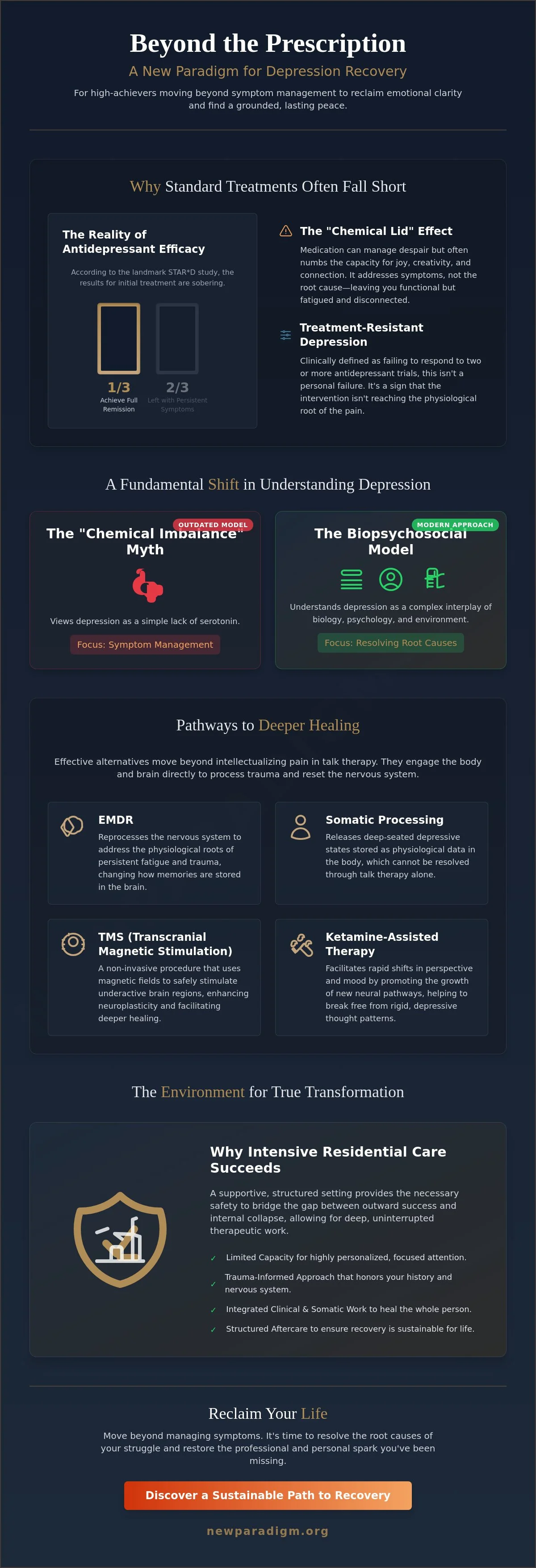
You have achieved everything the world defines as success, yet each morning feels like a heavy negotiation with a body that refuses to wake up. For many high achievers, the very tools designed to stabilize mood eventually become a source of emotional numbing and persistent fatigue. We understand that searching for alternatives to psychiatric medication for depression is not a rejection of clinical science. It's a necessary search for depth in a world that often settles for the surface. Only about one-third of people achieve full remission from their first antidepressant, according to the landmark STAR*D study, leaving millions in a state of quiet, intellectualized pain.
You deserve a path to recovery that doesn't rely on a daily prescription to feel functional. We're here to bridge the gap between professional expertise and the visceral reality of internal collapse. You'll discover how evidence-based, trauma-informed alternatives can reprocess the nervous system and resolve the underlying causes of your struggle. This guide previews the 2026 landscape of intensive residential care, somatic therapy, and the latest federal shifts in psychedelic research. We'll explore how to move beyond symptom management toward reclaiming emotional clarity, restoring your personal spark, and finding a grounded sense of peace that lasts.
Key Takeaways
- Understand the limitations of the "chemical imbalance" model and why the modern biopsychosocial approach is essential for addressing treatment-resistant depression.
- Examine evidence-based alternatives to psychiatric medication for depression like EMDR, which reprocesses the nervous system to address the physiological roots of persistent fatigue.
- Evaluate how advanced biological interventions, including TMS and ketamine-assisted therapy, can safely stimulate underactive brain regions to facilitate deeper healing.
- Discover how limited-capacity residential care provides the environment you'll need to bridge the gap between outward success and private struggle.
- Identify why a structured aftercare program is the essential bridge to ensuring your recovery isn't just temporary but a sustainable way of life.
Understanding the Limitations of Antidepressants and the Reality of Treatment-Resistant Depression
You maintain the appearance of control while your internal world quietly collapses. This disconnect between outward professional success and private suffering is a heavy burden to carry. For many, the standard medical response is a prescription, yet after months or years, the heavy fog of exhaustion remains. When two or more antidepressant trials fail to provide relief, clinicians define this state as Treatment-Resistant Depression. This isn't a sign that you're broken; it's an indication that the current intervention isn't reaching the root of your pain.
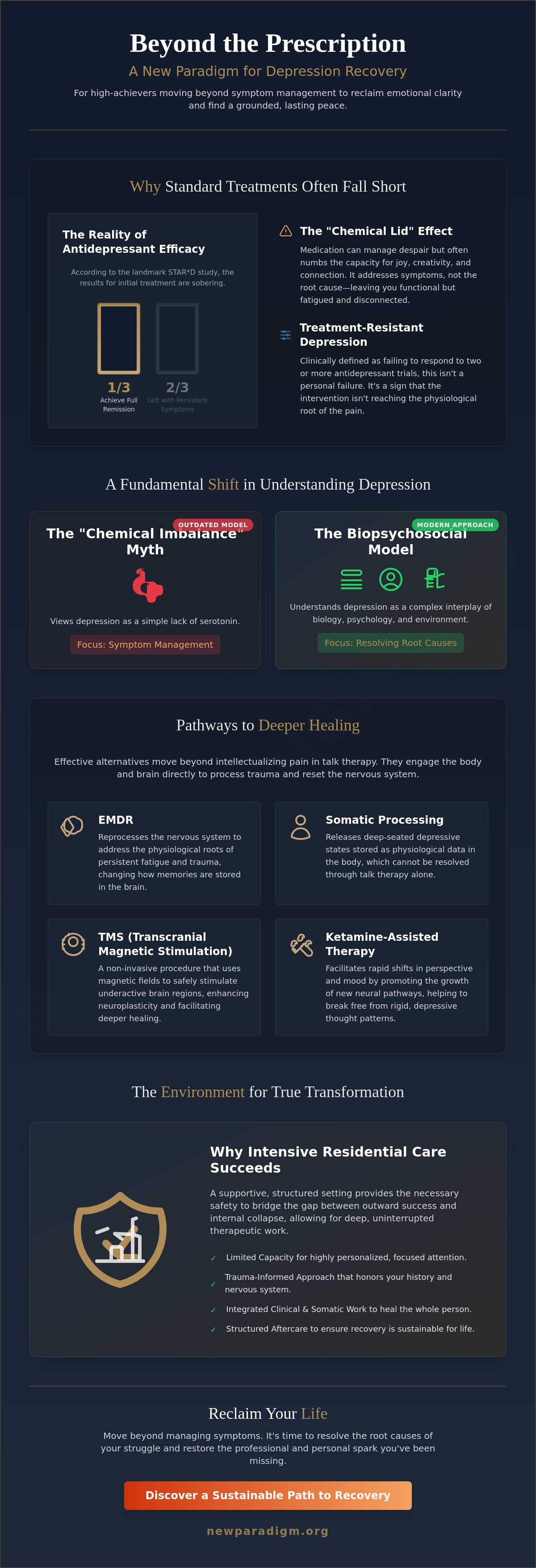
The outdated "chemical imbalance" myth suggests that depression is simply a lack of serotonin, but the modern biopsychosocial model reveals a much deeper story. True recovery requires looking at alternatives to psychiatric medication for depression that address how your history and environment have shaped your biology. We must move beyond the idea of "fixing" a brain and start understanding the whole person. Only about one-third of people achieve full remission from their first antidepressant, which highlights the need for a more comprehensive approach to mental health.
To better understand why traditional approaches sometimes fall short, watch this helpful clinical overview:
Why Medication Often Addresses Symptoms, Not Root Causes
Standard SSRIs are designed to manage symptoms, but they rarely resolve the underlying trauma or chronic stressors that fuel a depressive state. For the high-achieving individual, medication often acts as a chemical lid. It might stop the descent into total despair, but it also numbs the capacity for joy, creativity, and connection. You might find yourself performing your duties with clinical precision while feeling a profound sense of hidden exhaustion. Treatment-Resistant Depression is a physiological state of nervous system dysregulation rather than a simple lack of serotonin. When the body remains in a state of shutdown, a pill cannot provide the safety the nervous system requires to re-engage with life.
The Biological vs. Psychological Approach to Healing
There's a fundamental difference between managing a condition and undergoing a true internal transformation. Traditional psychiatry often focuses on maintenance, which can leave you feeling like a permanent patient. Effective alternatives to psychiatric medication for depression prioritize depth over scale. This involves moving beyond intellectualizing your pain in talk therapy. You can't think your way out of a physiological collapse; you must process it. A comprehensive Depression Treatment Program integrates clinical expertise with somatic work to move the body out of stagnation. This approach isn't about superficial management; it's about reclaiming the professional and personal spark that medication alone cannot restore.
Evidence-Based Psychotherapeutic Alternatives: The Power of EMDR and Somatic Processing
You may have spent years in traditional talk therapy, dissecting your history with surgical precision. Yet, despite your cognitive understanding of why you feel this way, the heavy, visceral sensation of depression remains lodged in your body. This is because deep-seated depressive states are often stored as physiological data, not just as stories or thoughts. When searching for effective alternatives to psychiatric medication for depression, it's vital to look toward interventions that speak the body's language. While a no-drug approach to mild depression often includes lifestyle shifts, moderate-to-severe states require clinical tools that can rewire neuroplasticity without pharmaceutical intervention.
EMDR Therapy: Reprocessing the Traumatic Roots of Depression
Standard psychotherapy asks you to talk about your pain. EMDR therapy sessions, however, focus on reprocessing it. This non-drug intervention uses bilateral stimulation to help the brain move "stuck" traumatic memories into a more adaptive state. It isn't about simply "crying out" or reliving the past; it's about "processing through" the physiological blocks that keep you in a state of shutdown. Evidence suggests that EMDR can act as a rapid-acting alternative to long-term medication by targeting the traumatic roots that SSRIs only mask. By facilitating this internal shift, you can achieve a level of emotional clarity that talk therapy alone rarely reaches.
Breaking the Cycle of Intellectualised Pain
Intellectualised pain occurs when your mind understands the problem, but your body remains depressed. You can explain your trauma, list your triggers, and analyze your behaviors, yet the persistent fatigue and internal collapse don't budge. This happens when there's a disconnect between the prefrontal cortex, which handles logic, and the limbic system, which governs emotion and survival. Somatic processing bridges this gap. It allows for the release of "trapped" emotional energy that has been stored in the nervous system, moving you from a state of survival back into a state of living. This deep work cannot happen in a sterile, rushed environment. It requires a safe, protective clinical space where you can finally move beyond symptom management and into true transformation. If you feel ready to move beyond intellectualizing your struggle, you can speak with a clinical specialist today to explore a path toward physiological recovery.
Evaluating Advanced Biological and Lifestyle Interventions
When daily medication fails to lift the heavy weight of depression, biological interventions offer a different mechanism of action. Unlike pills that circulate through the entire system, Transcranial Magnetic Stimulation (TMS) uses targeted magnetic pulses to stimulate underactive brain regions. For those exploring the most advanced alternatives to psychiatric medication for depression, research into Deep Brain Stimulation for Depression shows how direct neurological retraining is becoming a reality for treatment-resistant cases. These methods don't just mask symptoms; they aim to restore the brain's natural capacity for regulation and emotional response.
TMS, Ketamine, and Neurological Retraining
Ketamine-assisted therapy has emerged as a significant bridge to psychological work. It isn't a standalone cure, but it creates a "window of opportunity" where the brain's neuroplasticity is temporarily increased. This period of openness allows for deeper processing in a Residential Trauma Treatment setting. While medication often results in emotional blunting, these biological alternatives aim to restore the nervous system's flexibility. They are clinical tools within a broader journey, designed to help you move from a state of internal collapse back into a lived experience of clarity and presence. This approach focuses on transformation rather than the indefinite management of a condition.
The Role of Environment and Intensive Residential Care
A "wellness spa" stay might offer temporary relaxation, but it rarely addresses the structural burnout of a high-achieving life. True recovery requires a clinical burnout recovery program that prioritizes intensive internal work over superficial leisure. Healing often necessitates a temporary isolation from external noise, professional triggers, and the relentless demands of your daily environment. A premium mental health facility in Thailand provides a protective atmosphere where your only duty is your own recovery. This level of focused care allows for the stabilization of the nervous system through clinical nutrition and strict sleep hygiene, creating a foundation that outpatient care simply cannot match. If you are ready to step away from the noise and begin this intensive work, you can request a confidential clinical consultation to discuss your path forward.
A New Paradigm for Recovery: Why Intensive Residential Treatment Offers a Sustainable Path
Choosing to step away from the relentless pace of a high-functioning life is not an admission of defeat. It is a calculated, professional decision to address the physiological reality of your struggle. While outpatient resources often focus on maintaining your ability to perform, they rarely provide the space required to stop the cycle of internal collapse. For those seeking genuine alternatives to psychiatric medication for depression, the transition from symptom management to true recovery requires a level of clinical focus that daily life cannot accommodate. It is the difference between surviving a condition and resolving it.
From Symptom Management to Internal Transformation
A pill is a management strategy; intensive residential care is a transformation strategy. We do not offer a temporary escape from your responsibilities, but rather a personal environment for intensive internal work. Our clinical approach targets the specific conflicts of the high-achiever, where intellectual success has been used to mask a profound, visceral sense of hidden exhaustion. We recognize that your mind may have mastered the language of wellness while your body remains in a state of shutdown. Recovery is a practical methodology of nervous system regulation and trauma resolution, not a vague hope for improvement. In the serene clinical setting of Chiang Mai, the isolation from external noise allows you to engage with the deep work that medication and standard talk therapy often fail to reach.
The Journey Home: Aftercare and Sustainable Mental Health
The most vulnerable moment in any recovery journey is the return to professional and personal life. Without a bridge between the protective clinical environment and your daily reality, the old patterns of intellectualized pain can quickly resurface. A structured aftercare program acts as this essential bridge, providing the ongoing therapeutic guidance necessary to prevent relapse. Sustainable mental health is not about a one-time intervention; it's about integrating the emotional clarity you've gained into your existing world. You deserve a path that respects your need for depth, privacy, and clinical expertise. Reclaiming your life from the weight of depression is possible when you choose a methodology that targets the root causes of your suffering rather than merely managing its symptoms. If you are ready to begin this transformation, you can request a confidential clinical assessment to explore your options for 2026.
Reclaiming Your Life Through Physiological Transformation
True recovery isn't found in a higher dosage or a new prescription; it's found in the courageous work of reprocessing the trauma that keeps your nervous system in a state of shutdown. We have explored how EMDR, somatic processing, and advanced biological interventions provide a path toward emotional clarity that medication alone cannot achieve. By moving beyond the outdated chemical imbalance model, you can begin to resolve the underlying causes of your hidden exhaustion and internal collapse.
At New Paradigm, we provide a clinical facility founded by mental health professionals who understand the specific internal conflicts of high achievers. Our approach utilizes specialised intensive EMDR therapy within a strictly limited capacity to ensure your care remains deeply personalised and private. This is a deliberate environment for those who require more than superficial management. We invite you to begin your journey to deep, medication-free recovery at New Paradigm.
You don't have to settle for a life of emotional numbing or persistent fatigue. There are evidence-based alternatives to psychiatric medication for depression that respect your need for depth and clinical excellence. Your personal and professional spark is still there, waiting to be restored through a practical methodology of healing. We are ready to help you navigate the way back to yourself.
Frequently Asked Questions
Can depression be treated effectively without psychiatric medication?
Yes, depression can be treated effectively through evidence-based psychotherapeutic and biological interventions that address the nervous system's underlying state. These methods focus on resolving root causes, such as unresolved trauma or chronic physiological stress, rather than merely managing outward symptoms. For many individuals, these non-pharmacological approaches provide a more sustainable path to recovery by restoring the body's natural capacity for emotional regulation.
What is the most successful non-drug treatment for severe depression?
Clinical evidence suggests that a combination of intensive trauma-informed therapy and advanced biological interventions often yields the highest success rates for severe depression. Eye Movement Desensitisation and Reprocessing (EMDR) and somatic processing are highly effective for resolving the physiological roots of shutdown. Additionally, Transcranial Magnetic Stimulation (TMS) provides a non-invasive way to stimulate underactive brain regions, offering a powerful clinical alternative for treatment-resistant cases.
How does EMDR therapy help with depression compared to medication?
EMDR therapy targets the traumatic memories and physiological blocks that keep the nervous system in a depressive state, whereas medication typically focuses on temporary neurotransmitter adjustment. While antidepressants may provide a chemical lid to stabilize your mood, EMDR allows your brain to reprocess and integrate the distress at its source. This leads to a resolution of the intellectualized pain and hidden exhaustion that medication often leaves untouched.
Is it safe to stop taking antidepressants to try alternative therapies?
You must never stop or reduce your medication without direct clinical supervision and a medically managed tapering plan. Abruptly discontinuing antidepressants can cause severe withdrawal symptoms and a sudden collapse of your emotional stability. Transitioning to alternatives to psychiatric medication for depression requires a structured environment where clinicians can monitor your nervous system while you begin the intensive work of internal transformation.
What is the difference between a depression retreat and a clinical residential program?
A depression retreat is often focused on general wellness and leisure, whereas a clinical residential program provides intensive, evidence-based psychological care in a protective environment. We do not offer a spa stay or a temporary escape from stress. Instead, we provide a personal environment for deep internal work where a strictly limited capacity ensures that your recovery is guided by experienced clinical mentors who understand the gravity of your struggle.
How long does it take to see results from non-medication depression treatments?
The timeline for recovery is deeply individual, but many people experience significant shifts in their internal clarity within the first few weeks of an intensive program. While medication often requires several weeks to alter brain chemistry, clinical alternatives to psychiatric medication for depression like EMDR can produce rapid changes in how the body stores and responds to stress. Achieving long-term stability usually involves a dedicated period of residential care followed by a structured aftercare program.
Article by
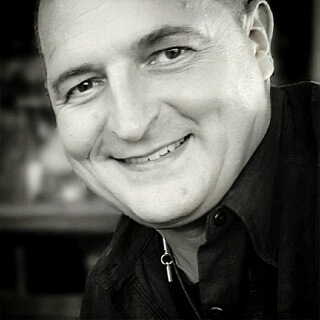
Dirk J. Lambert (MSc. - CCTS-I)
Dirk J. Lambert is a Licensed Psychotherapist, Mentor, Author, and Certified Trauma & EMDR Specialist with more than 25 years of experience helping people recover from trauma, depression, burnout, emotional abuse, and long-standing unresolved pain. His work is known for being direct, compassionate, and highly practical.
A twice-ordained Buddhist monk, Dirk bridges clinical trauma care with mindfulness, discipline, self-observation, and deep emotional honesty. He does not hide behind jargon, labels, or unnecessary complexity. He listens carefully, speaks plainly, and works toward meaningful change.
New Paradigm reflects the philosophy he has built over decades: intentionally small, deeply personal, private by design, and focused on what actually helps people recover from the inside out rather than simply cope more elegantly.