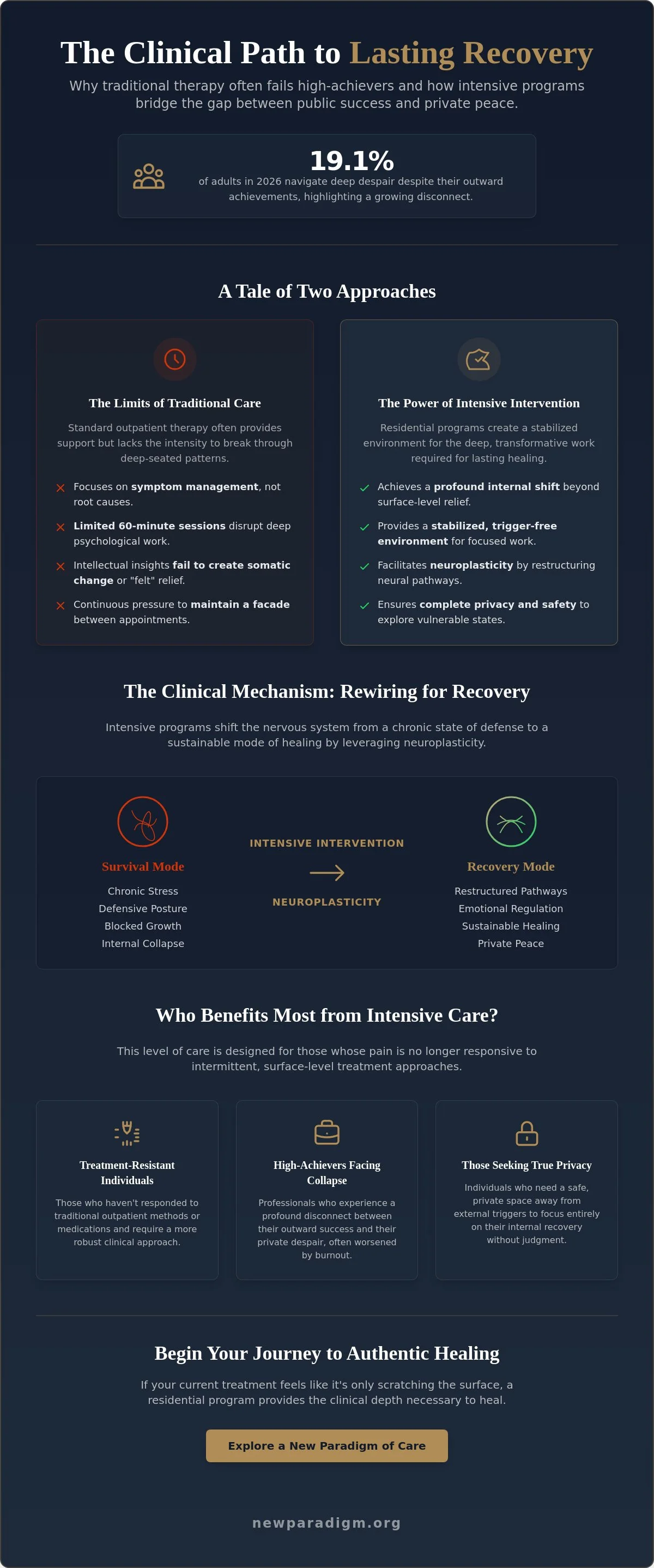
Your professional success has become a sophisticated mask for an internal collapse that no amount of logic or traditional talk therapy can reach. It's exhausting to spend every ounce of your energy performing wellness while searching for a depression treatment program that offers more than just a temporary reprieve from the darkness. You've likely found that understanding the "why" of your suffering hasn't translated into actually feeling different in your own skin. This disconnect is a common reality in 2026, where 19.1 percent of adults are navigating similar depths of despair despite their outward achievements.
We understand that you don't need another superficial management technique; you need a profound internal shift. This article promises to show you how intensive, trauma-informed residential programs provide the clinical depth necessary for lasting recovery from deep-seated depression. We will preview the essential components of a modern clinical environment, from nervous system regulation to specialized trauma work, that ensure your recovery is both private and sustainable. You'll discover why the old models of care often fail and how a focused, evidence-based approach can finally bridge the gap between your public success and your private peace.
Key Takeaways
- Learn how a specialized depression treatment program provides the clinical depth required to move beyond symptom management into true internal work.
- Understand the role of neuroplasticity in shifting the brain from a state of constant survival to a sustainable mode of recovery.
- Identify the underlying complex trauma that often serves as the hidden driver behind treatment-resistant symptoms and chronic exhaustion.
- Use a clinical framework to evaluate programs based on their commitment to privacy, safety, and individual focus.
- Recognize why the transition phase after intensive treatment is essential for preventing relapse and ensuring the longevity of your healing.
What is a Comprehensive Depression Treatment Program?
A comprehensive depression treatment program is more than a series of appointments; it's a structured, multi-modal clinical intervention designed to address the physiological and psychological roots of despair. While standard outpatient therapy provides valuable support, it often lacks the intensity required to break through deep-seated patterns of internal collapse. A residential depression treatment program offers a stabilized environment where you're removed from the triggers of daily life, allowing for the kind of deep psychological work that simply can't happen in sixty-minute increments. This environment provides the safety necessary to explore the depths of your experience without the pressure of maintaining a facade for the outside world.
At New Paradigm Mental Health Retreat, we approach this journey through the lens of Compassionate Realism. This means we acknowledge the somber gravity of your suffering without offering superficial platitudes or decorative marketing language. We provide a premium, protective atmosphere that prioritizes your safety and privacy above all else. This isn't a leisure stay or a generic wellness retreat. It's an intentional, personal environment for intensive internal work, tailored for those who are exhausted from managing symptoms and are ready to heal the underlying causes of their pain.
To better understand how these programs offer a path forward, watch this helpful video:
The Core Components of Intensive Care
Effective recovery requires more than just medication or intermittent talk therapy. It demands individualized clinical pathways that respect your unique history and move beyond "one size fits all" protocols. In an intensive setting, you benefit from the seamless integration of psychiatric oversight with intensive psychotherapy. This ensures every aspect of your health is monitored with precision-a level of clinical focus also found at Hope Therapy Center, where comprehensive psychiatric and therapeutic services are tailored to address the physiological and psychological roots of despair. The presence of 24/7 support is vital; it provides the immediate containment needed to interrupt the cycle of depressive rumination before it leads to further internal exhaustion. We don't just manage your state; we work to transform it through consistent, evidence-based intervention.
Who Benefits Most from a Residential Program?
This level of care is specifically designed for those who find that intellectualizing their pain hasn't led to actual relief. You may find yourself in one of these categories:
- Individuals with treatment-resistant depression: Those who haven't responded to traditional outpatient methods or medications and require a more robust clinical approach.
- High-achievers facing internal collapse: Professionals who experience a profound disconnect between their outward success and their private despair, often exacerbated by burnout.
- Those seeking isolation from noise: Individuals who require a safe, private space away from external triggers to focus entirely on their internal recovery.
If your current treatment feels like it's only scratching the surface, a residential depression treatment program provides the clinical depth necessary to reach the parts of you that have been hidden away in survival mode.
The Clinical Mechanism: How Intensive Programs Facilitate Healing
Deep-seated depression is often the result of a nervous system stuck in a chronic state of survival. When the brain is locked in this defensive posture, it prioritizes immediate safety over emotional growth, which is why intellectual insights from weekly therapy sessions often fail to create lasting change. A residential depression treatment program facilitates a shift into recovery mode by providing the consistent, high-frequency intervention required to stimulate neuroplasticity. According to clinical guidelines for intensive recovery programs, this shift isn't about simply feeling better in the moment; it's about physically restructuring the neural pathways that govern your emotional responses, a process that can be further supported by professional neurofeedback training at neurobics.care.
This work cannot be effectively performed in a large, sterile hospital environment or a crowded facility. We reject the institutional model that treats individuals as case numbers in favor of a strictly limited-capacity setting. This exclusivity isn't about luxury; it's about clinical focus. It ensures that your specific internal collapse receives the undivided attention of a team that understands the weight of your struggle. By creating a personal environment for intensive internal work, we provide the stability necessary for your brain to begin the process of repair.
Moving Beyond Talk Therapy: Somatic and Evidence-Based Modalities
Somatic healing is the essential bridge for those who have spent years intellectualizing their pain while remaining physically trapped in a state of exhaustion. In this context, EMDR therapy sessions serve a critical clinical function by reprocessing traumatic memories that have become stuck in the body's nervous system. Unlike superficial wellness retreats that offer temporary relaxation through spa services, an evidence-based depression treatment program utilizes these sessions to address the physiological roots of your despair. This targeted approach allows you to move through blocks that talk therapy alone cannot reach.
In addition to these clinical modalities, many find that artistic workshops can facilitate a deeper connection to the self. For example, engaging with Art Therapy provides a valuable non-verbal channel for processing emotions that are often difficult to articulate in words.
The Impact of Environment on Nervous System Regulation
True recovery requires a total isolation from external noise, allowing the nervous system to finally settle after years of high-performance pressure. This stillness is complemented by a supportive, non-judgmental community of peers who understand the unique burden of professional success coupled with internal despair. Chiang Mai provides a uniquely grounded backdrop for this work, offering a sense of peace and contemplative depth that supports clinical recovery. If you're ready to move beyond managing symptoms and begin this internal work, you can speak with us privately about your journey.
The Intersection of Trauma and Treatment-Resistant Depression
Many individuals find themselves in a frustrating cycle of failed interventions and temporary reprieves. The primary reason a depression treatment program often falls short isn't a lack of effort from the patient; it's a failure to address underlying complex trauma. While the National Institute of Mental Health guide to depression outlines standard symptoms and treatments, it doesn't always capture how "hidden" trauma drives treatment-resistant cases. This is particularly prevalent among high-achievers. You've likely spent years masking your struggle with outward success, yet you carry an internal weight that feels immovable. You aren't just dealing with low mood; your nervous system is likely protecting you from a history of unresolved pain that logic cannot solve.
We believe in a New Paradigm of care that treats the whole person rather than just the diagnosis. This approach recognizes that your exhaustion is a physiological response to a system that has been "on guard" for too long. By moving beyond the surface, we can address the deep-seated conflicts that keep you stuck in a state of internal collapse.
Understanding the Invisible Link
Your current state didn't emerge in a vacuum. Early childhood experiences and developmental stressors often shape the adult depressive patterns we see today. For a deeper exploration of these connections, you can read The Invisible Link: Understanding the Intersection of Trauma and Depression in 2026. These patterns aren't just mental constructs. They are physiological markers. Trauma-driven depression manifests as a specific type of visceral fatigue that traditional talk therapy often fails to reach. It's a body-based response to a perceived threat that your brain has never quite processed.
Evidence-Based Options for Deep Recovery
Moving beyond survival requires a shift from managing symptoms to resolving core conflicts. When you evaluate depression therapy options, it's vital to look for modalities that target the intersection of the mind and body. In our depression treatment program, "intensive" doesn't mean more hours of talking about the past. It means deep, focused reprocessing of the neural pathways that hold trauma. We utilize evidence-based tools to address the root cause, allowing you to finally stop performing wellness and start experiencing a genuine internal shift. If you're ready to address the source of your struggle with a clinical team that understands this depth, connect with us privately to discuss your recovery.
Selecting a Program and Ensuring Long-Term Stability
Choosing the right depression treatment program is a decision that requires discernment beyond checking boxes for licensing or basic accreditation. You aren't simply looking for a facility; you're seeking a clinical philosophy that aligns with the depth of your internal struggle. A truly effective program doesn't just manage your state for a few weeks. It provides a foundation for a completely different way of being in the world. As you evaluate your options, look past the superficial marketing language to understand the practitioners' experience and their commitment to treating the physiological roots of your pain. You need to know that the environment is designed to hold the weight of your experience without flinching.
Evaluating Clinical Depth and Privacy
For high-profile individuals or those in leadership roles, privacy is a clinical necessity for safety. You should ask direct questions about staff-to-client ratios and the specific credentials of the practitioners who will be guiding your sessions. A boutique, limited-capacity environment ensures that your recovery isn't lost in the noise of a large, institutional setting. This level of focus allows for the nuanced, personal work described in our guide, Beyond Coping: The Definitive Guide to Residential Trauma Treatment in 2026. When there are fewer clients, the clinical team can remain fully present with your process, ensuring that every detail of your recovery is handled with precision and care.
The Critical Bridge: Aftercare and Sustainable Health
The most vulnerable moment in any recovery journey is the transition from a protective clinical environment back to the complexities of daily life. This is why a structured aftercare program is a non-negotiable component of long-term stability. Sustainable health isn't built in isolation; it's maintained through a gradual reintegration process that honors the internal work you've done. For our international clients and expats, remote support becomes the vital link that ensures your new neural pathways remain strong even as you return to high-pressure environments. We don't believe in a temporary reprieve that leaves you stranded. We believe in building a life where you no longer need to mask your pain because the core conflict has finally been resolved. This is the path toward a recovery that lasts, preventing future relapse by addressing the source rather than the symptoms.
Reclaiming Your Internal Peace
True recovery isn't a matter of willpower; it's a matter of methodology. We've explored how a comprehensive depression treatment program must look past surface symptoms to address the physiological markers of trauma. You've learned that a stabilized, private environment is essential for allowing the nervous system to move from survival into a state of repair. It's about resolving the core conflict rather than just managing the day-to-day exhaustion that has come to define your life.
New Paradigm Mental Health Retreat was founded and is led by experienced mental health professionals who understand the gravity of your struggle. We aren't a large, sterile institution. We are a boutique clinical facility with a strictly limited capacity, ensuring your journey remains personal and focused. By utilizing evidence-based EMDR and trauma-informed protocols, we provide the clinical depth necessary for a transformation that lasts. You don't have to carry the weight of internal collapse alone anymore. There is a practical, grounded path forward toward sustainable peace.
Begin your journey toward deep, clinical recovery at New Paradigm Mental Health Retreat.
Frequently Asked Questions
How do I know if I need a residential depression treatment program instead of outpatient therapy?
You likely need a residential depression treatment program if weekly outpatient sessions aren't enough to interrupt your internal collapse. This level of care is necessary when your current environment contains too many triggers for your nervous system to ever truly settle. It's not a sign of failure. It's a clinical recognition that you require a more intensive, protected space to do the deep work of recovery.
What is the typical duration of an intensive depression recovery program?
Intensive recovery typically requires a commitment of thirty to ninety days. This timeframe isn't arbitrary; it's the period needed for the brain to move out of chronic survival mode and begin forming resilient neural pathways. We don't offer quick fixes because deep internal transformation requires time. Each week is intentionally structured to guide you from initial stabilization to a state of sustainable health.
Can a depression treatment program help if I have tried medication without success?
A specialized depression treatment program is specifically designed for individuals who haven't found relief through traditional medications. Many high-achievers suffer from treatment-resistant symptoms because their struggle is driven by deep-seated trauma rather than just biology. By using evidence-based somatic tools, we can address the physiological roots of your pain that medication often leaves untouched. This provides a clear path forward when other methods have failed.
Is trauma therapy always included in a depression treatment program?
Trauma-informed protocols are essential to our clinical approach because we recognize that unresolved pain is often the hidden driver of chronic depression. We don't treat trauma as a separate condition. We address it as a fundamental part of your recovery. By resolving these core conflicts, we help you move beyond simple symptom management toward a state of genuine internal peace and lasting stability.
How much privacy can I expect in a boutique mental health facility?
In a boutique mental health facility, you can expect a level of privacy that larger institutions simply cannot provide. We maintain a strictly limited capacity to ensure your stay remains confidential and focused. This isolation from external noise is a clinical tool. It allows you to engage in intensive internal work without the distractions or pressures of your professional life. Your safety and anonymity are our highest priorities.
What happens after I complete a residential program for depression?
Completion of a residential stay is just the beginning of your new way of being. You'll move into a structured aftercare program designed to support your transition back into your daily environment. This includes ongoing clinical check-ins and remote support to ensure your recovery remains sustainable. We don't leave you to navigate the return alone; we provide the bridge necessary to prevent relapse and maintain your health.
Article by
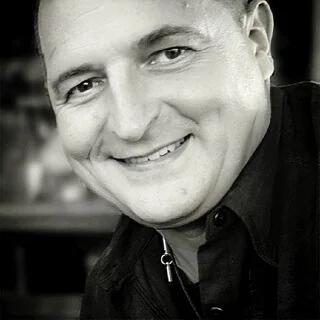
Dirk J. Lambert (MSc. - CCTS-I)
Dirk J. Lambert is a Licensed Psychotherapist, Mentor, Author, and Certified Trauma & EMDR Specialist with more than 25 years of experience helping people recover from trauma, depression, burnout, emotional abuse, and long-standing unresolved pain. His work is known for being direct, compassionate, and highly practical.
A twice-ordained Buddhist monk, Dirk bridges clinical trauma care with mindfulness, discipline, self-observation, and deep emotional honesty. He does not hide behind jargon, labels, or unnecessary complexity. He listens carefully, speaks plainly, and works toward meaningful change.
New Paradigm reflects the philosophy he has built over decades: intentionally small, deeply personal, private by design, and focused on what actually helps people recover from the inside out rather than simply cope more elegantly.